
1. Real Situation in 2009: When the State Becomes Unbearable for Citizens
On September 9, 2009, the proceedings regarding GraTeach were supposed to be discontinued. Instead, I was pushed into a hearing that served not justice, but system relief. Although the public prosecutor had signaled a willingness to discontinue the proceedings, the conversation turned into a regular hearing where lawyers and the court acted together—not in the interest of the case, but in the interest of a „solution“ that was safe for them. Without legal representation and under massive pressure, I had to accept a suspended sentence. It was not about my actions, but about discontinuing the proceedings against the management and eliminating me as a „disruptive factor.“
My experiences show: Those who advocate for democratic concerns are not protected, but systematically hindered.
2. Development Without Obstruction: What Could Have Been
Without the systematic obstruction by judicial arbitrariness and structural disadvantages, GraTeach would not only have survived but would have become a lighthouse project for digital participation and decentralized value creation. A „digital, interdisciplinary year“ after studies would have strengthened digital competencies and promoted structurally relevant products. Blockchain and AI would not have remained mere buzzwords but would have been tools to break up power concentrations and create new value creation models.
The FDP would have had the chance to transform from a program party into a movement party—one that not only demands freedom but actively shapes it. Instead, politics remained stuck in theoretical debates while digital society urgently needed new rules.
3. Perspective from 2026: Why This Case Has European Relevance
This case is not an isolated incident but a symptom of a structural problem: The liberals of Europe are the last chance for sovereignty. Most democracy activists do not even realize how they are being silenced in a „gang-like appearance.“ The FDP is losing voters because it can no longer defend freedom rights in the digital society.
The Route of Industrial Culture is an example of how German politics stifles innovation through look away and blockades. Given the proven unconstitutional behavior of the judiciary—not a miscarriage of justice, but a conviction without legal basis and without a hearing—the later funding offers and an 80% state guarantee from several public institutions seemed to me like an „invitation to commit a crime,“ as I would again advocate for digital democracy. This is not a coincidence, but systemic. The EU must act: An infringement procedure against Germany is long overdue. The GraTeach bankruptcy should have been reversed to free up funds for GISAD—an institution that would be sustainable without external funds and can only work independently in the spirit of the EU Charter.
European sovereignty begins with the EU protecting institutions like GISAD. The state of North Rhine-Westphalia must compensate for the damages caused and restore legal behavior by settling copyright issues. Only then can trust in a digital future be established.
The FDP now has a unique opportunity—if it finally stops just talking about freedom and starts organizing it. The ALDE Party should support this as a European party. As a member of both parties, I propose:
Liberal Program for Digital Sovereignty:
- „Trusted WEB 4.0 Law“:
- Mandatory WAN anonymity for all public digital projects.
- Trust stations in courts: Judges decide which data is released—not corporations.
- Demand to the EU: 40 founders for the EU-D-S by 2027—with start-up financing for structurally relevant projects.
- „Against Cloud Colonialism“:
- Instruct authorities not to host data with AWS, Azure & Co.
- Promote decentralized infrastructure following the Estonian model—but EU-wide.
- Ensure fair value creation for all participants in emerging decentralized machine markets.
- „Investment Steering for Social Cohesion“:
- Those investing in high-risk projects (Mars, AI weapons) must invest 10% in EU-D-S concepts.
- GISAD expert opinions decide on „structural relevance“—only those who strengthen society receive tax benefits.
- „The Liberals as the New People’s Parties of the Digital Age“:
- getmySense value creation concept. Micropayments for all. Those who expose fake news are rewarded. Those who spread fake news are penalized.
- „Digital, interdisciplinary year“ for every graduate/student.
- Free „digital basic equipment“ for every citizen (hardware + training).
- Digital cooperatives as an alternative to platform capitalism—profits remain decentralized.
- „Digital ownership for all.“ Only with your own key can you protect your digital property.
The liberals can fill the gap—but only if they define freedom as the result of digital participation and value creation. Freedom that includes everyone is unbeatable. If value creation shifts from portals to creators, the interests of the core electorate are not threatened. However, the core electorate is threatened if social peace cannot be maintained.
The question for the FDP leadership: Do you really just want to watch the SPD decline—or do you want to become the new people’s party of the digital era with former smart SPD voters?
4. GAP 2009: The Cost of Inaction
Carryover from Previous Years:
- 2000: Mannesmann takeover—133 billion euros (loss of European sovereignty)
- 2001–2007: Unemployment due to GraTeach blockade—18 billion euros
- 2004–2006: Revenue losses due to US platforms—54.3 billion euros
- 2003–2008: Loss of trust in economy & digitization—1,154 billion euros
- 2008: Financial crisis (10% of 5.1 trillion)—510 billion euros
GAP 2009:
- Loss of trust (2.5% of 2009 GDP: 12.3 trillion euros)—308 billion euros
- Damages from cyberattacks (30% of 80 billion euros)—24 billion euros
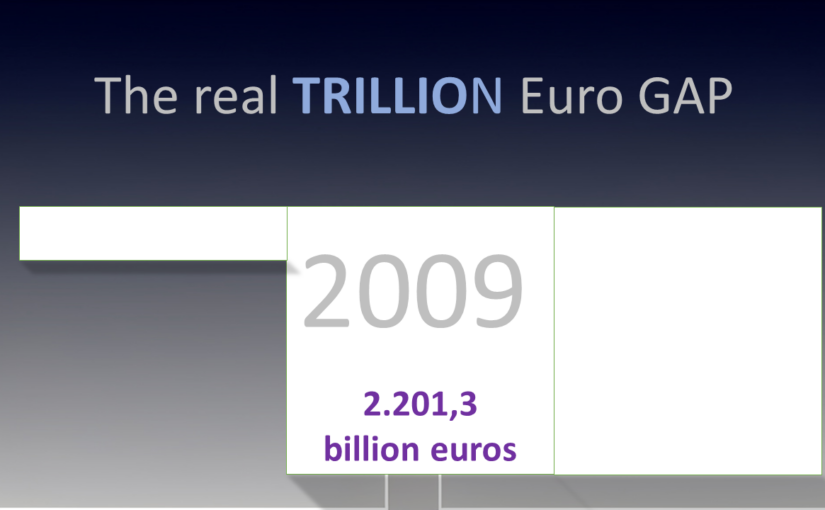
Total GAP 2009: 2,201.3 billion euros
The numbers show: The problem is not the revenue of the gatekeepers, but their digital pollution. Fake news and power concentration destroy trust—and thus the foundation for a European digital economy. The FDP must finally understand: Freedom is not a cliché, but a lived practice that must be actively defended.
Demands to European Liberals:
- Investigative committee on GraTeach—to expose systemic failure.
- Abolition of mandatory legal representation—if it is abused as a tool of oppression.
- „Right to digital sovereignty“—against surveillance and cyberattacks.
- Infringement proceedings against Germany—to enable GISAD.
The question is not whether we can afford this. The question is whether we can afford inaction.
Sources: Cybercrime Risk Ranking Europe