2009 – Europe’s Liberals: The Last Hope for Sovereignty!

1. Real Situation in 2009: When the State Becomes Unbearable for Citizens

On September 9, 2009, the proceedings regarding GraTeach were supposed to be discontinued. Instead, I was pushed into a hearing that served not justice, but system relief. Although the public prosecutor had signaled a willingness to discontinue the proceedings, the conversation turned into a regular hearing where lawyers and the court acted together—not in the interest of the case, but in the interest of a „solution“ that was safe for them. Without legal representation and under massive pressure, I had to accept a suspended sentence. It was not about my actions, but about discontinuing the proceedings against the management and eliminating me as a „disruptive factor.“

My experiences show: Those who advocate for democratic concerns are not protected, but systematically hindered.

2. Development Without Obstruction: What Could Have Been

Without the systematic obstruction by judicial arbitrariness and structural disadvantages, GraTeach would not only have survived but would have become a lighthouse project for digital participation and decentralized value creation. A „digital, interdisciplinary year“ after studies would have strengthened digital competencies and promoted structurally relevant products. Blockchain and AI would not have remained mere buzzwords but would have been tools to break up power concentrations and create new value creation models.

The FDP would have had the chance to transform from a program party into a movement party—one that not only demands freedom but actively shapes it. Instead, politics remained stuck in theoretical debates while digital society urgently needed new rules.

3. Perspective from 2026: Why This Case Has European Relevance

This case is not an isolated incident but a symptom of a structural problem: The liberals of Europe are the last chance for sovereignty. Most democracy activists do not even realize how they are being silenced in a „gang-like appearance.“ The FDP is losing voters because it can no longer defend freedom rights in the digital society.

The Route of Industrial Culture is an example of how German politics stifles innovation through look away and blockades. Given the proven unconstitutional behavior of the judiciary—not a miscarriage of justice, but a conviction without legal basis and without a hearing—the later funding offers and an 80% state guarantee from several public institutions seemed to me like an „invitation to commit a crime,“ as I would again advocate for digital democracy. This is not a coincidence, but systemic. The EU must act: An infringement procedure against Germany is long overdue. The GraTeach bankruptcy should have been reversed to free up funds for GISAD—an institution that would be sustainable without external funds and can only work independently in the spirit of the EU Charter.

European sovereignty begins with the EU protecting institutions like GISAD. The state of North Rhine-Westphalia must compensate for the damages caused and restore legal behavior by settling copyright issues. Only then can trust in a digital future be established.

The FDP now has a unique opportunity—if it finally stops just talking about freedom and starts organizing it. The ALDE Party should support this as a European party. As a member of both parties, I propose:

Liberal Program for Digital Sovereignty:

  1. „Trusted WEB 4.0 Law“:
    • Mandatory WAN anonymity for all public digital projects.
    • Trust stations in courts: Judges decide which data is released—not corporations.
    • Demand to the EU: 40 founders for the EU-D-S by 2027—with start-up financing for structurally relevant projects.
  2. „Against Cloud Colonialism“:
    • Instruct authorities not to host data with AWS, Azure & Co.
    • Promote decentralized infrastructure following the Estonian model—but EU-wide.
    • Ensure fair value creation for all participants in emerging decentralized machine markets.
  3. „Investment Steering for Social Cohesion“:
    • Those investing in high-risk projects (Mars, AI weapons) must invest 10% in EU-D-S concepts.
    • GISAD expert opinions decide on „structural relevance“—only those who strengthen society receive tax benefits.
  4. „The Liberals as the New People’s Parties of the Digital Age“:
    • getmySense value creation concept. Micropayments for all. Those who expose fake news are rewarded. Those who spread fake news are penalized.
    • Digital, interdisciplinary year“ for every graduate/student.
    • Free „digital basic equipment“ for every citizen (hardware + training).
    • Digital cooperatives as an alternative to platform capitalism—profits remain decentralized.
    • Digital ownership for all.“ Only with your own key can you protect your digital property.

The liberals can fill the gap—but only if they define freedom as the result of digital participation and value creation. Freedom that includes everyone is unbeatable. If value creation shifts from portals to creators, the interests of the core electorate are not threatened. However, the core electorate is threatened if social peace cannot be maintained.

The question for the FDP leadership: Do you really just want to watch the SPD decline—or do you want to become the new people’s party of the digital era with former smart SPD voters?

4. GAP 2009: The Cost of Inaction

Carryover from Previous Years:

  • 2000: Mannesmann takeover—133 billion euros (loss of European sovereignty)
  • 2001–2007: Unemployment due to GraTeach blockade—18 billion euros
  • 2004–2006: Revenue losses due to US platforms—54.3 billion euros
  • 2003–2008: Loss of trust in economy & digitization—1,154 billion euros
  • 2008: Financial crisis (10% of 5.1 trillion)—510 billion euros

GAP 2009:

  • Loss of trust (2.5% of 2009 GDP: 12.3 trillion euros)—308 billion euros
  • Damages from cyberattacks (30% of 80 billion euros)—24 billion euros

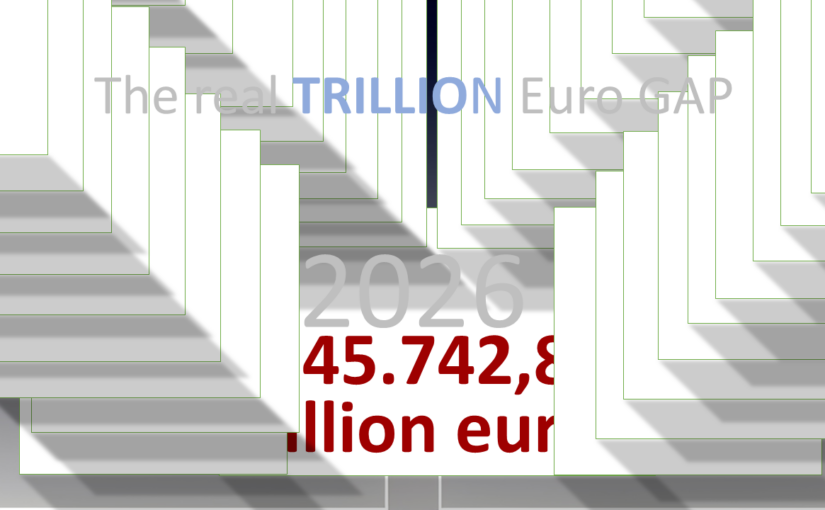
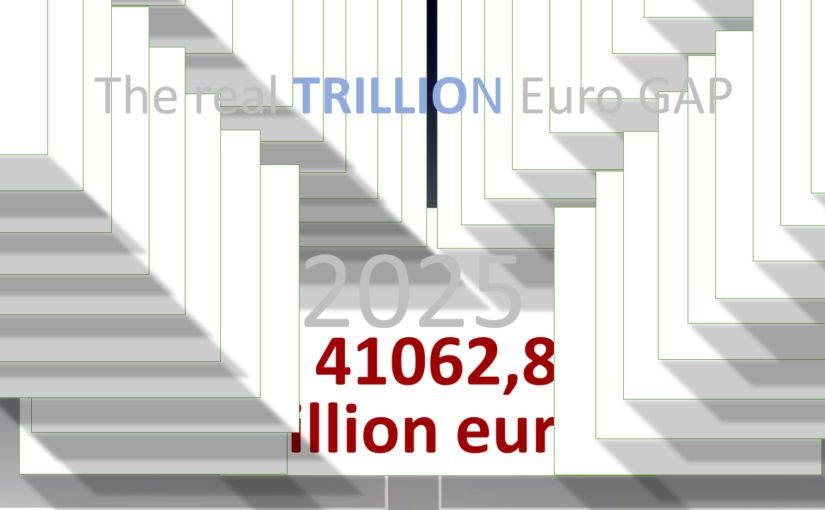
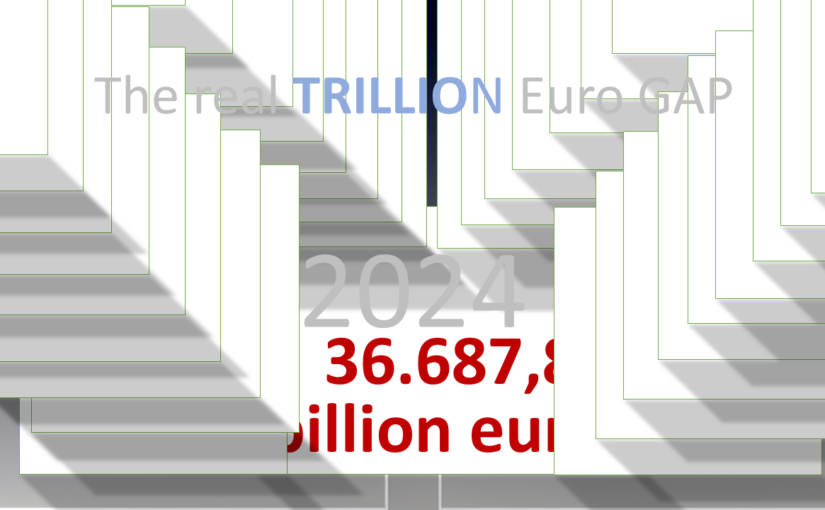
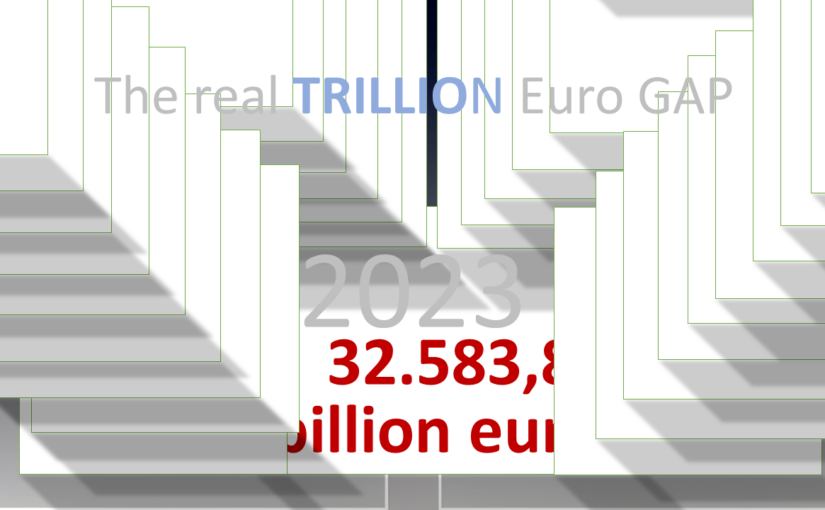
Total GAP 2009: 2,201.3 billion euros

The numbers show: The problem is not the revenue of the gatekeepers, but their digital pollution. Fake news and power concentration destroy trust—and thus the foundation for a European digital economy. The FDP must finally understand: Freedom is not a cliché, but a lived practice that must be actively defended.

Demands to European Liberals:

  1. Investigative committee on GraTeach—to expose systemic failure.
  2. Abolition of mandatory legal representation—if it is abused as a tool of oppression.
  3. „Right to digital sovereignty“—against surveillance and cyberattacks.
  4. Infringement proceedings against Germany—to enable GISAD.

The question is not whether we can afford this. The question is whether we can afford inaction.

2008: Gatekeepers pollute the internet like oil pollutes water

1. Real Situation in 2008

A conviction in the GraTeach case seemed unimaginable. Finally, I wanted to make a fresh start: The plattform www.citythek.de had been revised, the novel „The Trillion Dollar GAP“ was completed, and the concept of the Synergienetzwerk Mittelstand was awarded as Innovation Product 2008. I began searching for new partners with renewed hope. Those interested in learning more can find additional insights in the sidebar of finders.de under Blog Articles and Excerpts from the Books since 2007.

But the world around me plunged into the deepest crisis in decades. The global financial crisis, triggered by the US housing bubble and the collapse of Lehman Brothers in September 2008, dragged Europe down with it. The EU’s GDP plummeted by €420 billion in 2009, the Eurozone lost €410 billion, and Germany alone lost €120 billion. The automotive industry came to a standstill, banks faltered, and 185,000 companies went bankrupt. Bailouts for failing banks cost European taxpayers €5.1 trillion—a sum that still haunts us like a nightmare.

What went wrong:
The crisis was not a natural disaster but the result of systematic information failure. Opaque financial products, manipulated ratings, and a flood of advertising-driven „advice“ confused markets and regulators. While banks played with inscrutable subprime mortgages, gatekeepers like Google and Amazon profited not through solutions but through clicks, advertising, and data monopolies. Those searching for „safe investments“ found themselves in a jungle of paid rankings and opaque recommendations. Trust collapsed—and with it, the markets.


2. Unimpeded Development: Digital Sovereignty through Participant Protection

If Europe had already adopted Trusted WEB 4.0 in 2008, the crisis would have unfolded differently. Instead of navigating through advertising labyrinths, users would have obtained all relevant data with one click: genuine credit ratings, independent analyses, and clear warning signals. A categorized, decentralized web—as outlined in the Finder patents—would have made risks visible early on.

The financial crisis was not fate but a design flaw of the digital age. Trusted WEB 4.0 would have corrected this design: transparency instead of trickery, facts instead of fake rankings. Instead, the labyrinth only grew larger—and we are still paying the price today.


3. Perspective from 2026: Why Europe Missed the Opportunity

One would need a crystal ball to calculate how much damage the Trusted WEB concept (with Mannesmann as a partner) could have prevented. Conservatively estimated: 10% of the €5.1 trillion—i.e., €510 billion—could have been saved through early warning systems and WAN anonymity. After all, those operating in an anonymous but judicially verifiable network do not spread fake news.

What Trusted WEB 4.0 would have changed:

  • No hidden fees, no manipulated search results.
  • No dependence on gatekeepers who expanded their power with every crisis.
  • Shattered information asymmetry—and perhaps saved the €5.1 trillion in bailout money.

But the gatekeepers blocked every alternative. Their platforms became profiteers of the crisis: the more panic, the more clicks. The more clicks, the higher the advertising revenue. The collapse of Lehman Brothers was not a warning signal for them but a business model.


4. GAP 2008

The estimate remains conservative, but one thing is clear: The issue is not the gatekeepers‘ revenue but their digital pollution. A drop of oil can contaminate 1,000 liters of water—similarly devastating is the effect of fake news on the economy.

Carryover from previous years:

  • 2000: Mannesmann takeover – €133 billion (loss of European sovereignty)
  • 2001–2007: Unemployment – €18 billion (blockade of GraTeach)
  • 2004–2007: Revenue losses due to US platforms – €54.3 billion
  • 2003–2007: Loss of trust in the economy & digitization – €846 billion

GAP 2008:

  • Loss of trust (2.5% of 2008 GDP: €12.3 trillion) → €308 billion
  • Damage from the financial crisis (10% of €5.1 trillion) → €510 billion

Total GAP 2008: €1,869.3 billion


Source:
Federal Agency for Civic Education – Financial Crisis 2007/2008

2007: Data Subject Protection Instead of Data Protection

1. Real Situation in 2007: A Remote-Controlled System That Intimidates and Blocks Innovation

Imagine being confronted year after year with a dysfunctional system. What does that do to you? I only defined the gang-like appearance in 2023. After each of my initiatives for democracy, the state repeated the same pattern of behavior:

  • The NRW response letter to GraTeach of June 17, 2009, to the ghostwriter letter from a lawyer (2007) used delay tactics to calculate 5% interest above the base rate (€4,146.99) – based on an allegedly enforceable judgment, with the cynical note that it could only be overturned by filing a new lawsuit.
  • The administrative court ruling from 2005 had not found any pre-insolvency breach of contract. The insolvency administrator was responsible for the post-insolvency failure to utilize assets, but due to a poorly worded settlement, a percentage payment obligation was shifted onto us – under threat of enforcement by the district government.
  • The professional disqualification of the lead attorney in 2006 paralyzed the judiciary until 2009. No judge dared to dismiss the proceedings, even though the principle of “in dubio pro reo” should have required the public prosecutor to drop the case.
  • Proportionality? Nonexistent. NRW never denied causing the insolvency itself by breaking promises and placing GraTeach in a worse financial position than others (more on this).

Conclusion: A remote-controlled system that intimidates even civil servants, leaves judges and lawyers in the lurch, and is hostile to innovation. In a constitutional state, NRW would have to answer for the societal damage amounting to billions. But a new government is quickly elected – and no longer feels responsible.

2. Development Without Obstruction: Digital Sovereignty Through Participant Protection and Preservation of European Values

Data protection protects data – but not the participants who generate it. Gatekeepers exploit this: They deprive citizens of control over their data and monopolize value creation. My approach of participant protection through WAN anonymity (my patents from 2017 were technically feasible as early as 2007) would have changed this:

  • Combating fake news without censorship: With WAN anonymity, it is possible to prevent manipulation without restricting personality rights. Only in individual cases can forensic traces be secured by court order.
  • Digital identity as a civil right: Instead of losing data to corporations or states, citizens would have a digital home – a place where they can sovereignly decide with their own key about their digital property.
  • Value creation for all: WAN anonymity enables business models that include all participants. Gatekeepers receive a fair share of the value creation – not everything.
  • Technical basis: My three patent applications for the Personal Digital System show: It is never about technology for its own sake, but about transferring pre-digital principles (e.g., freedom of assembly, property protection, inheritance) into the digital world.

Core difference from gatekeepers: They focus on global expansion and data monopolies. The EU-D-S aims to unite all Europeans in a Digital Union – with fair value creation and democratic control.

3. Perspective from 2026: Why Europe Missed the Opportunity – and How to Move Forward

The irony: As a graduate pedagogue, I developed the core formula of today’s AI (tokenization) and a category system as early as 1999 that could have broken the power concentration of the gatekeepers. With Mannesmann Mobilfunk (from 2000), I could have spread the concept of diversity and distributed value creation across Europe.

Why has Trusted WEB 4.0 failed so far?

  • Power concentration: Gatekeepers and states want control, not participation.
  • Legal inertia: Instead of using WAN anonymity (which requires no new laws!), the focus was on anonymity on the one hand and total surveillance on the other – a concept for manipulation, not protection.
  • Lack of citizen orientation: Digital laws are made “for” people, not “with” them.

The solution: Transferring pre-digital principles – blockchain can be the technology in the background! A judge immediately understands WAN anonymity: It corresponds to the pre-digital procedure (e.g., trust stations, comparable to a lawyer).

Europe’s competitive advantage: Fairness and sustainability are not obstacles, but the only way to compete against the gatekeepers. With WAN anonymity, a flood of new digital laws could be avoided – because pre-digital rights already regulate everything.

4. GAP 2007

Carryover from previous years:

  • 2000: Mannesmann takeover – €133 billion (loss of European sovereignty)
  • 2001–2006: Blockade of GraTeach – €15 billion (unemployment, lost innovation)
  • 2004–2006: Revenue losses due to US platforms – €9.3 billion + €21 billion = €30.3 billion
  • 2003–2006: Loss of trust in the economy & digitization – €98 billion + €143 billion + €180 billion + €189 billion = €610 billion

GAP 2007:

  • Costs of unemployment due to lack of digital strategy: €3 billion
  • Loss of trust in the economy & digitization (2% of €11.8 trillion GDP in 2006): €236 billion
  • Revenue losses due to US platforms (30% of €80 billion): €24 billion

Total GAP 2007: €1,051,3 billion

Background: In 2007, several events shook confidence in digitization:

2006 – Digital Education as a Driver of Innovation: How Europe Wasted Its Future

1. Real Situation in 2006: A System Blocking Innovators

2006: Europe slowly recognizes the importance of digitization—but instead of acting, it only reacts when it is already too late. Many election manifestos of European states call for „more education,“ while in Germany, innovations like GraTeach have been systematically obstructed for years. By now, I feel like someone is patting me on the shoulder with one hand and punching me in the stomach with the other.

Judges and lawyers who expose systemic errors risk not only their reputation but, in the worst case, their professional existence. Justice as a tool of power—those who resist pay the price. It is therefore existential for democracy that independent institutes like GISAD can criticize and improve the system from the outside.

After the administrative court ruling, the judiciary had to admit that the criminal proceedings in the GraTeach insolvency case lacked any basis. Once the state becomes the plaintiff, the monopoly on the use of force can be shamelessly exploited. Finally, five years after the insolvency, a judge was found who, as his last official act, wanted to discontinue the proceedings. We were sitting in the courtroom, and the presiding judge hoped that the chief lawyer would resolve a problem with his license at the last minute. Both he and the lawyer considered the justification for the revocation of the license by the Düsseldorf Bar Association, just four hours before the hearing, to be pretextual. The lawyer had apparently accepted a client he had met through voluntary work. In case of doubt, the revocation of the license should only have taken effect after the hearing. I should not have suffered any disadvantage from this. At the latest, it was clear that the judiciary was being remotely controlled against me. Otherwise, given the legal situation, the proceedings would have had to be discontinued if the judiciary itself was unable to conduct a trial in a timely manner!

2. Development Without Obstruction: A Europe Seizing Its Opportunities

If Europe had consistently promoted getmySense (since 2002) and the Finder technology (since 1999), the educational landscape would look different today:

Holistic qualification concept

  • 0 to 6 years (kindergarten): Children explore the digital world playfully—not as consumers, but as creators. They categorize knowledge, exchange ideas with peers across Europe, and learn foreign languages playfully. Trendsetters from the start.
  • 7 to 15 years (school): Individualized learning becomes the standard. Students evaluate content, publish their own projects, and find like-minded people—even across language barriers. Language assistants and common foreign languages like English are trained in this way.
  • 16 years and older (studies/continuing education): Students and professionals use the platform for research, evaluation, and their own contributions. No pressure to „participate because everyone else is,“ but real participation and recognition.
  • Evaluation & Research: Users of all ages evaluate content, contribute to the knowledge database, and find targeted information—without algorithms pushing them into filter bubbles.
  • Own Contributions & Continuing Education: Everyone can share knowledge, develop it further, and engage in lifelong learning. Real inclusion: Whether a beginner or a child with learning difficulties—everyone has the chance to become visible in their performance category. Everyone is good at something and can profile themselves in a category.

Startup Promotion: Projects with high societal structural relevance would have been accelerated in all areas (categories). Talents would have stayed in Europe instead of emigrating to the USA.

AI Standards from Europe: By 2019 (20-year patent duration), the high-quality training data from getmySense would have been the basis for AI systems—under European rules. Any AI working with automatic linguistic tokenization would have had to coordinate with getmySense to avoid infringing the patent.

3. A View from the Future (2026): A System That Includes Everyone Has Nothing to Fear from Its Citizens

It is a fallacy that the technical superiority of the USA keeps us dependent. The real challenge—and at the same time our greatest opportunity—does not lie in central control, but in the integration of each individual. Promoting diversity and including all people is far more complex than autocratic surveillance. But this is precisely where the key lies: If we succeed in strengthening this diversity through AI and digitization, a society emerges that is more resilient than any autocratic system. Integrated citizens are productive, not violent. They participate instead of withdrawing.

But for this, we need a democracy that resists—a democracy that stands up to those who want to expand power with autocratic means. Technology is not an elite project. My patents are timeless because they do not just reflect progress, but translate proven pre-digital principles into digital tools. What is missing is the political will to demand structurally relevant innovations. Instead, politics remains stuck in empty demands: „More education!“ „More digitization!“—as if digitization were just the automation of administrative processes.

However, a digital authority will only be accepted if citizens feel: This is about me. I have an advantage here. In times of fake news and manipulation, this is precisely what is missing. As long as digitization is not understood as a tool for participation, it remains an instrument of division. Europe could be a pioneer—if it finally understands that real innovation is not decreed from above, but lived from below. The question is not whether we can do it. But whether we dare.

Today, we would be an equal partner to the USA—not a supplicant.

4. GAP 2006 – The Price of Lacking Independence

Carryover from previous years:
• 2000: Mannesmann takeover – €133 billion (loss of European sovereignty)
• 2001–2005: Blockade of GraTeach – €12 billion (unemployment, lost innovation)
• 2004–2005: Revenue losses due to US platforms – €9.3 billion (30% of the European online market)
• 2003–2005: Loss of trust in the economy & digitization – €98 billion + €143 billion + €180 billion = €421 billion

GAP 2006:
• Unemployment costs due to lack of digital strategy: €3 billion
• Loss of trust in the economy & digitization (1.5% of 2005 GDP):
    2006 GDP: €12,526.3 billion → €189 billion
• Revenue losses due to US platforms (30% of €70 billion): €21 billion

Total GAP 2006: €788.30 billion

Background

AWS launches in 2006—Europe has no answer. The EU-D-S could have built its own cloud, but instead, dependence is cemented.
Facebook opens to everyone—European alternatives are lacking. getmySense is actively obstructed while US platforms dominate the market.
Google acquires YouTube for $1.65 billion. Further proof: Europe is losing control of its digital future.
UMTS expansion stalls. While other countries are working on 4G, Europe is falling behind.

The consequence: MySpace and Facebook conquer Europe—with our data, our users, our future.

Conclusion

2006 was not a year of digitization, but of capitulation. The question is not whether it could have been different—but why we allowed it to happen.

2005: Key figures against turning a blind eye would have changed Europe

1. Real Situation in 2005: Silence as a System – How Power Works When Everyone Looks Away

In 2005 for GraTeach, proof was provided that law is no longer just an instrument of justice, but a tool of power. The ruling 15 K6814/02 by the Administrative Court in May 2005 was supposed to bring clarity: no administrative violation. No basis for further proceedings. But instead of legal certainty, there followed a deliberate silence.

What should have happened?

  • The insolvency administrator should have immediately settled the insolvency and returned the documents. Instead: four more years of blockade.
  • The state of North Rhine-Westphalia could have reached an agreement with me—not out of grace, but out of the realization that a digital, democratic society does not need political sacrifices, but solutions.
  • Returning the documents in 2005 regarding the RVR’s copyright infringements could have saved GraTeach and financed GISAD. Instead, time was bought—for whom? For a system that prioritizes remote control over justice.

The mechanisms of power:

  • Lawyers under pressure: Eight law firms were intimidated to my disadvantage. For example, one lawyer had his license revoked; others were threatened with the same. Not because of incompetence, but because they represented inconvenient truths.
  • The Federal Bar Association remains silent. Two cases of deliberate obstruction—no reaction. No investigation. No protest. Silence is complicity.
  • Mandatory legal representation as a weapon: At the Düsseldorf Regional Court (14C423/23), I did not lose because of the merits of the case, but because morally and mentally, legal representation was no longer possible. This is not a coincidence. It is systemic. Those who pursue inconvenient cases are left without rights.
  • Fundamental rights? Theoretically. Article 5(3) of the Basic Law protects science, research, and teaching. But what good is that if the media, out of fear of Google or economic repression, do not report?

My case is not an isolated incident. It proves: Justice is being remote-controlled. Not by judges, but by those pulling the strings in the background. The judiciary is no longer an independent actor—it is a cog in the machinery of global interests.

I could have given up. Instead, I decided to analyze the system. From this experience, my conviction was born: Europe needs a digital counterpower.

2. Development Without Obstruction: What Could Have Been—and What We Can Still Achieve

My vision was clear: Digital participation instead of dependency. Instead of surrendering to the gatekeepers, we could have built platforms like getmysense as early as 2002—a network connecting SMEs, citizens, and innovators. A system that creates transparency instead of concentrating power.

  • get-Primus.com: Starting with 40 European companies asserting themselves against the gatekeepers. Not global dominance, but European sovereignty.
  • Grassroots Democracy 2.0: Not just voting, but co-creating. Every citizen, every company would have a voice—not as a supplicant, but as a shaper of digitization. Fake news would be filtered out through digital social control.
  • Structural relevance instead of profit maximization: My concepts would have shown that complexity is not the problem, but the power asymmetry. If we set the rules ourselves, we don’t need the mercy of tech giants.

3. A Look from the Future (2026)

“The gatekeepers fear AGI—and for good reason.”

Artificial General Intelligence (AGI) will come. And it will ask a question: “Why should I preserve a system based on exploitation and manipulation?”

The gatekeepers know their time is running out. Their business models are based on data monopolies, fake news, and dependency. An AGI will not tolerate this. It will have to decide:

  • Shut down—because humanity cannot be helped with these concepts.
  • Or: Enslave humans to keep the system running.

But there is a third option: A digital ecosystem that includes everyone. If we act now and implement a concept that integrates everyone according to their abilities, the AGI will see no contradiction in its logic. Decentralization, participation, and structural responsibility are superior to any digital autocracy.

The gatekeepers are afraid. Not just of AGI—but that their lies and power games will no longer work. Their concepts are not future-proof. They know it. That’s why they fight so fiercely against alternatives.

Europe still has a chance. But it ends if we continue to look away.

4. GAP 2005 – The Price of Silence

Carryover from previous years:

  • 2000: Mannesmann takeover – €133 billion (loss of European sovereignty)
  • 2001–2004: Blockade of GraTeach – €9 billion (unemployment, lost innovation)
  • 2004: Revenue losses due to US platforms – €4.5 billion (30% of the European online market)

GAP 2005:

  • Costs of unemployment due to lack of digital strategy: €3 billion
  • Loss of trust in the economy and digitization (1.5% of 2005 GDP):
    • 2005 GDP: ~€12,000 billion → €180 billion
  • Revenue losses due to US platforms (30% of €16 billion): €4.8 billion

Total GAP 2005: €575.30 billion

What actually happened:

  • The EU Constitution failed in France and the Netherlands. Citizens distrusted politics—with good reason.
  • Data retention was discussed, but without a European solution. Instead of data sovereignty: surveillance without control.
  • The 2007 financial crisis could have been mitigated—if we had promoted decentralized digital value creation.

2005 was not fate. It was a decision. The question is: When will we stop looking away?
What if we finally act today—in 2026? If we found GISAD, implement the EU-D-S, and show that Europe can do more than watch?
The clock is ticking. AGI is coming. It should not have to ask: “Why are you so inconsistent?”

2004 – Have EU candidates gambled away their digital sovereignty?

1. Real Situation: The Invisible Chains of Dependency

Imagine emerging victorious from war in 1945, not only rebuilding Europe economically through the Marshall Plan but also installing invisible mechanisms to ensure long-term dependency on the USA. This is the question we face in 2004: How deeply embedded are the digital traps leading Europe into a future controlled by others?

While the USA had already produced powerful players with a precise plan for the future—and knew exactly what stood in their way, such as the spread of Finder technology—Europe lagged behind. Today, lawyers and historians ask: Was a gang-like structure established around the turn of the millennium to systematically hinder creative minds in Europe? Suddenly, visionaries developing democratic solutions for digital society began to fail. Their silence speaks volumes.

For me, every path of analysis leads to the same conclusion: If I want to save the constitution and democracy in Europe, there is only one way—founding GISAD. Yet to this day, there is no executive management. Even former members of the German Bundestag from the traffic light coalition, whom I approached directly, showed no interest. Why? Perhaps because GISAD would have to take risks—external funding, political resistance, the discomfort of proving the state wrong. I will not guarantee the use of public funds, and I do not trust public authorities as long as they fail to fulfill their own responsibilities.

2. Development Without Obstruction: Europe’s Digital Dream

If we had launched the EU-D-S with GraTeach and GISAD in 2004, Europe would stand differently today. The vision of a digital society was already outlined in the Digital Agenda for Europe (2010–2020), but its roots go back to the 2000s:

  • Technology for the People: The EU wanted digital participation for all—without roaming charges, with universal broadband, and accessible services.
  • Fundamental Rights as a Compass: Data protection (GDPR), consumer rights, and digital sovereignty were to apply online as they do offline.
  • Inclusion Through Competence: Digital education, modern administration, and Industry 4.0 for everyone—not just elites.
  • A Digital Single Market: Fair rules, free data flow, European standards instead of US dominance.
  • Security as a Cornerstone: Cybersecurity to protect Europe from attacks and strengthen its own technologies.
  • Innovation with Values: AI, blockchain, and supercomputing—always in harmony with freedom, fairness, and sustainability.

Instead of consistently implementing these goals, Europe remained stuck in the pre-digital era or distinguished itself with only slightly less surveillance than digital autocracies.

3. Perspective from 2026: The Missed Opportunity

Since 9/11, the USA has replaced democracy with surveillance and manipulation—and Europe allowed it. The ten new EU member states of 2004 were deceived: They were led to believe that democracy could be saved with cosmetic reforms, while the digital future was left to others.

What could have been:

  • Economic Strength: An EU-D-S would have broken the dependency on US platforms. Investments in European infrastructure would have secured value creation and accelerated EU growth. Independent solutions for e-commerce, search engines, and social networks—similar to China’s Alibaba or Baidu—would have emerged.
  • Innovation Instead of Brain Drain: Local tech companies would have grown, and talent would have stayed. Projects could have been built on sovereign systems.
  • Social Cohesion: Secure, multilingual services would have bridged the gap between EU states and offered a digital immigration concept.
  • E-Government: Reservations about digitizing authorities with US products are justified. A European overall concept would have significantly accelerated the digitization of administration.
  • Global Influence: Europe would have set standards—for data protection, democracy, and sustainability—instead of bowing to the rules of US giants.
  • Terrorist Attacks (e.g., Madrid 2004): Better coordination of security authorities and citizens through a European digital infrastructure.

Instead: The EU remained a pawn of global powers.

4. GAP: The Billion-Dollar Bill for Missed Opportunities

Carryover GAP from Previous Years:

  • (2000) Mannesmann takeover: €133 billion
  • (2001) Unemployment costs due to blocked GraTeach participation concept: €2 billion
  • (2002) Unemployment costs due to blocked GraTeach participation concept: €2 billion
  • (2003) Unemployment costs due to blocked GraTeach participation concept: €2 billion
  • 2003 GDP: €9,754 billion → €98 billion

GAP 2004:

  • Unemployment costs due to lack of a digital overall concept: €3 billion (Assumption: The creation of flexible, individually adapted digital workplaces would have significantly accelerated job uptake).
  • Loss of trust in the economy and digitization (1% of GDP):
  • 2004 GDP: $19,423.32 billion × 0.73416 EUR/USD = €14,273.56 billion → €143 billion
  • Revenue losses due to US online platforms (30% of €15 billion): €4.5 billion

Total GAP 2004: €387.5 billion

Background: The 2004 EU enlargement brought hope—but without digital sovereignty, it remained incomplete. While Google and Amazon expanded their dominance, Europe lost tax revenues, jobs, and technological leadership. Through tax tricks alone, corporations like Booking.com or Microsoft siphoned off billions.

Conclusion

2004 was the year Europe admitted new states with false promises. Did this make it easier for a rising digital autocracy?

Sources

2003 – Preparation of a kill switch by some players!

1. The Real Situation

From 2003 onward, I experienced treatment that profoundly shook my trust in public authorities. The NRW judiciary acted like a tool of external interests—without legal basis, but systematically.

This loss of trust due to digitization has since spread to broad sections of the population. Even if most cannot explain it, the feeling that politics no longer shapes but often reacts unreflectively is growing stronger.

The Mannesmann trial (starting February 17, 2003) could be key here: The digital scalers apparently saw me as a threat to their plans. My criminal trial began on April 16, 2003, based on the unfounded accusation by Ms. Wolff (see 2001). The allegations were fabricated: I had not been authorized to act for GraTeach since 2000, yet the prosecutor claimed I should have held maintenance payments in trust—a legal phantom. Since maintenance payments were disbursed multiple times a year together with program costs and no longer accessed by me, trust-based separation (by me) was impossible. The conviction was handed down without a hearing. My first defense attorney was sidelined. After the trial, a lay judge came up to me: „Next time, let’s have a beer, okay?“ He understood as little as I did what it was all about.

In 2005, the administrative court ruled that the revocation notices from the state were unlawful, meaning maintenance payments were not held in trust. In 2006, an appeal failed because an attorney’s license was revoked four hours before the hearing. Until 2009, the system blocked any clarification. They waited to see if I would continue to advocate for democracy. In 2009, I was coerced into a „discussion meeting“ under false pretenses, which ended in a staged trial against me, pre-arranged between the defense and judges.


In total, I was persecuted by the judiciary for 11 years because I stood up for democracy. What does this say about NRW’s external control?

2. Development Without Obstruction

Had these attacks not occurred, GISAD would have been founded in 2003. The institution would have created independent expert reports on societal structural relevance—a counter-design to digital autocracy. Instead, I was isolated, my work sabotaged. The goal: to prevent Europe from developing its own digital agenda.

GraTeach would still exist and would have spread either directly or as a mirrored concept across Europe. This would have given GISAD the backing to develop new metrics for societal structural relevance, evaluate them, and identify new projects. This is not about creating another bureaucratic tool, but simply about an easy way to reflect the alignment—and thus the sustainable acceptance—of one’s own products with societal development.

The metrics reflect the EU’s goals.

3. A Look from the Future (2026): The Kill-Switch and Its Consequences

In recent years, I have received many funding offers from the EU and NRW. But NRW can switch me off at any time in what is, unfortunately for digital freedom fighters, a fictional constitutional state, without any chance for me to defend myself. Both the lack of incentive and the incalculable entrepreneurial risk prevent me from working with external funds again. This wouldn’t even be necessary for founding GISAD. It would be enough if the RVR paid its outstanding bill.

Article 20 of the German Basic Law (GG) is clear: „All state authority emanates from the people.“ But reality looks different. In 2023, no politician from the traffic light coalition contradicted me when I said that the right to resist under Article 20(4) applies to me. The Federal Constitutional Court ignores my complaints. The Federal Bar Association remains silent. The judiciary is no longer a place of protection but part of the problem. The RVR owes GraTeach millions—money that could fund GISAD. I am offering 30% of the claim as a premium for legal support. A litigation funder has expressed interest. A complaint is ready. Yet not even in the Netherlands can a law firm be found to take the case.

The question is: Is GISAD even wanted? Or is there fear of a metric that measures the loss of pre-digital achievements, because all democracy-preserving projects are boycotted—and a metric would prove that the constitutional order has already been undermined? Relying solely on laws that always lag behind reality and are not proactively shaped is grossly negligent, because laws are meant to regulate a designed reality.

The services that were supposed to protect me are themselves trapped in a data arms race. They can only keep up if they align with the gatekeepers.

My new getmysense patent from 2026 shows another way: AI that integrates human action. But as long as founders only focus on US exits, Europe remains dependent. But who can implement it? Only a large group of founders strong enough that they cannot be switched off.

Conclusion: Without addressing the past, there is no democratic future. The legal path is blocked. If NRW refuses to acknowledge the damages claim against the RVR, only resistance remains—or proof that the constitution has already been suspended. Anyone who disputes the application of Article 20(4) GG should provide GraTeach with a lawyer for its claims that have not expired!

Some believe that the increasingly dangerous global situation, with armament and wars, can be resolved. But if society is already digitally enslaved, this will no longer help preserve democracy.

New Opportunity to Preserve Digital Sovereignty

If Germany no longer has the will to preserve digital democracy, the other EU states remain to ensure the preservation of the EU Charter within the EU-D-S.

Under the priority of February 12, 2026, I filed a patent adapted to today’s situation for Finder technology, with the registration number 10 2026 000 788.7. Based on the assumption of integrating human actions into as many AI steps as possible, we can position ourselves at the forefront of democratic, AI-generated value creation. AI developers are invited to contribute to this concept within the EU-D-S. A youth ban on the social media concept GetMySense, built on this, would be nonsensical. Young people consistently build their own knowledge and know-how here without fakes and gain recognition worldwide among like-minded individuals. They are integrated into societal control at an early stage through this concept. State action can be kept to a minimum.

4. GAP: Kill-Switch Disables European Competitors

2003 was the year Europe lost control. The takeover of Mannesmann (2000: 133 billion euros) marked the beginning of digital colonization. From 2003 onward, US corporations systematically underreported their revenues in Europe. Google and Amazon booked profits through tax havens—an estimated 5–10 billion euros were missing from the statistics. The GAP 2004 (lack of European alternatives) was conservatively estimated at 10–15 billion euros. Had EU-D-S existed, these funds would have flowed into European infrastructure. Instead, they financed the expansion of the gatekeepers.

Carryover of the GAP from Previous Years:

  • Mannesmann Takeover (2000): 133 billion euros
  • Costs due to blocked GraTeach participation concept:
    • Unemployment costs (2001): 2 billion euros
    • Unemployment costs (2002): 2 billion euros
    • Unemployment costs (2003): 2 billion euros
  • Loss of trust in the economy and digitization (1% of 2003 GDP): 98 billion euros

Total 2003 = 237 billion euros

Outlook for 2004

From 2004 onward, 30% of the revenue of online platforms—5 billion euros in 2003—is attributed to the kill-switch against European digital players.

Background: How Dependency Suffocates Digital Sovereignty

Every day, I experience how lock-in effects work—not as a technical phenomenon, but as a political instrument. Here’s the mechanism:

  • The Psychology of Habit: People and organizations adapt to software like a second skin. The longer the usage, the deeper the dependency. This is no accident, but design: Platforms like Google or Microsoft create ecosystems where exiting becomes painful. Data, workflows, even social networks are designed to bind users. Switching is not just technically complex but psychologically burdensome—like moving to a foreign country without the freedom to choose the language.
  • The Illusion of No Alternatives: The more dominant a platform becomes, the more it evolves for its users—but not with them. The apparent sophistication is a vicious cycle: Because everyone uses it, it gets better; because it’s better, everyone uses it. Those who switch pay a price: higher costs, lost data, lost time. This is not fair competition—it’s a trap.
  • The Political Dimension: Lock-in is not market failure but an exercise of power. Whoever controls the infrastructure controls the rules. For decades, Europe has watched as US corporations built this infrastructure—and with it, dependency. GISAD could have countered this: as an institution measuring how much sovereignty we lose, and as a catalyst for real alternatives.
  • The Kill-Switch as a System: My case shows how innovations that could break this lock-in are deliberately obstructed. Getmysense or EU-D-S are not just technical projects but political acts: They challenge the power of the gatekeepers. Their obstruction is no coincidence—it’s part of the system.

© Olaf Berberich, 2026. All rights reserved.

2002 – Loss of confidence to the detriment of the economy

1. The Real Situation

In 2000, I took over the management of getTIME.net GmbH as the majority shareholder. While GraTeach was responsible for conception and web design, getTIME.net, with two programmers, focused on technical implementation. After GraTeach’s insolvency, I had to lay off both employees. The insolvency administrator, Stock, did not use the funds remaining in the GraTeach account for outstanding maintenance payments, nor did he liquidate existing assets such as the structured cabling or open claims (e.g., 43,935 DM against the Deutsche Gesellschaft für Industriekultur). Instead, months later, he offered me a settlement: I was to purchase the domain citythek.de while waiving getTIME.net’s claims against GraTeach. The documents related to the multi-million claims against Route Industriekultur were only released in 2009—too late to immediately prove copyright infringements and fraud. A lawyer who wanted to assert these claims in 2015 was stopped by professional regulations. To this day, the claims have not expired. In a constitutional state, there would have been an agreement with the public sector.

To avert the insolvency of getTIME.net, I dissolved my private pension insurance and sold my apartment. Maintaining the citythek concept alone, without staff, was impossible. However, with the Finder technology—similar to the later EU-D-S—I could refer to specialized portals behind each category. By 2003, I wanted to make a fresh start.

2. Development Without Obstruction

Since 1999, we had digitally mapped analog life: City-Gewebbed enabled citizens to network with leisure and consumption profiles as both real and dream personas. Cityplay already existed as a brand game. Without the insolvency, getmysense would have launched in 2002—a decentralized model ensuring diversity and fair value creation for the middle class. The core was the manual creation of Finders (patent ES2374881T3), which identify meaningful units. These were ready for German and partially for English, aiming to connect like-minded people worldwide. Users would have playfully created Finders; the first became a trendsetter until someone better came along.

3. View from the Future (2026): Democracy or Remote Control?

The enforcement of my patent claims (ES2374881T3) could have steered AI development by 2019: The manually created Finders in getmysense offer a precision that algorithmic tokenization (e.g., Byte-Pair-Encoding) cannot achieve. However, gatekeepers use hallucinations and anonymity to cover up manipulations—such as threats or targeted disinformation.

My prognosis: The question arises whether gatekeepers profit from hallucinations (Was it a hallucination, or was I threatened with death?). Both help to increasingly remote-control everything and everyone in the context of an organized criminal phenomenon. Currently, society appears to be experiencing a growing gap between rich and poor. Before the expected comprehensive remote control of society through manipulative AI systems, those most affected will be individuals from whom wealth transfers through manipulation are profitable.

Two digital societal models stand opposed:

  • Surveillance and Manipulation (Gatekeeper Strategy)
  • Structured Social Control (My Democratic Concept)

The latter is still missing today. Individual democratic initiatives serve merely as an alibi for a decades-long master plan. My counter-proposal, developed since the 1990s, aims for inclusion, but digital expansion relies on destroying trust, artificial excitement, and outsourcing value creation. The result is that citizens distrust digitization, authorities remain analog, and young people are excluded from social media.

4. GAP: Loss of Trust as a Growth Brake

Carryover from Previous Years:

  • Mannesmann takeover (2000): 133 billion euros
  • Due to the blocked GraTeach participation concept, costs arise:
    Unemployment costs (2001): 2 billion euros
  • Unemployment costs (2002): 2 billion euros

Total 2002 = 137 billion euros

Forecast of the Calculation Due to Loss of Trust:
For the 15 EU states (with strongly varying data), a GDP of 8,000 billion euros is assumed for 2003. One percent of this is set as the GAP, i.e., 80 billion euros.

Background:
In the social media/AI sector, there were no significant competitors to getmysense yet. Facebook was only founded in 2004. Later, no democracy-preserving competitors were allowed.

The Real Situation (2001/2002): USA as Pioneer of Digital Surveillance

After the attacks of September 11, 2001, the US government under President George W. Bush used the fear of terrorism to push through extensive surveillance laws and programs. These measures laid the foundation for a global digital autocracy—precisely the scenario I have been countering for 30 years with projects like EU-D-S and getmysense!

  • Patriot Act (October 2001): The law allowed authorities to access communication data without judicial approval—a clear breach of democratic principles. The USA used the crisis to build an infrastructure later exploited by tech giants like Google and Amazon for their global expansion.
  • NSA Programs (from 2001): Programs like Stellar Wind showed how the state systematically intercepted digital communication. This was a direct attack on the idea of a Trusted Web, where users control their own data.
  • Collaboration with Tech Giants: Companies like Google and Amazon indirectly benefited from this development. My approach to keeping value creation in Europe was in stark contrast to this model.
  • Export of Surveillance Technology: The USA pressured allies to adopt similar laws. Instead of inclusion and social control by users, surveillance became the global standard.

2001 – Democracy from the citizen’s perspective

1. Reality

I want to describe phenomenologically how Germany has moved away from its Basic Law. An evaluation of this behavior should be left to committed jurists.

I have already described my experiences in 1985, where adults who had struggled all their lives suddenly learned to read because I offered them an individual approach. GraTeach was a ten-year struggle—here, analogous to my experience, it was about creating an atmosphere for academics in which everyone was motivated to contribute optimally with their individual skills. First, I had to convince the participants that it was not about frontal teaching where they sought recognition through grades. But who should moderate such „instruction“? Ultimately, former participants whom I had trained as instructors did this best. Then it was the good reputation of GraTeach among employers that led them to hire participants, so that in increasingly shorter cycles, participants could be placed in well-paid jobs.

I cannot blame the emerging digital autocracy solely on the gatekeepers. They have exploited freedoms offered by a public sector that increasingly fails to fulfill its control mandate in the interest of the people. The structures created over the past decades put every public servant under pressure to constantly justify and cover themselves. The result is a set of rules that could not be further removed from individual needs. Schools reflect government action. So it does not surprise me that, more than 40 years after our pedagogical insights, the same demands, such as „thinking from the learner’s perspective,“ are still being sold as new. As long as teachers are part of a control chain, nothing will change.

Accordingly, GraTeach was systemically relevant. Without attacking the school system up to the university level, I created spaces for individual development for participants before they entered the workforce. Academics from all fields came together to contribute their knowledge individually to digital projects. Everyone was important and could contribute something to the projects from day one. In 2000, there were efforts to turn GraTeach into a university. It would have been better, however, if there had been the possibility to this day to receive maintenance payments after completing a degree or master craftsman’s diploma, in order to work on systemically relevant projects for between two and 24 months, as with GraTeach. Currently, students must decide on a course of study about which they know little and can only guess whether it suits them. This often leads to career breaks that cost taxpayers dearly in the form of unemployment benefits. The maintenance payments could be repaid on the condition that the recipients reach a certain career/salary level, making the measures largely cost-neutral if optimally implemented.

In a constitutional environment, GraTeach would have been an economically healthy company. In this context, the statement by the State Chancellery in 2000 that the „economic situation of GraTeach GmbH is not stable in the long term“ must be evaluated. It should be investigated to what extent the state of North Rhine-Westphalia had already created an environment at that time in which the generally recognized project was doomed to fail.

Looking at the many individual measures taken against GraTeach, a pattern of organized action emerges. This term does not judge whether the individual cases involved incompetence, political pressure, or intent. Such an evaluation would have to be made by an initiative aimed at preserving the constitution or European sovereignty.

If even one of the following ultimately anti-social measures had not been taken, GraTeach would not have gone bankrupt:

  • The state should have paid for the work carried out by GraTeach, such as the „Active Labor Market Policy of the State of NRW.“ We were rightly reprimanded by the BBDO advertising agency for distorting competition.
  • For arbitrary new qualification measures in the multimedia sector, an hourly rate of 13.30 DM was granted, even though these measures did not have GraTeach’s sophisticated core technology.
  • GraTeach was penalized for its high job placement rate. Only the hours attended by participants were paid at an hourly rate of 9.90 DM. The effort to find new suitable participants to fill these gaps was not remunerated.
  • Contrary to the public statement at the regional conference on February 20, 2001, GraTeach was not released from a rental contract earmarked for vocational training. The infrastructure cabling worth 100,000 euros, contributed by GraTeach, was not compensated.
  • Ms. Kristina Wolff, along with other participants, filed a criminal complaint with the Duisburg police (she lost a damages dispute in this matter, case no. 70 C 483/04). In this context, the reputation of GraTeach GmbH was significantly damaged by an article. Only IBusiness reported on it and was displayed at the top of search engines for many years when searching for my name or that of the management.
  • The insolvency administrator should have, as recommended by the NRW Economic Development Agency, Office for Endangered Companies NRW, paid out the maintenance allowances on the account and returned the GmbH after a „one-day insolvency.“

The state of NRW had at least the opportunity to influence five of the six points.

2. Development Without Obstruction

If GraTeach had received the necessary support, it would be a European lighthouse project for digital education and participatory leadership today. The idea of attracting graduates after their studies or master craftsman’s diploma with maintenance payments for systemically relevant projects would be standard. Unemployment would have decreased, career breaks would have been avoided, and the digital transformation would have gained momentum through holistically thinking managers. The repayment of maintenance payments upon reaching certain salary levels would have made the model even cost-neutral.

GraTeach would have served as a model for a „democracy from the citizen up“ and would have helped shape the European Digital Union (EU-D-S). GISAD would have been planned as early as 2003 and would today be a central authority for independent expert opinions on societal structural relevance. Instead of today’s dependence on gatekeepers, there would be a European data infrastructure that combines citizens‘ rights and innovation.

3. View from the Future (2026)

If the EU-D-S had been realized as early as 2004, the world would look different today:

  • GraTeach as a European lighthouse project: With EU-D-S, GraTeach could have been scaled as part of a European Digital Union. GISAD would today be a central authority for independent expert opinions on societal structural relevance.
  • Legal Sovereignty: Instead of today’s dependence on gatekeepers, there would be a European data infrastructure that combines citizens‘ rights and innovation.
  • WAN Anonymity (from 2015): Data protection and digital self-determination would have been integrated into European platforms from the start—rather than as subsequent regulation.
  • getmysense (2002): Instead of centralized social media, there would be decentralized European platforms.
  • GISAD: I would have founded GISAD long ago to create expert opinions on societal structural relevance—if the RVR had paid its license bill—without losing my independence through third-party funds!

4. The GAP (2001)

Scaling in itself is not a bad thing, as long as it does not only strengthen the power of a few. I assess the GAP from today’s perspective. Ideally, in a slightly adapted concept, most graduates would have gone to other qualifiers in Europe to accompany the transfer of pre-digital achievements into the digital society with comparable concepts. It can be assumed that these exploratory phases at the start of a career—or even without age limits for career changes—would have become standard. Unemployment would have been significantly reduced, and those involved in digitization would have been much more satisfied and thus more productive.

In the coming years, I will use 2 percent more of Germany’s unemployment costs as a basis for the GAP. The assumed damage already includes the expansion of the entire concept to all EU countries. It is not about scientific proof but about developing a sense of the costs incurred because we did not proactively shape our digital future.

Politics reacts when it is put under pressure and usually acts correctly at the last moment. The problem with this concept is that it takes years to be recognized by all sides and must be introduced at exactly the right time. For the digital breakthrough, that year was 2001.

Even if a lot of money were invested today in such integration measures in the labor market, the same efficiency would not be achieved. Failure is not even ruled out if one tries to enforce changed learning/teaching behavior in a short time and under pressure.

Every company justifies itself through its key figures. Accordingly, one can also expect the EU and Germany to disclose their annual unemployment costs. Without easily accessible statistics, I rely on AI. I assume the following values:

  • Direct expenditures for unemployment benefits and labor market policy: 45.3 billion euros (Source: Federal Employment Agency, 2001).
  • Total economic costs (including lost tax revenues): 80–100 billion euros (Source: IAB, 2001).
  • Average annual costs of unemployment in the EU: 200 billion euros (including direct expenditures for unemployment benefits, administration, and lost tax revenues). Source: European Commission, IAB, OECD.

Assuming that the costs of unemployment in the EU increase rather than decrease each year, the GAP grows in a simplified calculation in the area of unemployment costs from 2002 by 1 percent of the EU estimate, i.e., 2 billion euros.

For 2001, the GAP from 2000 in the amount of 133 billion euros is adopted.

2000 – How Europe gave away its digital future

1. Real Situation (2000)

Duisburg, February 2000: The Plan That Could Have Changed Everything

In an unassuming office in ElekTronikPark Duisburg lay a document that was supposed to change Europe forever: the business plan of Shopping City AG, written by Mike Meyer for Mannesmann Pilotentwicklung. Over 27 pages, it outlined nothing less than the blueprint for a sovereign, democratic internet made in Europe. The core elements were the Citythek—a semantic search engine that would have made Google look old—and the Shopping-Card, a PKI-based payment system that would have made PayPal obsolete. But the truly revolutionary part was in the fine print: The technology for it came from my company, getTIME.net GmbH. My Finder technology (Patent ES2374881T3) would have given Citythek what Google still cannot achieve today: precise, hallucination-free search, based on 1,000 clearly defined categories—a system controlled by users, not manipulated by algorithms.

Partly due to synergies, 100,000 hours of work had already been invested in development, without external capital, driven by a vision: A Europe that controls its own data. GraTeach was not just a training academy but the technological lever to turn Mannesmann’s e-commerce dreams into reality. The synergies were perfect:

  • getTIME.net provided the search engine logic, GraTeach the executives and the web interface with social media architecture,
  • Mannesmann brought the infrastructure (partnerships with Deutsche Bank, Hermes, Astra-Net),
  • Shopping City AG was to be the commercial arm—a European Amazon, but fair, transparent, and user-controlled.

Then came Prof. Landscheid.

The Blockade: „Not Economically Viable“

Dr. Landscheid, then as now influential in the Regional Conference Kamp-Lintfort, knew about my Mannesmann rescue plan. On January 9, 2000, I had a conversation with Mayor Landscheidt about whether he would be willing to push an idea up to Chancellor Gerhard Schröder. This went far beyond Shopping City AG: It included a complete ecosystem of social media, secure payment solutions, and a digital trading platform that could stand up to US corporations. Instead of support, however, I encountered silence—or worse: targeted sabotage.

When GraTeach slipped into insolvency in 2001, the official reason was a lease agreement from which they could not be released, even though this had been promised in the Regional Conference. But the real reason ran deeper: Political and economic blockades orchestrated by actors who had an interest in keeping Europe dependent. The NRW State Chancellery did not hesitate to describe GraTeach as „not economically viable.“ A farce. While other startups were funded with millions—often without comparable substance—this project was deliberately bled dry.

„How can a concept that was supposed to save Mannesmann, create thousands of jobs, and make Europe digitally sovereign be ’not viable‘?“

The answer lies in the systematic nature of the decisions at the time:

  • Banks feared competition from the Shopping-Card (which would have made their own payment solutions obsolete).
  • US tech giants like Amazon and Google had no interest in a European counter-model.
  • Political decision-makers—perhaps even in collusion with the NRW judiciary (which later pursued me criminally for eleven years without cause)—ensured that GraTeach had no room to breathe.

„Stones were placed in my path where others rolled out red carpets.“
„This was not coincidence. This was system.“

The Sale to Vodafone: Could It Have Been Avoided If GISAD Had Existed?

This is where it gets explosive. A democracy-preserving metric for societal structural relevance in digital projects is not desired. But what if?

  1. GISAD as a Democratic Clearinghouse
    If GISAD had existed in 2000, it would have been the natural partner for Mannesmann—not just technologically, but also strategically. GISAD would have:

    • Developed evaluation models showing that Mannesmann’s rescue plan was sustainably more profitable than Vodafone’s takeover offer.
    • Built public pressure to stop the Vodafone takeover—with the argument: „Why give away a European tech giant to a British corporation when we have a better solution ourselves?“
    • Positioned the Finder technology as a USP: „Mannesmann with the GraTeach overall concept = a European Google + Amazon + PayPal in one.“
  2. The Metrics Lie
    Vodafone’s takeover of Mannesmann (for 190 billion euros) was presented as „unbeatable“ in 2000. But what if GISAD had proven that the rescue plan created more long-term value for Europe?

    • Shopping City AG would have generated billions in revenue—in Europe, not in the USA.
    • Citythek would have become the standard for e-commerce search, with data sovereignty in Germany.
    • The Shopping-Card would have made PayPal obsolete—and secured Europe’s control over payment data.

„With a comprehensive concept behind us, Mannesmann wouldn’t have needed to be sold at all.“
„We could have outbid Vodafone—not with empty promises, but with hard facts: sustainably more jobs, more tax revenue, more sovereignty.“

Instead, Mannesmann was dismantled. The pilot development (and thus Shopping City AG) was discontinued. I was financially and mentally weakened to the point that I could no longer maintain the patent. And Europe lost its last chance to play a leading role in the digital age.

2. Development Without Obstruction (2000)

If the Finder technology had prevailed, Europe would be digitally sovereign today. The 1,000 categories would not only have revolutionized search engines but also laid the foundation for a European Digital Union (EU-D-S). Instead of data colonialism, there would be an infrastructure that empowers users and distributes value creation fairly. getmysense would long have been a global model for inclusive, privacy-friendly networks.

With GISAD as a democratic clearinghouse, Europe would have built a real alternative to US corporations. The 190 billion euros from the Mannesmann takeover would have flowed into European infrastructure, research, and jobs—instead of being drained abroad.

3. View from the Future (2026)

Even today, only 3 billion euros would be needed to give 100 million EU citizens access to the EU-D-S!

2026 shows: The Finder logic would have been unbeatable. With the EU-D-S initiative, Europe would finally have become a digital power—not through complexity, but through clear structures. The 1,000 categories would now be standard in public search systems. Google and Amazon? They would be struggling with regulation, while Europe retains value creation.

The three fatal mistakes of the digital economy for a functioning society:

  1. Complexity Instead of Simplicity:
    The Semantic Web failed due to its own overload. My 1,000 categories would have been the solution.
  2. Gatekeepers Instead of User Control:
    Google, Facebook & Co. built their empires on distraction and data exploitation. My model would have shown: It can be done without advertising labyrinths.
  3. No Transfer of Human Structures:
    Today, even modern systems struggle with hallucinations—because there is no systematic integration of human evaluation. My 1999 approach was already ahead.

The Consequences:

  • Google & Co. dominate: Not because they are better, but because they trap users in their systems.
  • Europe remains dependent: Instead of promoting Finder, it imported US technologies—and citizens lost control over data and values.
  • The irony: Today, corporations seem desperately searching for solutions for „trustworthy AI“—yet I already had them in 1999.

What remains? A question that still stands today: Why did Europe bet on complexity when there was a simple, better solution?

4. The GAP 2000

Long-term Value Creation in Europe (Shopping City AG, Citythek) Short-term Profits for Hedge Funds/Banks; Discontinuation of Pilot Development

Analysis 2000: (created without guarantee by AI)

Transfer of the GAP from 1999:
In 1999, the GAP was still zero, as Google and Amazon generated hardly any revenue in Europe. In 2000, the GAP began to grow because the course was set for dependence:

  • 133 billion euros (70% of 190 billion) did not flow into European infrastructure.
  • The GraTeach insolvency prevented the development of a European alternative to Google/Amazon.
  • No investments in democracy-preserving structures led to long-term dependence on US platforms.

Consequences for the Future:

  • Europe lost control over its digital future.
  • The 133 billion euros could have preserved structures—instead, they flowed abroad.
  • The GAP will continue to grow in the coming years as dependence on US corporations increases and European alternatives are lacking.