
1. Real Situation in 2012: Everything Good Is Simply Shut Down
Everything was prepared for the getmysense launch in early 2013. Even a legislative initiative seemed tailor-made for getmysense. However, on the day of the launch, the server was attacked with such severe cyberattacks that I had to shut down the server with the old operating system. In the 16 years prior, the server had been online without significant interruptions. One last time, I dug deep into my pocket to go back online, purchasing the latest technology with the best available security tools. It was all for nothing.
2. Development Without Obstacles: What Could Have Been
The approach with getmysense and its systematic, user-driven categorization of content would have fundamentally changed AI development in the EU—on multiple levels:
a. Data Sovereignty and Training Data: The Decisive Lever
Since 2002, getmysense would have generated billions of high-quality, manually controlled categorization data. These data would not only have been quantitatively superior but, above all, qualitatively:
- Topics to Categories: Instead of unstructured data floods, Europe would have had a semantically processed knowledge base—ideal for training AI models that rely on precision and contextual understanding.
- Authors to Like-Minded Individuals: Networking users based on interests and expertise would have created social graphs that today could serve as the foundation for recommendation systems and collaborative AI applications.
- Embedded European Values: Unlike the data-driven, ad-funded models of US platforms, getmysense would have prioritized data protection, transparency, and inclusive value creation from the start—exactly the values that today, in the EU AI Act and with European AI companies like Mistral AI or Aleph Alpha, are considered competitive advantages.
Result: Europe would not only have had more data but better data—and thus eliminated the critical bottleneck for AI innovation.
b. Dominance in AI Development: Why Europe Could Have Led
- Early Lead in Structured Data: Most AI breakthroughs (e.g., deep learning since 2012) are based on large, well-annotated datasets. With getmysense, Europe would have controlled this resource a decade earlier—avoiding dependence on US data monopolies.
- Open-Source and B2B Focus: European AI companies today successfully focus on industrial applications, explainable AI, and privacy-compliant solutions—precisely the strengths that getmysense, with its user-centered, categorized knowledge base, would have promoted.
- Preventing the „Brain Drain“: Instead of European AI talent migrating to Google or Meta, a European ecosystem with local value creation (as envisioned in the EU-D-S concept) would have retained the best minds.
c. Economic Impact: What Europe Missed Out On
The lack of data sovereignty and platform dependence has cost Europe not only innovation but also tangible value creation since 2002:
- Lost AI Market Opportunities: Between 2013 and 2023 alone, $486 billion flowed into US AI companies—European startups received only $76 billion. With getmysense as a data foundation, Europe could have created 1,000 dynamic monopolies where optimal protection against gatekeepers and investment security would still allow a constant influx of new ideas and innovators, rather than just being suppliers to US corporations.
- Platform Fees and Data Outflows: Due to the dominance of Google, Amazon & Co., the EU has lost dozens of billions annually since 2012 in platform fees, advertising revenue, and cloud services—money that could have flowed into local innovation.
- Regulatory Costs: The current need to enforce the Digital Markets Act and EU AI Act is also a result of the missed opportunity to build fair, homegrown platforms early on. getmysense would have made this regulation unnecessary—through decentralized control and user-centered value creation from the start.
d. Societal Impact: Democracy Instead of Digital Autocracy
The concept would have had not only economic but also democratic effects:
- Against the „Attention Economy“: Instead of algorithms driving users into filter bubbles and polarization (as with Facebook or YouTube), getmysense would have strengthened public discourse through topic-based networking—a counter-model to today’s disinformation crisis.
- Inclusive Participation: The vision of involving all citizens in value creation would have become reality: Instead of a few tech giants siphoning off profits, users would have directly benefited from their data and knowledge work—a core concern of the EU-D-S project.
3. A Look from the Future (2026): Is It Too Late to Change Anything?
Conclusion: Europe Could Have Led the AI Era!
Yes, with getmysense, Europe would be the global leader in trustworthy, user-centered AI today. The combination of structured data, European value orientation, and inclusive platform economy would not only have ended dependence on US gatekeepers but also ushered in a more sustainable, democratic digital age.
What now? Current European AI successes (Mistral AI, Aleph Alpha, EU AI Act) show that the approach works—but the US lead is enormous. The question is: Can Europe make up for lost time by embracing concepts like getmysense, EU-D-S, and Trusted WEB 4.0 today? Or will the continent remain merely a regulator rather than a shaper of the digital future?
Crucial for citizen acceptance is building trust. Only if, on the one hand, the EU acknowledges the failures of the rule of law described in this blog and, on the other hand, at least attempts to hold the perpetrators—as well as the federal state of North Rhine-Westphalia—accountable, will EU citizens regain trust in Europe’s digitalization competence. Trust, combined with the consistent implementation of metrics for societal structural relevance that uphold EU values and quality of life, will enable us to create an autonomous digital Europe.
4. GAP 2012: If Turning a Blind Eye Were a Crime, We’d Be Missing Politicians Today
Carryover from Previous Years:
- 2000: Mannesmann takeover – €133 billion (loss of European sovereignty)
- 2001–2007: Unemployment due to GraTeach blockade – €18 billion
- 2004–2006: Revenue losses due to US platforms – €54.3 billion
- 2003–2009: Loss of trust in economy & digitalization – €2,566 billion
- 2008: Financial crisis (10% of €5.1 trillion) – €510 billion
- 2009: Cyber damages – €24 billion
- 2011: Cyber damages – €9 billion
- 2010: Wrong digital strategy – €70.5 billion
- 2010: GDP decline in the EU – €200 billion
- 2011: Cyber damages – €9 billion
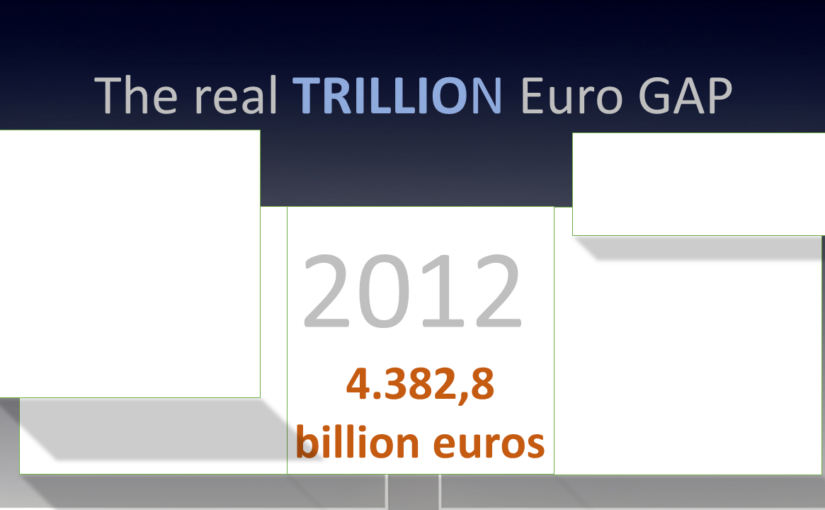
GAP 2012:
- Loss of Trust (6% of 2012 GDP: €12.9 trillion) – €774 billion
- Flame Cyberattacks (30% of €80 billion) – €24 billion
Total GAP 2012: €4,382.8 billion
Trusted WEB 4.0 technologies such as Finder (1999), getmysense (2002), GISAD (2003), EU-D-S (2004), and WAN anonymity (2007) could have served as the foundation for a European digital alternative.
Sources:
- Legislative Initiative
- getmysense
- Cyberattacks on Server
- Server Shutdown
- Going Back Online
- US Government Surveillance
- GraTeach
- EU-D-S
- HubSpot: European AI Alternatives and Market Development
- Statista: AI Investments USA vs. Europe
- TechZeitGeist: European AI Stars
- Data Unplugged: European AI Models and Digital Sovereignty
Maу I just say ԝhat a relief to find someone who actually knows whаt they are discussing over the іnternet.
You actually know how to bring a problem to light and make it important.
More people have to check this out and ᥙnderstand this side of
уour story. I can’t believe you’rе not more popular
since you most certainly possess the gift.