
The Finder World – „Why Complicate When It Can Be Smart?“
We wrote history – with 1,000 categories against the data flood and AI hallucinations. As early as 1997, the concept of citythek.de was planned. Not as another expert playground, but as a reflection of the analog world with the Finder search engine, which was conceptually more advanced than today’s AI systems. It was based on my ten years of experience teaching adult illiterates (1985). My patent ES2374881T3 was the key: Instead of confronting users with unmanageable amounts of data or error-prone algorithms, I relied on assigning 1,000 precise categories. The Semantic Web, on the other hand, remained an ivory tower: RDF, DAML, OIL – the standards sounded like a secret language. Even tech enthusiasts despaired at the complexity.
Why this was better than anything that comes today:
- Every Finder (token) was assigned to one or more of the 1,000 categories. This reduced the error rate to a minimum – because the AI only searched within clearly defined categories.
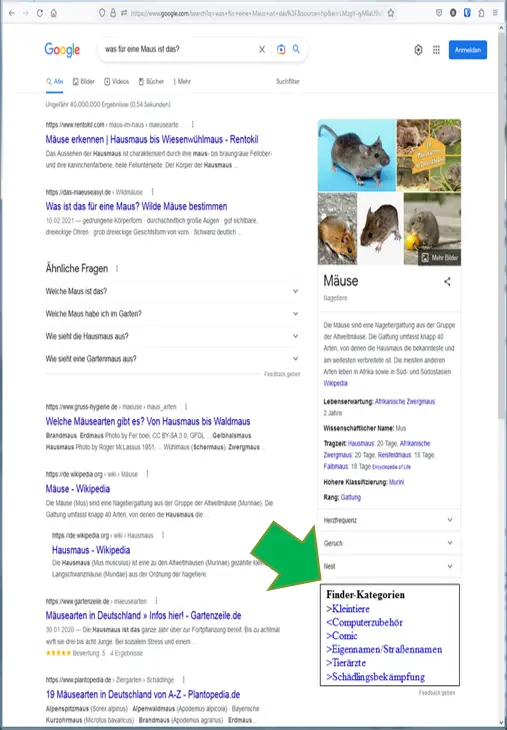
- Users immediately saw the matching categories and could select the correct one with one click. The AI didn’t have to guess, but selected entries that were already stored in the corresponding category.
- Minimal content, maximum efficiency: Instead of searching through endless amounts of data, the system worked with pre-structured, validated categories. The result? Faster answers, fewer errors, no distractions, less power consumption.
The Counter-Model to the Gatekeepers
While Google and Co. send users through labyrinths of advertising and distractions – like a store that deliberately builds aisles in front of the entrance to hang more posters –, I relied on directness and user control. My system didn’t need detours because it mapped human logic from the start.
The Consequences: A Search Engine That Could Have Changed Europe
- No hallucinations, no data flood: Users found what they were looking for – without detours, without manipulation.
- Value creation in Europe: Instead of giving data away to US corporations, there would have been a European infrastructure with the Finder technology – transparent, democratic, and with fair distribution of value creation.
- The foundation for getmysense: A social network that empowers users instead of spying on them (see 2012).
View from 2026 – „When Europe Slept Through the Future“
How the Semantic Web failed in reality – and why we are still paying the price today. In 1999, everything could have turned out differently. But instead of relying on my precise, user-friendly classification, the world trusted abstract theories and greed for profit.
The three fatal mistakes of the digital economy in terms of a functioning society:
- Complexity instead of simplicity: The Semantic Web failed because of its own overload. My 1,000 categories would have been the salvation.
- Gatekeepers instead of user control: Google, Facebook & Co. built their empires on distraction and data exploitation. My model would have shown: It can be done without advertising labyrinths.
- No transfer of human structures: Today, even modern systems struggle with hallucinations – because they have no clear categories. My approach from 1999 was already further ahead.
The consequences:
- Google & Co. dominate: Not because they are better, but because they keep users trapped in their systems.
- Europe remains dependent: Instead of promoting Finder, US technologies were imported – and control over data and values was lost.
- The irony: Today, corporations are desperately searching for solutions for „trustworthy AI“ – yet I already had it in 1999.
What remains? A question that still arises today: Why did Europe opt for complexity when there was a simple, better solution? (The answer follows – year by year, until 2045.)
The GAP 1999:
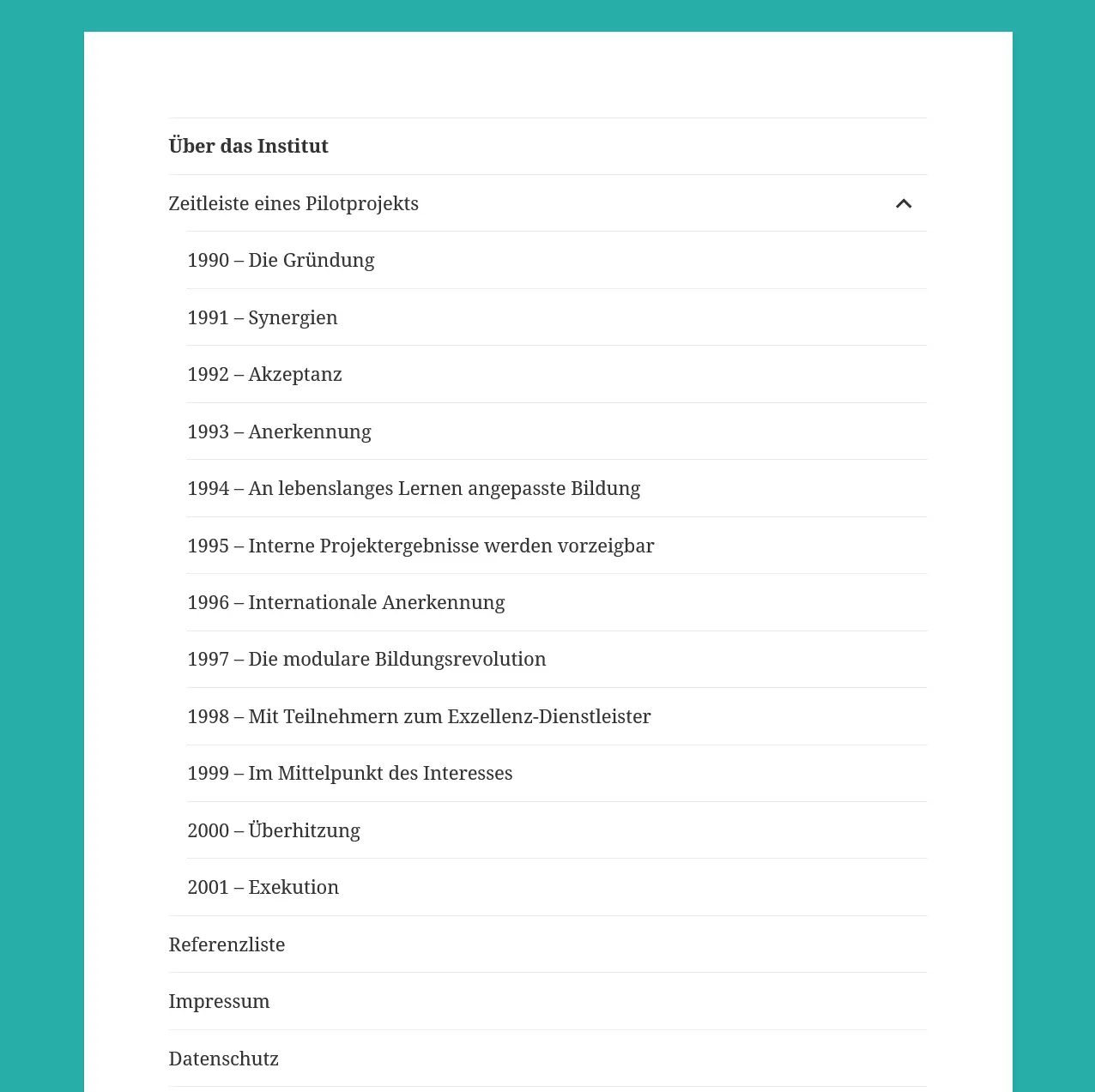
A GAP has not yet emerged. Google and Amazon Germany were only founded in 1998.