
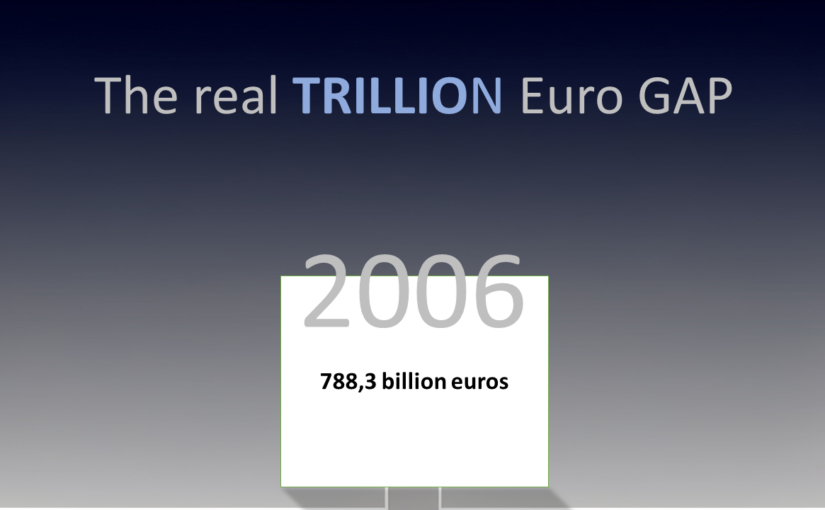
1. Real Situation in 2006: A System Blocking Innovators
2006: Europe slowly recognizes the importance of digitization—but instead of acting, it only reacts when it is already too late. Many election manifestos of European states call for „more education,“ while in Germany, innovations like GraTeach have been systematically obstructed for years. By now, I feel like someone is patting me on the shoulder with one hand and punching me in the stomach with the other.
Judges and lawyers who expose systemic errors risk not only their reputation but, in the worst case, their professional existence. Justice as a tool of power—those who resist pay the price. It is therefore existential for democracy that independent institutes like GISAD can criticize and improve the system from the outside.
After the administrative court ruling, the judiciary had to admit that the criminal proceedings in the GraTeach insolvency case lacked any basis. Once the state becomes the plaintiff, the monopoly on the use of force can be shamelessly exploited. Finally, five years after the insolvency, a judge was found who, as his last official act, wanted to discontinue the proceedings. We were sitting in the courtroom, and the presiding judge hoped that the chief lawyer would resolve a problem with his license at the last minute. Both he and the lawyer considered the justification for the revocation of the license by the Düsseldorf Bar Association, just four hours before the hearing, to be pretextual. The lawyer had apparently accepted a client he had met through voluntary work. In case of doubt, the revocation of the license should only have taken effect after the hearing. I should not have suffered any disadvantage from this. At the latest, it was clear that the judiciary was being remotely controlled against me. Otherwise, given the legal situation, the proceedings would have had to be discontinued if the judiciary itself was unable to conduct a trial in a timely manner!
2. Development Without Obstruction: A Europe Seizing Its Opportunities
If Europe had consistently promoted getmySense (since 2002) and the Finder technology (since 1999), the educational landscape would look different today:
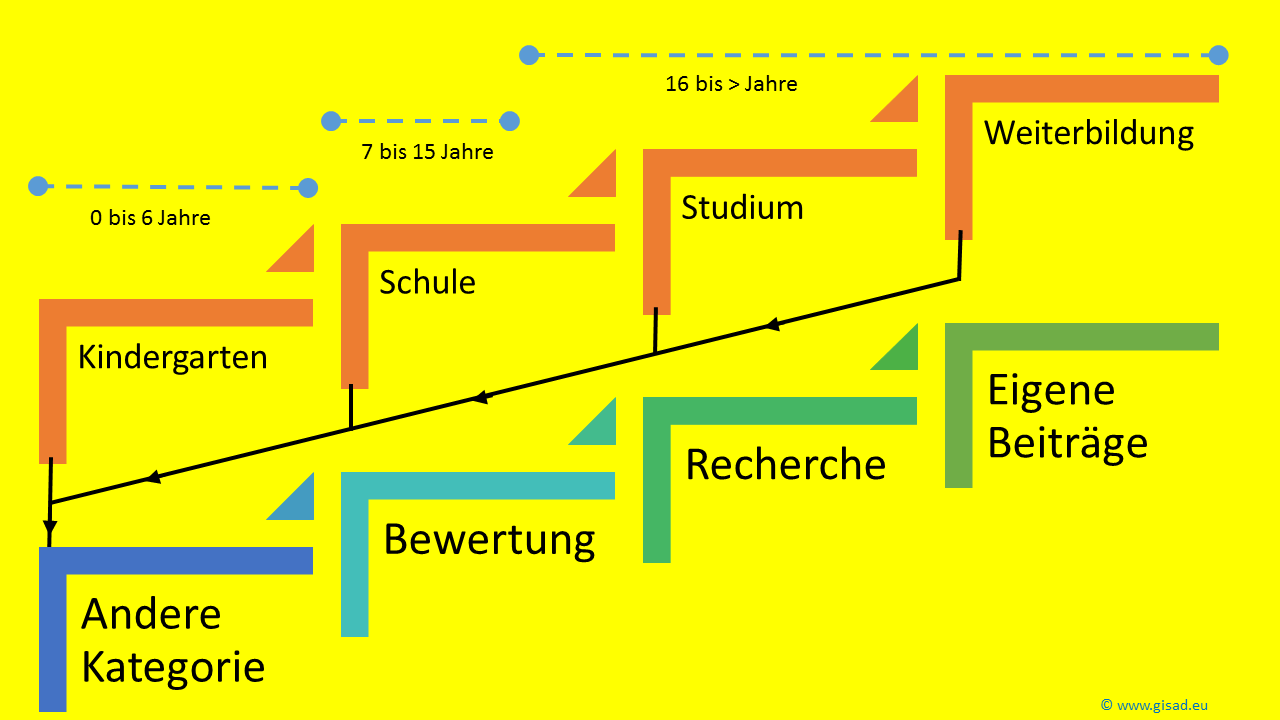
- 0 to 6 years (kindergarten): Children explore the digital world playfully—not as consumers, but as creators. They categorize knowledge, exchange ideas with peers across Europe, and learn foreign languages playfully. Trendsetters from the start.
- 7 to 15 years (school): Individualized learning becomes the standard. Students evaluate content, publish their own projects, and find like-minded people—even across language barriers. Language assistants and common foreign languages like English are trained in this way.
- 16 years and older (studies/continuing education): Students and professionals use the platform for research, evaluation, and their own contributions. No pressure to „participate because everyone else is,“ but real participation and recognition.
- Evaluation & Research: Users of all ages evaluate content, contribute to the knowledge database, and find targeted information—without algorithms pushing them into filter bubbles.
- Own Contributions & Continuing Education: Everyone can share knowledge, develop it further, and engage in lifelong learning. Real inclusion: Whether a beginner or a child with learning difficulties—everyone has the chance to become visible in their performance category. Everyone is good at something and can profile themselves in a category.
Startup Promotion: Projects with high societal structural relevance would have been accelerated in all areas (categories). Talents would have stayed in Europe instead of emigrating to the USA.
AI Standards from Europe: By 2019 (20-year patent duration), the high-quality training data from getmySense would have been the basis for AI systems—under European rules. Any AI working with automatic linguistic tokenization would have had to coordinate with getmySense to avoid infringing the patent.
3. A View from the Future (2026): A System That Includes Everyone Has Nothing to Fear from Its Citizens
It is a fallacy that the technical superiority of the USA keeps us dependent. The real challenge—and at the same time our greatest opportunity—does not lie in central control, but in the integration of each individual. Promoting diversity and including all people is far more complex than autocratic surveillance. But this is precisely where the key lies: If we succeed in strengthening this diversity through AI and digitization, a society emerges that is more resilient than any autocratic system. Integrated citizens are productive, not violent. They participate instead of withdrawing.
But for this, we need a democracy that resists—a democracy that stands up to those who want to expand power with autocratic means. Technology is not an elite project. My patents are timeless because they do not just reflect progress, but translate proven pre-digital principles into digital tools. What is missing is the political will to demand structurally relevant innovations. Instead, politics remains stuck in empty demands: „More education!“ „More digitization!“—as if digitization were just the automation of administrative processes.
However, a digital authority will only be accepted if citizens feel: This is about me. I have an advantage here. In times of fake news and manipulation, this is precisely what is missing. As long as digitization is not understood as a tool for participation, it remains an instrument of division. Europe could be a pioneer—if it finally understands that real innovation is not decreed from above, but lived from below. The question is not whether we can do it. But whether we dare.
Today, we would be an equal partner to the USA—not a supplicant.
4. GAP 2006 – The Price of Lacking Independence
Carryover from previous years:
• 2000: Mannesmann takeover – €133 billion (loss of European sovereignty)
• 2001–2005: Blockade of GraTeach – €12 billion (unemployment, lost innovation)
• 2004–2005: Revenue losses due to US platforms – €9.3 billion (30% of the European online market)
• 2003–2005: Loss of trust in the economy & digitization – €98 billion + €143 billion + €180 billion = €421 billion
GAP 2006:
• Unemployment costs due to lack of digital strategy: €3 billion
• Loss of trust in the economy & digitization (1.5% of 2005 GDP):
2006 GDP: €12,526.3 billion → €189 billion
• Revenue losses due to US platforms (30% of €70 billion): €21 billion
Total GAP 2006: €788.30 billion
Background
• AWS launches in 2006—Europe has no answer. The EU-D-S could have built its own cloud, but instead, dependence is cemented.
• Facebook opens to everyone—European alternatives are lacking. getmySense is actively obstructed while US platforms dominate the market.
• Google acquires YouTube for $1.65 billion. Further proof: Europe is losing control of its digital future.
• UMTS expansion stalls. While other countries are working on 4G, Europe is falling behind.
The consequence: MySpace and Facebook conquer Europe—with our data, our users, our future.
Conclusion
2006 was not a year of digitization, but of capitulation. The question is not whether it could have been different—but why we allowed it to happen.
Sources:
- GISAD – Art12b
- Learning Accounts (PDF)
- GISAD – Link List
- Child Abuse (PDF)
- getmySense – A Holistic Social Media Network
- Post-Democracy or Digital Democracy Upgrade (PDF)
- Education Strike: Everything New or Rather the „Master of Practice“?
- Why Europe Must Take a Different Path
- Freedom of Choice Between Search Algorithms
- YouTube – Documentation
- Documentation 7-12-2007 (PDF)