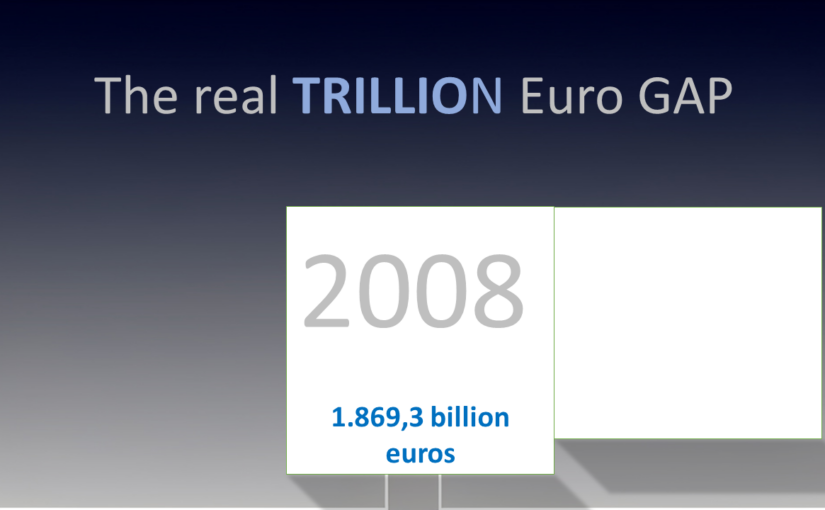
1. Real Situation in 2008
A conviction in the GraTeach case seemed unimaginable. Finally, I wanted to make a fresh start: The plattform www.citythek.de had been revised, the novel „The Trillion Dollar GAP“ was completed, and the concept of the Synergienetzwerk Mittelstand was awarded as Innovation Product 2008. I began searching for new partners with renewed hope. Those interested in learning more can find additional insights in the sidebar of finders.de under Blog Articles and Excerpts from the Books since 2007.
But the world around me plunged into the deepest crisis in decades. The global financial crisis, triggered by the US housing bubble and the collapse of Lehman Brothers in September 2008, dragged Europe down with it. The EU’s GDP plummeted by €420 billion in 2009, the Eurozone lost €410 billion, and Germany alone lost €120 billion. The automotive industry came to a standstill, banks faltered, and 185,000 companies went bankrupt. Bailouts for failing banks cost European taxpayers €5.1 trillion—a sum that still haunts us like a nightmare.
What went wrong:
The crisis was not a natural disaster but the result of systematic information failure. Opaque financial products, manipulated ratings, and a flood of advertising-driven „advice“ confused markets and regulators. While banks played with inscrutable subprime mortgages, gatekeepers like Google and Amazon profited not through solutions but through clicks, advertising, and data monopolies. Those searching for „safe investments“ found themselves in a jungle of paid rankings and opaque recommendations. Trust collapsed—and with it, the markets.
2. Unimpeded Development: Digital Sovereignty through Participant Protection
If Europe had already adopted Trusted WEB 4.0 in 2008, the crisis would have unfolded differently. Instead of navigating through advertising labyrinths, users would have obtained all relevant data with one click: genuine credit ratings, independent analyses, and clear warning signals. A categorized, decentralized web—as outlined in the Finder patents—would have made risks visible early on.
The financial crisis was not fate but a design flaw of the digital age. Trusted WEB 4.0 would have corrected this design: transparency instead of trickery, facts instead of fake rankings. Instead, the labyrinth only grew larger—and we are still paying the price today.
3. Perspective from 2026: Why Europe Missed the Opportunity
One would need a crystal ball to calculate how much damage the Trusted WEB concept (with Mannesmann as a partner) could have prevented. Conservatively estimated: 10% of the €5.1 trillion—i.e., €510 billion—could have been saved through early warning systems and WAN anonymity. After all, those operating in an anonymous but judicially verifiable network do not spread fake news.
What Trusted WEB 4.0 would have changed:
- No hidden fees, no manipulated search results.
- No dependence on gatekeepers who expanded their power with every crisis.
- Shattered information asymmetry—and perhaps saved the €5.1 trillion in bailout money.
But the gatekeepers blocked every alternative. Their platforms became profiteers of the crisis: the more panic, the more clicks. The more clicks, the higher the advertising revenue. The collapse of Lehman Brothers was not a warning signal for them but a business model.
4. GAP 2008
The estimate remains conservative, but one thing is clear: The issue is not the gatekeepers‘ revenue but their digital pollution. A drop of oil can contaminate 1,000 liters of water—similarly devastating is the effect of fake news on the economy.
Carryover from previous years:
- 2000: Mannesmann takeover – €133 billion (loss of European sovereignty)
- 2001–2007: Unemployment – €18 billion (blockade of GraTeach)
- 2004–2007: Revenue losses due to US platforms – €54.3 billion
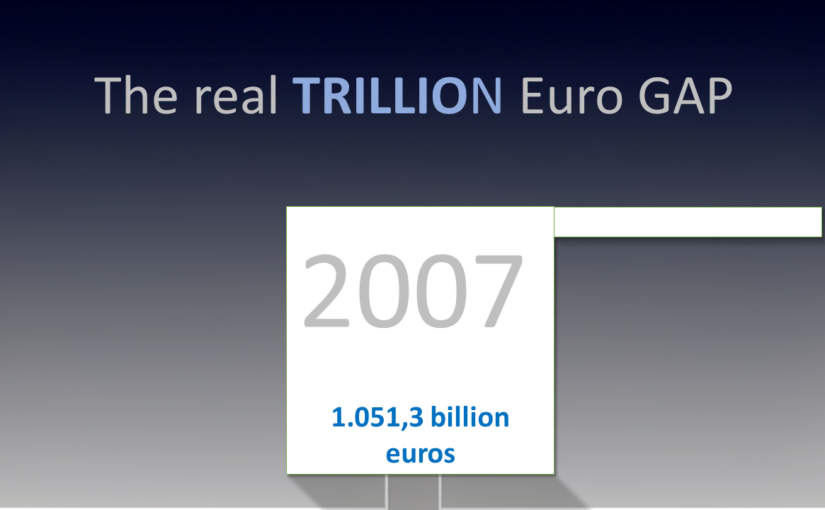
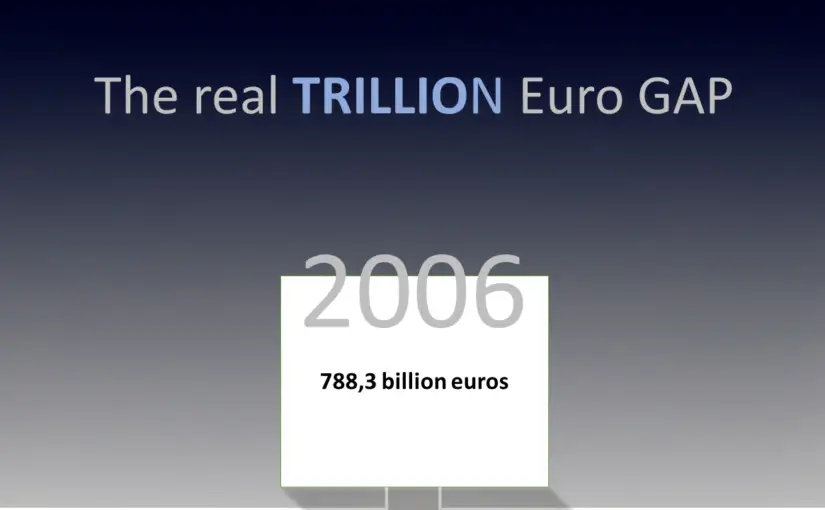
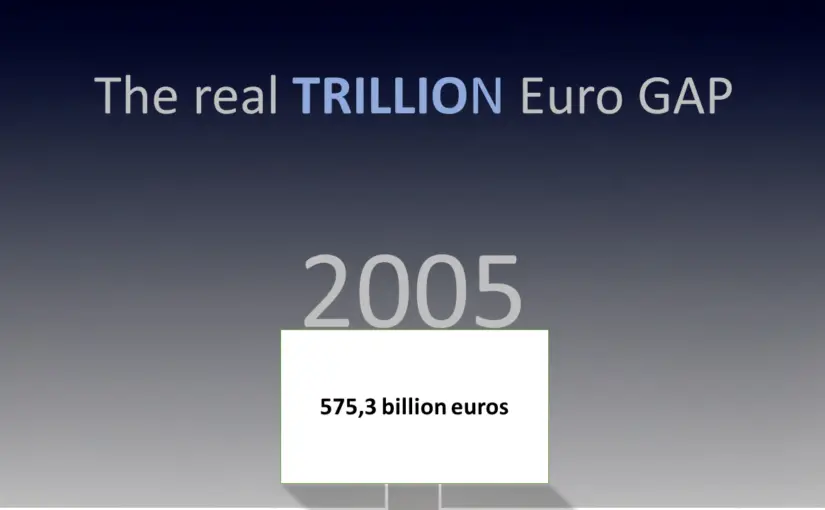
- 2003–2007: Loss of trust in the economy & digitization – €846 billion
GAP 2008:
- Loss of trust (2.5% of 2008 GDP: €12.3 trillion) → €308 billion
- Damage from the financial crisis (10% of €5.1 trillion) → €510 billion
Total GAP 2008: €1,869.3 billion
Source:
Federal Agency for Civic Education – Financial Crisis 2007/2008