2003 – Preparation of a kill switch by some players!

1. The Real Situation

From 2003 onward, I experienced treatment that profoundly shook my trust in public authorities. The NRW judiciary acted like a tool of external interests—without legal basis, but systematically.

This loss of trust due to digitization has since spread to broad sections of the population. Even if most cannot explain it, the feeling that politics no longer shapes but often reacts unreflectively is growing stronger.

The Mannesmann trial (starting February 17, 2003) could be key here: The digital scalers apparently saw me as a threat to their plans. My criminal trial began on April 16, 2003, based on the unfounded accusation by Ms. Wolff (see 2001). The allegations were fabricated: I had not been authorized to act for GraTeach since 2000, yet the prosecutor claimed I should have held maintenance payments in trust—a legal phantom. Since maintenance payments were disbursed multiple times a year together with program costs and no longer accessed by me, trust-based separation (by me) was impossible. The conviction was handed down without a hearing. My first defense attorney was sidelined. After the trial, a lay judge came up to me: „Next time, let’s have a beer, okay?“ He understood as little as I did what it was all about.

In 2005, the administrative court ruled that the revocation notices from the state were unlawful, meaning maintenance payments were not held in trust. In 2006, an appeal failed because an attorney’s license was revoked four hours before the hearing. Until 2009, the system blocked any clarification. They waited to see if I would continue to advocate for democracy. In 2009, I was coerced into a „discussion meeting“ under false pretenses, which ended in a staged trial against me, pre-arranged between the defense and judges.


In total, I was persecuted by the judiciary for 11 years because I stood up for democracy. What does this say about NRW’s external control?

2. Development Without Obstruction

Had these attacks not occurred, GISAD would have been founded in 2003. The institution would have created independent expert reports on societal structural relevance—a counter-design to digital autocracy. Instead, I was isolated, my work sabotaged. The goal: to prevent Europe from developing its own digital agenda.

GraTeach would still exist and would have spread either directly or as a mirrored concept across Europe. This would have given GISAD the backing to develop new metrics for societal structural relevance, evaluate them, and identify new projects. This is not about creating another bureaucratic tool, but simply about an easy way to reflect the alignment—and thus the sustainable acceptance—of one’s own products with societal development.

The metrics reflect the EU’s goals.

3. A Look from the Future (2026): The Kill-Switch and Its Consequences

In recent years, I have received many funding offers from the EU and NRW. But NRW can switch me off at any time in what is, unfortunately for digital freedom fighters, a fictional constitutional state, without any chance for me to defend myself. Both the lack of incentive and the incalculable entrepreneurial risk prevent me from working with external funds again. This wouldn’t even be necessary for founding GISAD. It would be enough if the RVR paid its outstanding bill.

Article 20 of the German Basic Law (GG) is clear: „All state authority emanates from the people.“ But reality looks different. In 2023, no politician from the traffic light coalition contradicted me when I said that the right to resist under Article 20(4) applies to me. The Federal Constitutional Court ignores my complaints. The Federal Bar Association remains silent. The judiciary is no longer a place of protection but part of the problem. The RVR owes GraTeach millions—money that could fund GISAD. I am offering 30% of the claim as a premium for legal support. A litigation funder has expressed interest. A complaint is ready. Yet not even in the Netherlands can a law firm be found to take the case.

The question is: Is GISAD even wanted? Or is there fear of a metric that measures the loss of pre-digital achievements, because all democracy-preserving projects are boycotted—and a metric would prove that the constitutional order has already been undermined? Relying solely on laws that always lag behind reality and are not proactively shaped is grossly negligent, because laws are meant to regulate a designed reality.

The services that were supposed to protect me are themselves trapped in a data arms race. They can only keep up if they align with the gatekeepers.

My new getmysense patent from 2026 shows another way: AI that integrates human action. But as long as founders only focus on US exits, Europe remains dependent. But who can implement it? Only a large group of founders strong enough that they cannot be switched off.

Conclusion: Without addressing the past, there is no democratic future. The legal path is blocked. If NRW refuses to acknowledge the damages claim against the RVR, only resistance remains—or proof that the constitution has already been suspended. Anyone who disputes the application of Article 20(4) GG should provide GraTeach with a lawyer for its claims that have not expired!

Some believe that the increasingly dangerous global situation, with armament and wars, can be resolved. But if society is already digitally enslaved, this will no longer help preserve democracy.

New Opportunity to Preserve Digital Sovereignty

If Germany no longer has the will to preserve digital democracy, the other EU states remain to ensure the preservation of the EU Charter within the EU-D-S.

Under the priority of February 12, 2026, I filed a patent adapted to today’s situation for Finder technology, with the registration number 10 2026 000 788.7. Based on the assumption of integrating human actions into as many AI steps as possible, we can position ourselves at the forefront of democratic, AI-generated value creation. AI developers are invited to contribute to this concept within the EU-D-S. A youth ban on the social media concept GetMySense, built on this, would be nonsensical. Young people consistently build their own knowledge and know-how here without fakes and gain recognition worldwide among like-minded individuals. They are integrated into societal control at an early stage through this concept. State action can be kept to a minimum.

4. GAP: Kill-Switch Disables European Competitors

2003 was the year Europe lost control. The takeover of Mannesmann (2000: 133 billion euros) marked the beginning of digital colonization. From 2003 onward, US corporations systematically underreported their revenues in Europe. Google and Amazon booked profits through tax havens—an estimated 5–10 billion euros were missing from the statistics. The GAP 2004 (lack of European alternatives) was conservatively estimated at 10–15 billion euros. Had EU-D-S existed, these funds would have flowed into European infrastructure. Instead, they financed the expansion of the gatekeepers.

Carryover of the GAP from Previous Years:

  • Mannesmann Takeover (2000): 133 billion euros
  • Costs due to blocked GraTeach participation concept:
    • Unemployment costs (2001): 2 billion euros
    • Unemployment costs (2002): 2 billion euros
    • Unemployment costs (2003): 2 billion euros
  • Loss of trust in the economy and digitization (1% of 2003 GDP): 98 billion euros

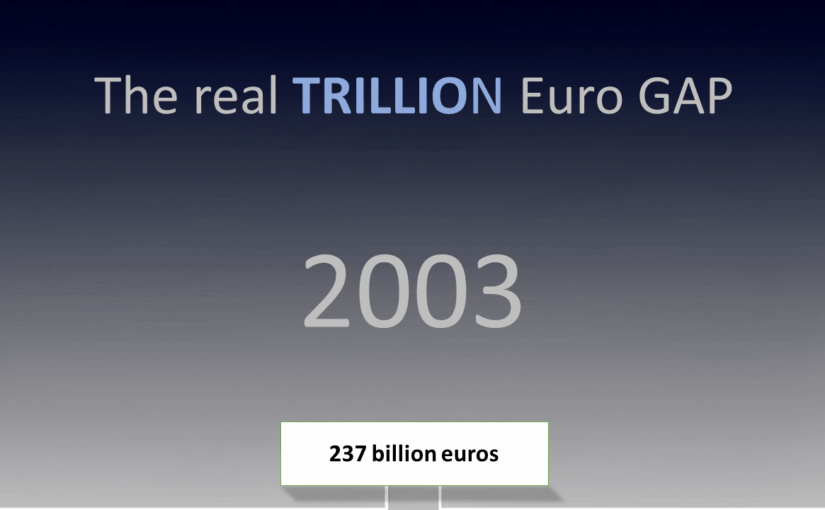
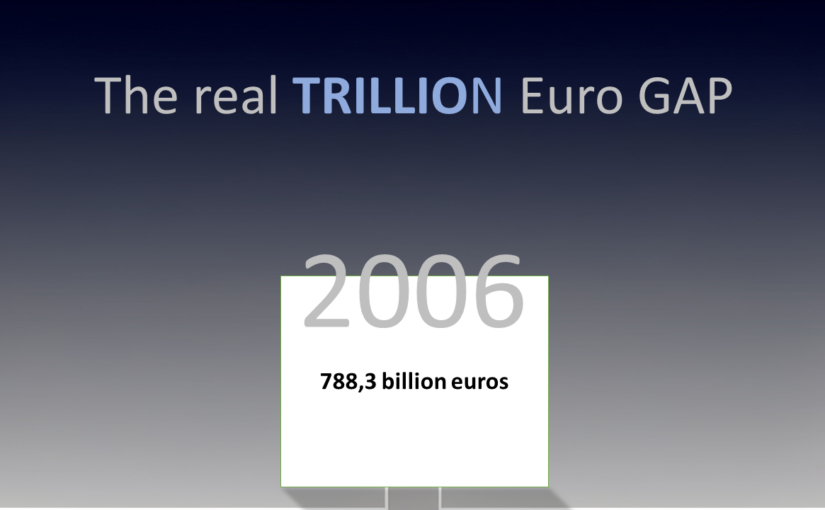
Total 2003 = 237 billion euros

Outlook for 2004

From 2004 onward, 30% of the revenue of online platforms—5 billion euros in 2003—is attributed to the kill-switch against European digital players.

Background: How Dependency Suffocates Digital Sovereignty

Every day, I experience how lock-in effects work—not as a technical phenomenon, but as a political instrument. Here’s the mechanism:

  • The Psychology of Habit: People and organizations adapt to software like a second skin. The longer the usage, the deeper the dependency. This is no accident, but design: Platforms like Google or Microsoft create ecosystems where exiting becomes painful. Data, workflows, even social networks are designed to bind users. Switching is not just technically complex but psychologically burdensome—like moving to a foreign country without the freedom to choose the language.
  • The Illusion of No Alternatives: The more dominant a platform becomes, the more it evolves for its users—but not with them. The apparent sophistication is a vicious cycle: Because everyone uses it, it gets better; because it’s better, everyone uses it. Those who switch pay a price: higher costs, lost data, lost time. This is not fair competition—it’s a trap.
  • The Political Dimension: Lock-in is not market failure but an exercise of power. Whoever controls the infrastructure controls the rules. For decades, Europe has watched as US corporations built this infrastructure—and with it, dependency. GISAD could have countered this: as an institution measuring how much sovereignty we lose, and as a catalyst for real alternatives.
  • The Kill-Switch as a System: My case shows how innovations that could break this lock-in are deliberately obstructed. Getmysense or EU-D-S are not just technical projects but political acts: They challenge the power of the gatekeepers. Their obstruction is no coincidence—it’s part of the system.

© Olaf Berberich, 2026. All rights reserved.

2002 – Loss of confidence to the detriment of the economy

1. The Real Situation

In 2000, I took over the management of getTIME.net GmbH as the majority shareholder. While GraTeach was responsible for conception and web design, getTIME.net, with two programmers, focused on technical implementation. After GraTeach’s insolvency, I had to lay off both employees. The insolvency administrator, Stock, did not use the funds remaining in the GraTeach account for outstanding maintenance payments, nor did he liquidate existing assets such as the structured cabling or open claims (e.g., 43,935 DM against the Deutsche Gesellschaft für Industriekultur). Instead, months later, he offered me a settlement: I was to purchase the domain citythek.de while waiving getTIME.net’s claims against GraTeach. The documents related to the multi-million claims against Route Industriekultur were only released in 2009—too late to immediately prove copyright infringements and fraud. A lawyer who wanted to assert these claims in 2015 was stopped by professional regulations. To this day, the claims have not expired. In a constitutional state, there would have been an agreement with the public sector.

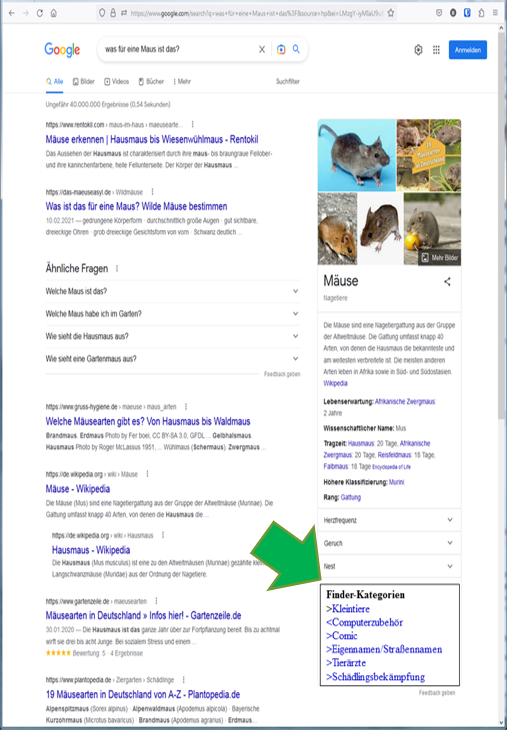
To avert the insolvency of getTIME.net, I dissolved my private pension insurance and sold my apartment. Maintaining the citythek concept alone, without staff, was impossible. However, with the Finder technology—similar to the later EU-D-S—I could refer to specialized portals behind each category. By 2003, I wanted to make a fresh start.

2. Development Without Obstruction

Since 1999, we had digitally mapped analog life: City-Gewebbed enabled citizens to network with leisure and consumption profiles as both real and dream personas. Cityplay already existed as a brand game. Without the insolvency, getmysense would have launched in 2002—a decentralized model ensuring diversity and fair value creation for the middle class. The core was the manual creation of Finders (patent ES2374881T3), which identify meaningful units. These were ready for German and partially for English, aiming to connect like-minded people worldwide. Users would have playfully created Finders; the first became a trendsetter until someone better came along.

3. View from the Future (2026): Democracy or Remote Control?

The enforcement of my patent claims (ES2374881T3) could have steered AI development by 2019: The manually created Finders in getmysense offer a precision that algorithmic tokenization (e.g., Byte-Pair-Encoding) cannot achieve. However, gatekeepers use hallucinations and anonymity to cover up manipulations—such as threats or targeted disinformation.

My prognosis: The question arises whether gatekeepers profit from hallucinations (Was it a hallucination, or was I threatened with death?). Both help to increasingly remote-control everything and everyone in the context of an organized criminal phenomenon. Currently, society appears to be experiencing a growing gap between rich and poor. Before the expected comprehensive remote control of society through manipulative AI systems, those most affected will be individuals from whom wealth transfers through manipulation are profitable.

Two digital societal models stand opposed:

  • Surveillance and Manipulation (Gatekeeper Strategy)
  • Structured Social Control (My Democratic Concept)

The latter is still missing today. Individual democratic initiatives serve merely as an alibi for a decades-long master plan. My counter-proposal, developed since the 1990s, aims for inclusion, but digital expansion relies on destroying trust, artificial excitement, and outsourcing value creation. The result is that citizens distrust digitization, authorities remain analog, and young people are excluded from social media.

4. GAP: Loss of Trust as a Growth Brake

Carryover from Previous Years:

  • Mannesmann takeover (2000): 133 billion euros
  • Due to the blocked GraTeach participation concept, costs arise:
    Unemployment costs (2001): 2 billion euros
  • Unemployment costs (2002): 2 billion euros

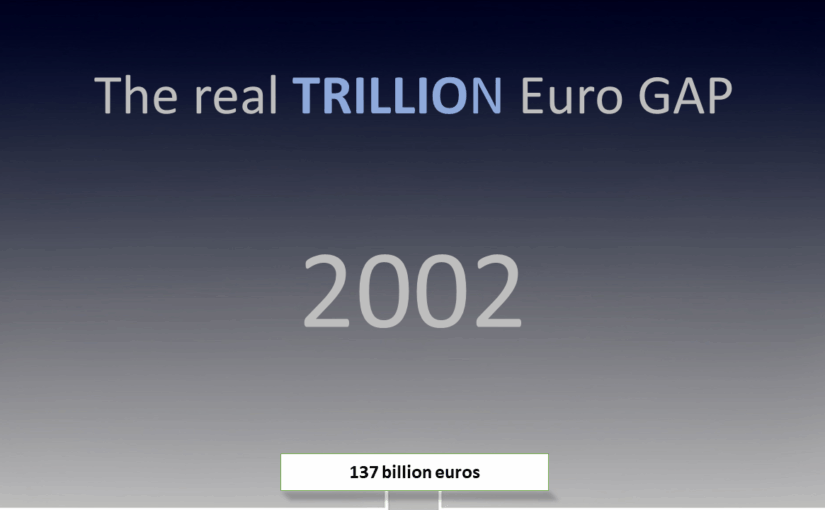
Total 2002 = 137 billion euros

Forecast of the Calculation Due to Loss of Trust:
For the 15 EU states (with strongly varying data), a GDP of 8,000 billion euros is assumed for 2003. One percent of this is set as the GAP, i.e., 80 billion euros.

Background:
In the social media/AI sector, there were no significant competitors to getmysense yet. Facebook was only founded in 2004. Later, no democracy-preserving competitors were allowed.

The Real Situation (2001/2002): USA as Pioneer of Digital Surveillance

After the attacks of September 11, 2001, the US government under President George W. Bush used the fear of terrorism to push through extensive surveillance laws and programs. These measures laid the foundation for a global digital autocracy—precisely the scenario I have been countering for 30 years with projects like EU-D-S and getmysense!

  • Patriot Act (October 2001): The law allowed authorities to access communication data without judicial approval—a clear breach of democratic principles. The USA used the crisis to build an infrastructure later exploited by tech giants like Google and Amazon for their global expansion.
  • NSA Programs (from 2001): Programs like Stellar Wind showed how the state systematically intercepted digital communication. This was a direct attack on the idea of a Trusted Web, where users control their own data.
  • Collaboration with Tech Giants: Companies like Google and Amazon indirectly benefited from this development. My approach to keeping value creation in Europe was in stark contrast to this model.
  • Export of Surveillance Technology: The USA pressured allies to adopt similar laws. Instead of inclusion and social control by users, surveillance became the global standard.

2001 – Democracy from the citizen’s perspective

1. Reality

I want to describe phenomenologically how Germany has moved away from its Basic Law. An evaluation of this behavior should be left to committed jurists.

I have already described my experiences in 1985, where adults who had struggled all their lives suddenly learned to read because I offered them an individual approach. GraTeach was a ten-year struggle—here, analogous to my experience, it was about creating an atmosphere for academics in which everyone was motivated to contribute optimally with their individual skills. First, I had to convince the participants that it was not about frontal teaching where they sought recognition through grades. But who should moderate such „instruction“? Ultimately, former participants whom I had trained as instructors did this best. Then it was the good reputation of GraTeach among employers that led them to hire participants, so that in increasingly shorter cycles, participants could be placed in well-paid jobs.

I cannot blame the emerging digital autocracy solely on the gatekeepers. They have exploited freedoms offered by a public sector that increasingly fails to fulfill its control mandate in the interest of the people. The structures created over the past decades put every public servant under pressure to constantly justify and cover themselves. The result is a set of rules that could not be further removed from individual needs. Schools reflect government action. So it does not surprise me that, more than 40 years after our pedagogical insights, the same demands, such as „thinking from the learner’s perspective,“ are still being sold as new. As long as teachers are part of a control chain, nothing will change.

Accordingly, GraTeach was systemically relevant. Without attacking the school system up to the university level, I created spaces for individual development for participants before they entered the workforce. Academics from all fields came together to contribute their knowledge individually to digital projects. Everyone was important and could contribute something to the projects from day one. In 2000, there were efforts to turn GraTeach into a university. It would have been better, however, if there had been the possibility to this day to receive maintenance payments after completing a degree or master craftsman’s diploma, in order to work on systemically relevant projects for between two and 24 months, as with GraTeach. Currently, students must decide on a course of study about which they know little and can only guess whether it suits them. This often leads to career breaks that cost taxpayers dearly in the form of unemployment benefits. The maintenance payments could be repaid on the condition that the recipients reach a certain career/salary level, making the measures largely cost-neutral if optimally implemented.

In a constitutional environment, GraTeach would have been an economically healthy company. In this context, the statement by the State Chancellery in 2000 that the „economic situation of GraTeach GmbH is not stable in the long term“ must be evaluated. It should be investigated to what extent the state of North Rhine-Westphalia had already created an environment at that time in which the generally recognized project was doomed to fail.

Looking at the many individual measures taken against GraTeach, a pattern of organized action emerges. This term does not judge whether the individual cases involved incompetence, political pressure, or intent. Such an evaluation would have to be made by an initiative aimed at preserving the constitution or European sovereignty.

If even one of the following ultimately anti-social measures had not been taken, GraTeach would not have gone bankrupt:

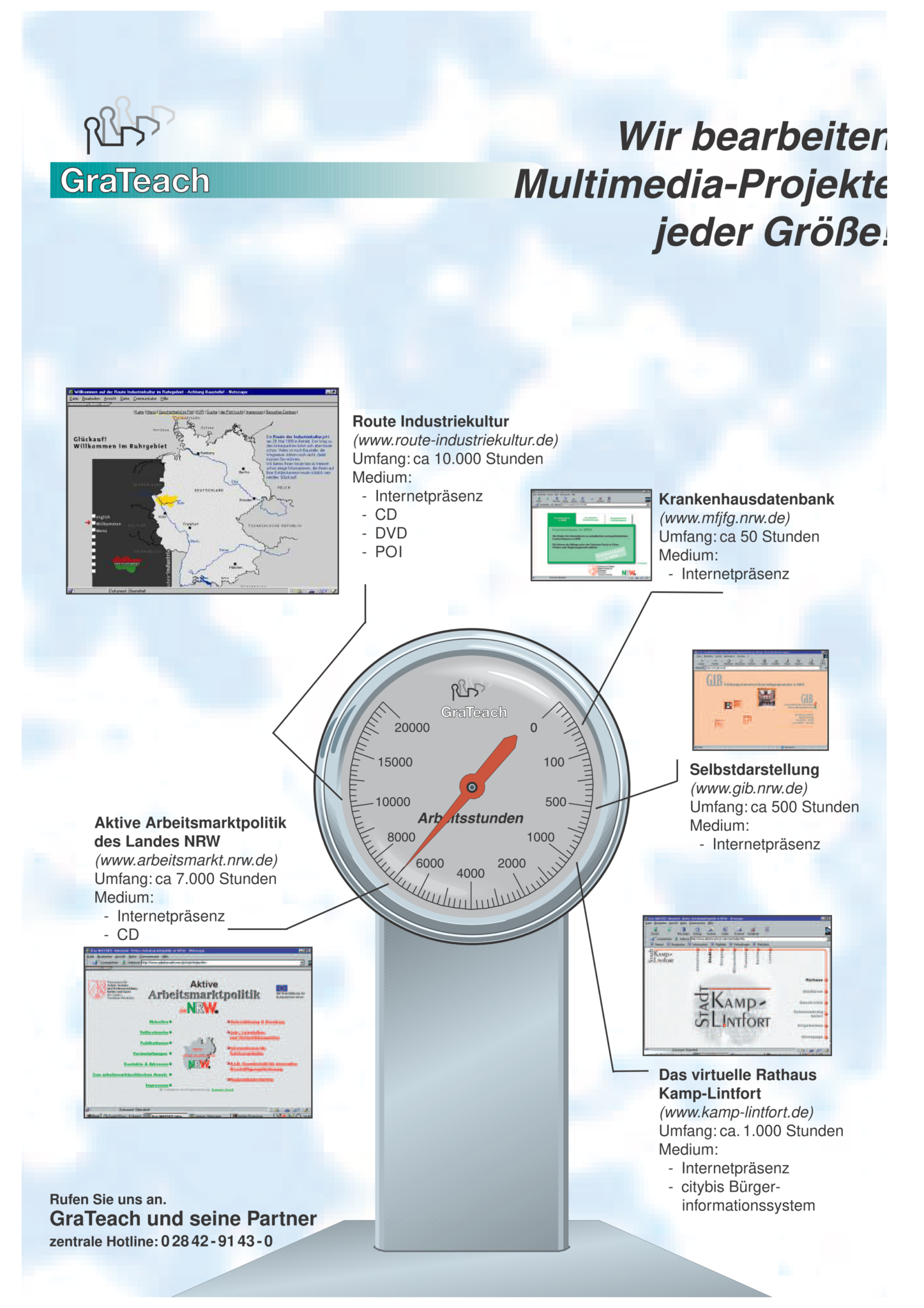
  • The state should have paid for the work carried out by GraTeach, such as the „Active Labor Market Policy of the State of NRW.“ We were rightly reprimanded by the BBDO advertising agency for distorting competition.
  • For arbitrary new qualification measures in the multimedia sector, an hourly rate of 13.30 DM was granted, even though these measures did not have GraTeach’s sophisticated core technology.
  • GraTeach was penalized for its high job placement rate. Only the hours attended by participants were paid at an hourly rate of 9.90 DM. The effort to find new suitable participants to fill these gaps was not remunerated.
  • Contrary to the public statement at the regional conference on February 20, 2001, GraTeach was not released from a rental contract earmarked for vocational training. The infrastructure cabling worth 100,000 euros, contributed by GraTeach, was not compensated.
  • Ms. Kristina Wolff, along with other participants, filed a criminal complaint with the Duisburg police (she lost a damages dispute in this matter, case no. 70 C 483/04). In this context, the reputation of GraTeach GmbH was significantly damaged by an article. Only IBusiness reported on it and was displayed at the top of search engines for many years when searching for my name or that of the management.
  • The insolvency administrator should have, as recommended by the NRW Economic Development Agency, Office for Endangered Companies NRW, paid out the maintenance allowances on the account and returned the GmbH after a „one-day insolvency.“

The state of NRW had at least the opportunity to influence five of the six points.

2. Development Without Obstruction

If GraTeach had received the necessary support, it would be a European lighthouse project for digital education and participatory leadership today. The idea of attracting graduates after their studies or master craftsman’s diploma with maintenance payments for systemically relevant projects would be standard. Unemployment would have decreased, career breaks would have been avoided, and the digital transformation would have gained momentum through holistically thinking managers. The repayment of maintenance payments upon reaching certain salary levels would have made the model even cost-neutral.

GraTeach would have served as a model for a „democracy from the citizen up“ and would have helped shape the European Digital Union (EU-D-S). GISAD would have been planned as early as 2003 and would today be a central authority for independent expert opinions on societal structural relevance. Instead of today’s dependence on gatekeepers, there would be a European data infrastructure that combines citizens‘ rights and innovation.

3. View from the Future (2026)

If the EU-D-S had been realized as early as 2004, the world would look different today:

  • GraTeach as a European lighthouse project: With EU-D-S, GraTeach could have been scaled as part of a European Digital Union. GISAD would today be a central authority for independent expert opinions on societal structural relevance.
  • Legal Sovereignty: Instead of today’s dependence on gatekeepers, there would be a European data infrastructure that combines citizens‘ rights and innovation.
  • WAN Anonymity (from 2015): Data protection and digital self-determination would have been integrated into European platforms from the start—rather than as subsequent regulation.
  • getmysense (2002): Instead of centralized social media, there would be decentralized European platforms.
  • GISAD: I would have founded GISAD long ago to create expert opinions on societal structural relevance—if the RVR had paid its license bill—without losing my independence through third-party funds!

4. The GAP (2001)

Scaling in itself is not a bad thing, as long as it does not only strengthen the power of a few. I assess the GAP from today’s perspective. Ideally, in a slightly adapted concept, most graduates would have gone to other qualifiers in Europe to accompany the transfer of pre-digital achievements into the digital society with comparable concepts. It can be assumed that these exploratory phases at the start of a career—or even without age limits for career changes—would have become standard. Unemployment would have been significantly reduced, and those involved in digitization would have been much more satisfied and thus more productive.

In the coming years, I will use 2 percent more of Germany’s unemployment costs as a basis for the GAP. The assumed damage already includes the expansion of the entire concept to all EU countries. It is not about scientific proof but about developing a sense of the costs incurred because we did not proactively shape our digital future.

Politics reacts when it is put under pressure and usually acts correctly at the last moment. The problem with this concept is that it takes years to be recognized by all sides and must be introduced at exactly the right time. For the digital breakthrough, that year was 2001.

Even if a lot of money were invested today in such integration measures in the labor market, the same efficiency would not be achieved. Failure is not even ruled out if one tries to enforce changed learning/teaching behavior in a short time and under pressure.

Every company justifies itself through its key figures. Accordingly, one can also expect the EU and Germany to disclose their annual unemployment costs. Without easily accessible statistics, I rely on AI. I assume the following values:

  • Direct expenditures for unemployment benefits and labor market policy: 45.3 billion euros (Source: Federal Employment Agency, 2001).
  • Total economic costs (including lost tax revenues): 80–100 billion euros (Source: IAB, 2001).
  • Average annual costs of unemployment in the EU: 200 billion euros (including direct expenditures for unemployment benefits, administration, and lost tax revenues). Source: European Commission, IAB, OECD.

Assuming that the costs of unemployment in the EU increase rather than decrease each year, the GAP grows in a simplified calculation in the area of unemployment costs from 2002 by 1 percent of the EU estimate, i.e., 2 billion euros.

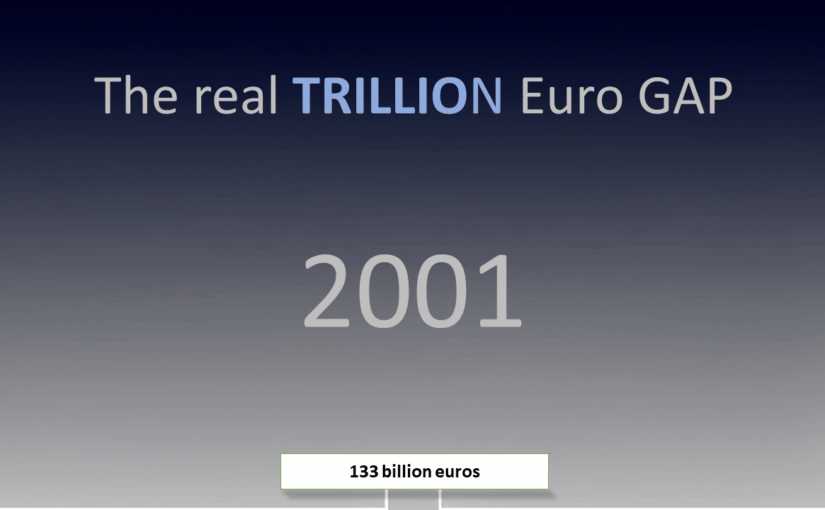
For 2001, the GAP from 2000 in the amount of 133 billion euros is adopted.

2000 – How Europe gave away its digital future

1. Real Situation (2000)

Duisburg, February 2000: The Plan That Could Have Changed Everything

In an unassuming office in ElekTronikPark Duisburg lay a document that was supposed to change Europe forever: the business plan of Shopping City AG, written by Mike Meyer for Mannesmann Pilotentwicklung. Over 27 pages, it outlined nothing less than the blueprint for a sovereign, democratic internet made in Europe. The core elements were the Citythek—a semantic search engine that would have made Google look old—and the Shopping-Card, a PKI-based payment system that would have made PayPal obsolete. But the truly revolutionary part was in the fine print: The technology for it came from my company, getTIME.net GmbH. My Finder technology (Patent ES2374881T3) would have given Citythek what Google still cannot achieve today: precise, hallucination-free search, based on 1,000 clearly defined categories—a system controlled by users, not manipulated by algorithms.

Partly due to synergies, 100,000 hours of work had already been invested in development, without external capital, driven by a vision: A Europe that controls its own data. GraTeach was not just a training academy but the technological lever to turn Mannesmann’s e-commerce dreams into reality. The synergies were perfect:

  • getTIME.net provided the search engine logic, GraTeach the executives and the web interface with social media architecture,
  • Mannesmann brought the infrastructure (partnerships with Deutsche Bank, Hermes, Astra-Net),
  • Shopping City AG was to be the commercial arm—a European Amazon, but fair, transparent, and user-controlled.

Then came Prof. Landscheid.

The Blockade: „Not Economically Viable“

Dr. Landscheid, then as now influential in the Regional Conference Kamp-Lintfort, knew about my Mannesmann rescue plan. On January 9, 2000, I had a conversation with Mayor Landscheidt about whether he would be willing to push an idea up to Chancellor Gerhard Schröder. This went far beyond Shopping City AG: It included a complete ecosystem of social media, secure payment solutions, and a digital trading platform that could stand up to US corporations. Instead of support, however, I encountered silence—or worse: targeted sabotage.

When GraTeach slipped into insolvency in 2001, the official reason was a lease agreement from which they could not be released, even though this had been promised in the Regional Conference. But the real reason ran deeper: Political and economic blockades orchestrated by actors who had an interest in keeping Europe dependent. The NRW State Chancellery did not hesitate to describe GraTeach as „not economically viable.“ A farce. While other startups were funded with millions—often without comparable substance—this project was deliberately bled dry.

„How can a concept that was supposed to save Mannesmann, create thousands of jobs, and make Europe digitally sovereign be ’not viable‘?“

The answer lies in the systematic nature of the decisions at the time:

  • Banks feared competition from the Shopping-Card (which would have made their own payment solutions obsolete).
  • US tech giants like Amazon and Google had no interest in a European counter-model.
  • Political decision-makers—perhaps even in collusion with the NRW judiciary (which later pursued me criminally for eleven years without cause)—ensured that GraTeach had no room to breathe.

„Stones were placed in my path where others rolled out red carpets.“
„This was not coincidence. This was system.“

The Sale to Vodafone: Could It Have Been Avoided If GISAD Had Existed?

This is where it gets explosive. A democracy-preserving metric for societal structural relevance in digital projects is not desired. But what if?

  1. GISAD as a Democratic Clearinghouse
    If GISAD had existed in 2000, it would have been the natural partner for Mannesmann—not just technologically, but also strategically. GISAD would have:

    • Developed evaluation models showing that Mannesmann’s rescue plan was sustainably more profitable than Vodafone’s takeover offer.
    • Built public pressure to stop the Vodafone takeover—with the argument: „Why give away a European tech giant to a British corporation when we have a better solution ourselves?“
    • Positioned the Finder technology as a USP: „Mannesmann with the GraTeach overall concept = a European Google + Amazon + PayPal in one.“
  2. The Metrics Lie
    Vodafone’s takeover of Mannesmann (for 190 billion euros) was presented as „unbeatable“ in 2000. But what if GISAD had proven that the rescue plan created more long-term value for Europe?

    • Shopping City AG would have generated billions in revenue—in Europe, not in the USA.
    • Citythek would have become the standard for e-commerce search, with data sovereignty in Germany.
    • The Shopping-Card would have made PayPal obsolete—and secured Europe’s control over payment data.

„With a comprehensive concept behind us, Mannesmann wouldn’t have needed to be sold at all.“
„We could have outbid Vodafone—not with empty promises, but with hard facts: sustainably more jobs, more tax revenue, more sovereignty.“

Instead, Mannesmann was dismantled. The pilot development (and thus Shopping City AG) was discontinued. I was financially and mentally weakened to the point that I could no longer maintain the patent. And Europe lost its last chance to play a leading role in the digital age.

2. Development Without Obstruction (2000)

If the Finder technology had prevailed, Europe would be digitally sovereign today. The 1,000 categories would not only have revolutionized search engines but also laid the foundation for a European Digital Union (EU-D-S). Instead of data colonialism, there would be an infrastructure that empowers users and distributes value creation fairly. getmysense would long have been a global model for inclusive, privacy-friendly networks.

With GISAD as a democratic clearinghouse, Europe would have built a real alternative to US corporations. The 190 billion euros from the Mannesmann takeover would have flowed into European infrastructure, research, and jobs—instead of being drained abroad.

3. View from the Future (2026)

Even today, only 3 billion euros would be needed to give 100 million EU citizens access to the EU-D-S!

2026 shows: The Finder logic would have been unbeatable. With the EU-D-S initiative, Europe would finally have become a digital power—not through complexity, but through clear structures. The 1,000 categories would now be standard in public search systems. Google and Amazon? They would be struggling with regulation, while Europe retains value creation.

The three fatal mistakes of the digital economy for a functioning society:

  1. Complexity Instead of Simplicity:
    The Semantic Web failed due to its own overload. My 1,000 categories would have been the solution.
  2. Gatekeepers Instead of User Control:
    Google, Facebook & Co. built their empires on distraction and data exploitation. My model would have shown: It can be done without advertising labyrinths.
  3. No Transfer of Human Structures:
    Today, even modern systems struggle with hallucinations—because there is no systematic integration of human evaluation. My 1999 approach was already ahead.

The Consequences:

  • Google & Co. dominate: Not because they are better, but because they trap users in their systems.
  • Europe remains dependent: Instead of promoting Finder, it imported US technologies—and citizens lost control over data and values.
  • The irony: Today, corporations seem desperately searching for solutions for „trustworthy AI“—yet I already had them in 1999.

What remains? A question that still stands today: Why did Europe bet on complexity when there was a simple, better solution?

4. The GAP 2000

Long-term Value Creation in Europe (Shopping City AG, Citythek) Short-term Profits for Hedge Funds/Banks; Discontinuation of Pilot Development

Analysis 2000: (created without guarantee by AI)

Transfer of the GAP from 1999:
In 1999, the GAP was still zero, as Google and Amazon generated hardly any revenue in Europe. In 2000, the GAP began to grow because the course was set for dependence:

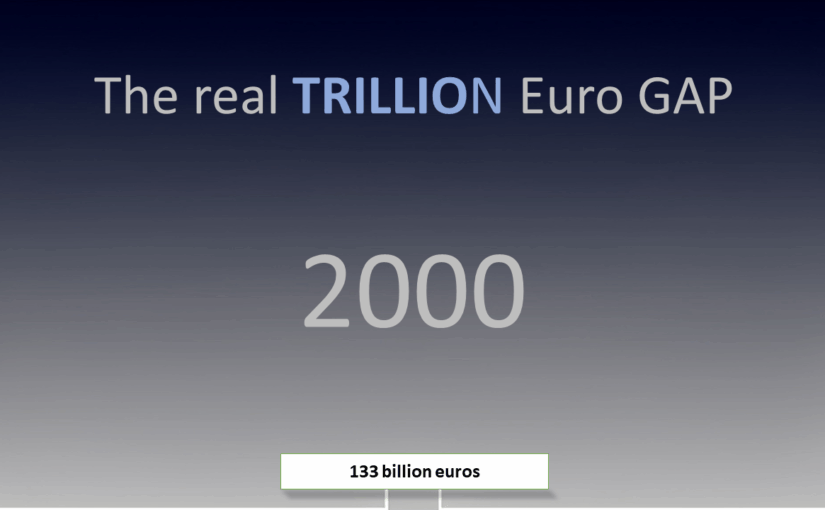
  • 133 billion euros (70% of 190 billion) did not flow into European infrastructure.
  • The GraTeach insolvency prevented the development of a European alternative to Google/Amazon.
  • No investments in democracy-preserving structures led to long-term dependence on US platforms.

Consequences for the Future:

  • Europe lost control over its digital future.
  • The 133 billion euros could have preserved structures—instead, they flowed abroad.
  • The GAP will continue to grow in the coming years as dependence on US corporations increases and European alternatives are lacking.

1999: Opportunity for Europe (Patent ES2374881T3 – “Finder technology: Simple. Precise. Hallucination-free.”)


The Finder World – „Why Complicate When It Can Be Smart?“

We wrote history – with 1,000 categories against the data flood and AI hallucinations. As early as 1997, the concept of citythek.de was planned. Not as another expert playground, but as a reflection of the analog world with the Finder search engine, which was conceptually more advanced than today’s AI systems. It was based on my ten years of experience teaching adult illiterates (1985). My patent ES2374881T3 was the key: Instead of confronting users with unmanageable amounts of data or error-prone algorithms, I relied on assigning 1,000 precise categories. The Semantic Web, on the other hand, remained an ivory tower: RDF, DAML, OIL – the standards sounded like a secret language. Even tech enthusiasts despaired at the complexity.

Why this was better than anything that comes today:

  • Every Finder (token) was assigned to one or more of the 1,000 categories. This reduced the error rate to a minimum – because the AI only searched within clearly defined categories.
  • Users immediately saw the matching categories and could select the correct one with one click. The AI didn’t have to guess, but selected entries that were already stored in the corresponding category.
  • Minimal content, maximum efficiency: Instead of searching through endless amounts of data, the system worked with pre-structured, validated categories. The result? Faster answers, fewer errors, no distractions, less power consumption.

The Counter-Model to the Gatekeepers

While Google and Co. send users through labyrinths of advertising and distractions – like a store that deliberately builds aisles in front of the entrance to hang more posters –, I relied on directness and user control. My system didn’t need detours because it mapped human logic from the start.

The Consequences: A Search Engine That Could Have Changed Europe

  • No hallucinations, no data flood: Users found what they were looking for – without detours, without manipulation.
  • Value creation in Europe: Instead of giving data away to US corporations, there would have been a European infrastructure with the Finder technology – transparent, democratic, and with fair distribution of value creation.
  • The foundation for getmysense: A social network that empowers users instead of spying on them (see 2012).

View from 2026 – „When Europe Slept Through the Future“

How the Semantic Web failed in reality – and why we are still paying the price today. In 1999, everything could have turned out differently. But instead of relying on my precise, user-friendly classification, the world trusted abstract theories and greed for profit.

The three fatal mistakes of the digital economy in terms of a functioning society:

  1. Complexity instead of simplicity: The Semantic Web failed because of its own overload. My 1,000 categories would have been the salvation.
  2. Gatekeepers instead of user control: Google, Facebook & Co. built their empires on distraction and data exploitation. My model would have shown: It can be done without advertising labyrinths.
  3. No transfer of human structures: Today, even modern systems struggle with hallucinations – because they have no clear categories. My approach from 1999 was already further ahead.

The consequences:

  • Google & Co. dominate: Not because they are better, but because they keep users trapped in their systems.
  • Europe remains dependent: Instead of promoting Finder, US technologies were imported – and control over data and values was lost.
  • The irony: Today, corporations are desperately searching for solutions for „trustworthy AI“ – yet I already had it in 1999.
  • What remains? A question that still arises today: Why did Europe opt for complexity when there was a simple, better solution? (The answer follows – year by year, until 2045.)

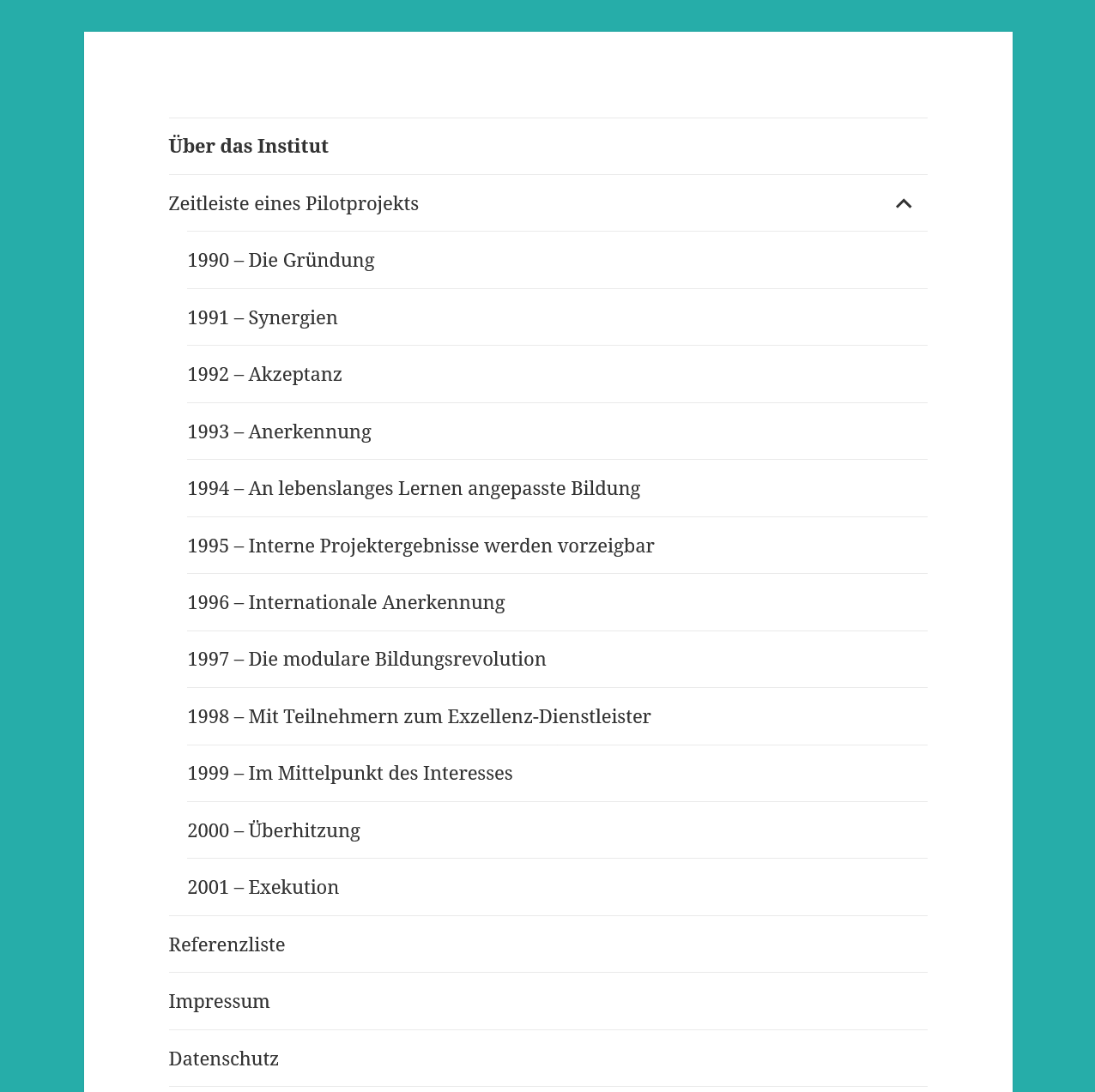
GraTeach has become known beyond the region as a leadership academy with the Kamp-Lintfort basic conversations and the online magazine. Anyone who wants to engage with the many projects should look at the entire GraTeach.de timeline from 1990 to 2001 with the information behind the links.

The GAP 1999:

A GAP has not yet emerged. Google and Amazon Germany were only founded in 1998.

1985 – How It All Began


In this blog series, The Real Trillion Euro Gap, I compare two developments from 1999 to a preview of 2045:

  • A destructive misdevelopment of our society, shaped by short-term interests, and
  • A proactively designed digital future that preserves and evolves pre-digital achievements.

For decades, I have attempted to accompany a holistic concept for such a society. But the comparison shows:

A gap of trillions of euros has emerged—as economic damage and as the investment needed to rectify these misdevelopments.

This gap is no coincidence. It is the result of missed opportunities, ignored patents, and a digitization often dominated by autocratic business models.

Yet it is not just about numbers. It is about the question:

What could an inclusive, participatory society have looked like—and how can we still shape it?

A Pedagogical Milestone: The Segmenting Method (1985)

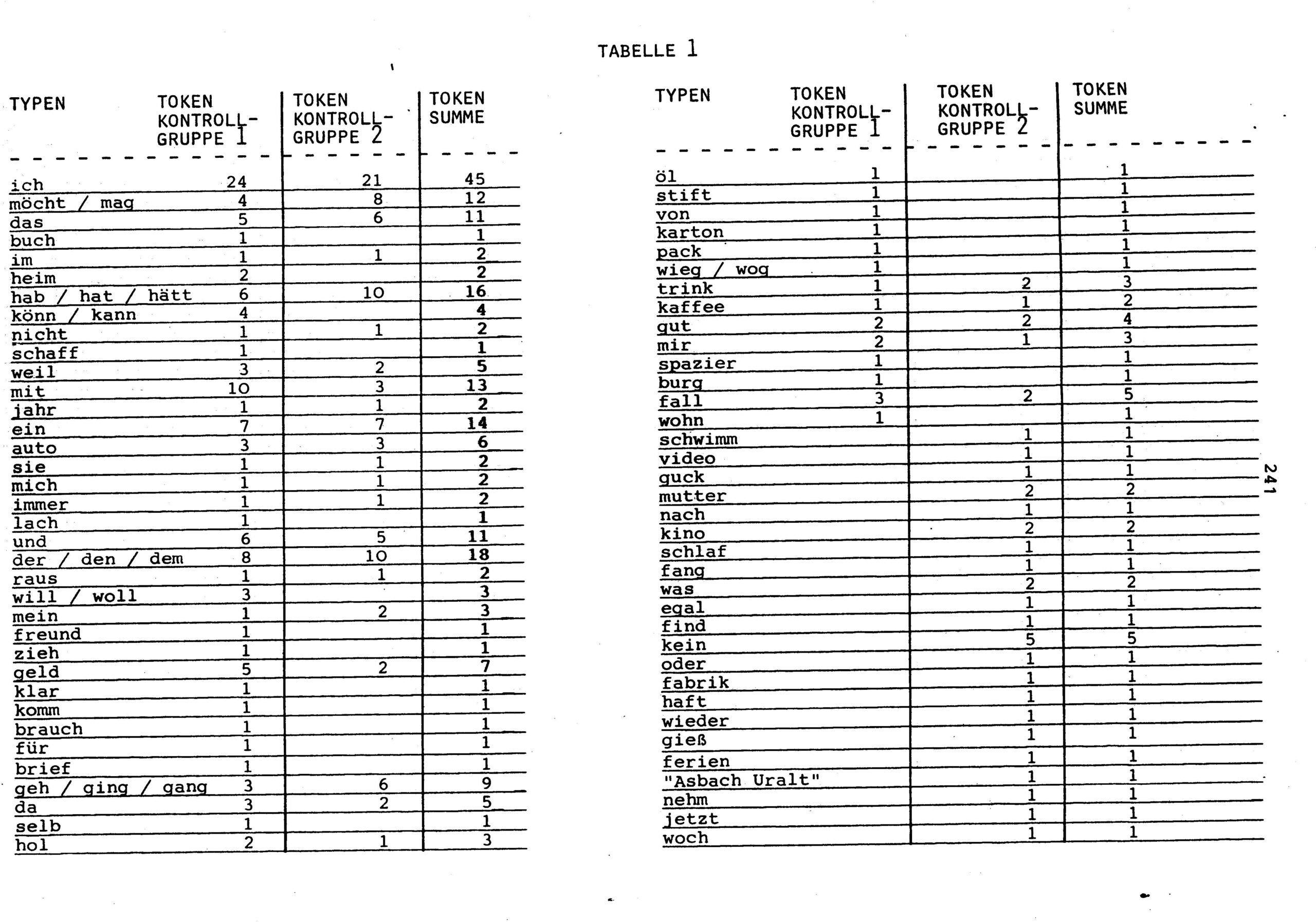
As early as 1985, Ingrid Daniels and I laid the foundation in our diploma thesis for a principle now known in AI as tokenization.

The Segmenting Method was a hybrid, participant-centered approach that broke down words into meaningful, recognizable units—not into letters, but into meaning-bearing segments.

Back then, it was about literacy. Today, this approach is relevant for AI, the Semantic Web, and inclusive education.

Even then, we spoke of tokens. (Excerpt from the teaching materials we created.)

Core Principles of the Segmenting Method

  • Segmentation instead of letter isolation:
    Words are broken down into recurring units such as “Haus-” (“house-”), “-tür” (“-door”), or “-licht” (“-light”).
    Example: “Hauslicht” (“house light”) → “Haus-” + “-licht” (analogous to “Tageslicht”/“daylight”).
    Goal: Rapid pattern recognition to accelerate reading and writing through association.
  • Contextual embedding:
    Segments are taught in everyday situations (e.g., “Where else do you find -licht?” → “Mondlicht”/“moonlight,” “Kerzenlicht”/“candlelight”).
    This promotes transferability and reduces cognitive load.
  • Participant orientation:
    The segments come from the learners’ own language—similar to the language experience approach.
    Learners identify patterns in self-created texts.
  • Visual support:
    Color coding or symbols anchor the segments.
    Example: All words with “-ung” (“-tion”/“-ing”) are marked in blue to highlight them as “noun-building blocks.”
  • Quick successes:
    Through frequent segments (e.g., “ge-”/“pre-”, “-en”/“-ing”), learners decode entire word families—without analyzing every letter.

Advantages—Then and Now

  • Efficiency: Faster learning success through pattern recognition.
  • Motivation: Learners unlock word families and see progress.

Comparison: Segmenting Method (1985) vs. Modern Reading Methods (2026)

Criterion Segmenting Method (1985) Modern Methods (2026)
Basic Approach Hybrid: Segments + holism Multimodal: Phonics, whole-word, morphemics + digital tools
Units Meaning-bearing segments (e.g., “-ung”) Morphemics (“word building blocks”) + syllable method
Technology Manual segmentation, later databases AI-supported platforms (e.g., “Antura,” “GraphoGame”)
Participant Orientation Everyday language, self-created texts Personalized learning via algorithms (e.g., “Duolingo ABC”)
Visual Aids Color coding, symbols Gamification (e.g., “Endless Alphabet”), augmented reality
Target Group Adult illiterates Inclusive approaches for all age groups
Scientific Basis Practical experience, linguistic intuition Neuroscience, long-term studies on reading fluency

Current Trends Confirming the Segmenting Method

  • Morphemic approaches are now standard (e.g., in German primary schools).
  • My 1999 idea (European Patent ES2374881T3):
    Using 1,000 core categories—similar to today’s “high-frequency word” lists.
  • AI-driven segmentation:
    Tools like “GraphoGame” adaptively adjust learning paths—a principle we advocated early.
  • Language experience + technology:
    Apps like “Speechify” convert speech to text and automatically mark segments.
  • Social context:
    Modern methods emphasize collaborative learning (e.g., “literacy cafés”)—exactly like our approach.

Critique of Modern Methods

  • Over-technologization: Some tools lose the human dialogue (à la Freire/Freinet).
  • Cultural blind spots: Data-driven segmentation often ignores local contexts.
  • Commercialization: Many apps are not freely accessible—our approach focused on open knowledge sharing.

Conclusion: Why This Approach Advances Society

The Segmenting Method was visionary because it:

  • Anticipated hybridity (now standard in pedagogy),
  • Emphasized participant orientation and contextualization (now rediscovered),
  • Showed how socially relevant research drives innovation—without autocratic business models.

This example illustrates a central concern of the series The Real Trillion Euro Gap:

Digitization is not an end in itself.

It must be designed to be inclusive, participatory, and democratic—just like pre-digital research.

Where we fail to pay attention, we risk a digital autocracy serving the interests of a few—rather than a society that makes technology usable for all.

The question is not whether we can shape the future. It is whether we want to.

Everyone must—and everyone can—contribute to a livable society.

Are you afraid of a blackboard? No. So why be afraid to judge digitization?

Just like a blackboard, it is a tool!