2027: A genuine digital democracy cannot be copied by autocracies!
Introduction: The Threat to Digital Democracy
The current digital reality does not allow for a true digital democracy. The study „A True Digital Democracy Cannot Be Copied by Autocracies“ proves that autocratic actors and organized networks systematically undermine democratic processes—through remote-controlled manipulation, gang-like behavior, and legal gray areas. The judiciary cannot effectively counter this because it can only act when there are identifiable perpetrators and evidence. The pinprick tactic remains unpunished; the control of many individual perpetrators who are unaware of the overall goal overwhelm the judiciary, and technical infrastructures enable the control of entire regions—as in the case of GraTeach in NRW.
The legal dilemma exacerbates the problem: Article 20(4) of the Basic Law (right to resistance) is not practical for individuals when they have to defend themselves against systemic attacks without a lawyer and only in writing. The EU delegates cases like GraTeach to national judiciaries—which, however, fail due to structural limitations. The principle that „all state authority emanates from the people“ (Article 20(2) of the Basic Law) is being undermined when those who advocate for the constitutional order can be neutralized through digital knowledge about the motives and desires of each individual in their environment.
Trusted WEB 4.0 + EU-D-S is the only solution I know of. Only in this way can I secure Europe’s digital sovereignty and build a true digital democracy.
This is how a true digital democracy emerges—one that autocracies fear because it cannot be copied!
1. Real Situation: The Digital Threat Landscape
Europe is caught in a digital vise:
- Hybrid warfare: Russia deliberately deploys „disposable agents“—young, socially marginalized, often petty criminal individuals who perform seemingly harmless tasks for small sums (sometimes just a few hundred euros). This method corresponds to the gang-like appearance in relation to the strategy of a thousand pinpricks. Investigative research by RTL, stern, and n-tv, as well as the ARTE documentary „Russia’s Shadow Army in Europe“, prove that such actors sow social unrest, engage in espionage, and even prepare attacks in Europe.
- Increasing digital surveillance: States are expanding surveillance infrastructures, leading to the erosion of privacy and censorship. Social media platforms facilitate the recruitment and control of such agents. Without social control and AI-supported verifiability, disinformation servers cannot be effectively combated.
- Dependence on gatekeepers: Without EU-D-S, dependence on US/China tech giants (Google, Meta, Amazon, Alibaba) increases—leading to the loss of Europe’s digital sovereignty. The revenues for 2026 amount to: Google approx. €290 billion, Amazon approx. €600 billion, Meta approx. €150 billion. These funds flow into further strengthening their market power, while Europe loses value creation.
- Economic disadvantages: The dominance of gatekeepers accelerates the outflow of value creation from Europe. The stock market is being discredited by the current speculative behavior of US politics, which can influence events so that a few benefit from stock market prices.
- Societal polarization: The lack of democratic digital infrastructure leads to manipulation through disinformation and deepens division. Permanent remote control creates subjects—not empowered citizens.
- Cybersecurity risks: Dependence on central platforms increases vulnerability to cyberattacks on critical infrastructures. Without evidence, even new laws against the gatekeepers are useless.
2. Unimpeded Development: Trusted WEB 4.0 as the Solution
Trusted WEB 4.0 + EU-D-S is the only solution to secure Europe’s digital sovereignty. The study shows that five systemic effects would occur:
- End of digital anonymity for companies: Algorithm development and security vulnerabilities within the EU-D-S are publicly visible. Early warning systems for democracy-endangering technologies emerge.
- The judiciary gains tools against digital manipulation: Preventive lawsuits, automated WAN-anonymous evidence collection, and EU-wide enforcement become possible.
- Civil society becomes the most powerful actor: NGOs, media, science, and citizens gain co-determination rights and access to documentation.
- Autocracies lose their greatest lever: Transparency obligations, real-time defense, and international cooperation make digital attacks impossible.
- The economy becomes an ally of democracy: Compliance bonuses, democracy bonuses, and reputation gains promote democracy-friendly technologies.
Trusted WEB 4.0 is not a technical standard—it is the salvation of democracy in the digital age.
3. 2027: A Look from the Future – Lessons from the Past
Europe 2027 faces a historic crossroads:
- The threat is real—and it is happening now. The judiciary is overwhelmed, politics either ignore the problem or do not understand it, and society is unaware.
- Trusted WEB 4.0 + EU-D-S is the game-changer: A system that makes manipulation impossible or at least provable within the framework of WAN anonymity, provides effective protection for those affected, and returns power to the citizens.
A true digital democracy becomes possible—but only if I act now.
- Technical security: Manipulation is impossible or at least provable.
- Legal protection: Those affected receive effective assistance.
- Political capacity to act: The EU and member states cooperate instead of blocking.
- Societal resilience: Citizens are informed and capable of action.
The best time to build a true digital democracy was 25 years ago. The second-best time is now.
However, the course for an anti-constitutional digital society has already been set:
- Politics: Political disillusionment is undeniable in most EU countries. Politics always stands between the citizens and the state, with the state demanding more surveillance with ever-new arguments. Due to increasing digital capabilities from abroad, a gang-like appearance is increasingly used to influence political decisions. Data processors have unlimited financial reserves with which they can carry out an unmanageable number of minimally invasive manipulations.
- Security services: It is not disputed that security services are under pressure. But just like politics, they do not shape the future; instead, in a seemingly necessary but actually influenced consensus process, they move further and further away from the constitutional order, as shown in Intransparent Germany Threatens Europe. Surveillance is replaced by social control with getmySense. This makes society more democratic. The best constitutional protection is the one that is not needed.
- Judiciary: The judiciary justifies itself with legal tunnel vision. Any significant deviation from the norm must be incorporated into the law, such as the maximum number of lawyers that are reasonable for the principle „in doubt for the defendant.“ In this case, the alternative of self-representation with the help of AI in exclusively written proceedings must be possible. This would also ensure that a broad public can be involved.
- Investors: These are interested in exponential growth of their capital investment. In terms of risk diversification, the category system with 1,000 categories offers comprehensive coverage of all societal areas. Within their area, Primus companies have all the opportunities to test their ideas.
- Specialists: Even IT and AI specialists are trapped in anti-democratic constraints. Since politics and the economy depend on specialists, it is crucial for the success of the EU-D-S to involve as many specialists as possible through participation in startups.
The EU-D-S must start so large with businesses and societal interest groups (passive members) that it cannot fail even if individual actors are eliminated. This is why 40 European founders as Primus are required in the EU-D-S.
When founding the EU-D-S, I must act as if Europe were occupied. While there is freedom of speech to generate as much excitement as possible for advertising spaces, on the other hand, data processors also use the analysis of the vast amounts of data as an early warning system to determine when a specific action can eliminate a potential competitor. For example, a patent application already provides precise information about the goals of a potential competitor.
Accordingly, I will not publish until March 2027 how many founders support the EU-D-S. The EU-D-S has not yet been introduced and therefore cannot fail. Until then, it will be prepared as a result of Trusted WEB 4.0. One founder in the EU-D-S is GISAD, which, according to the EU-D-S Constitution, has a right of veto as soon as a product contradicts the requirements of a democratic society.
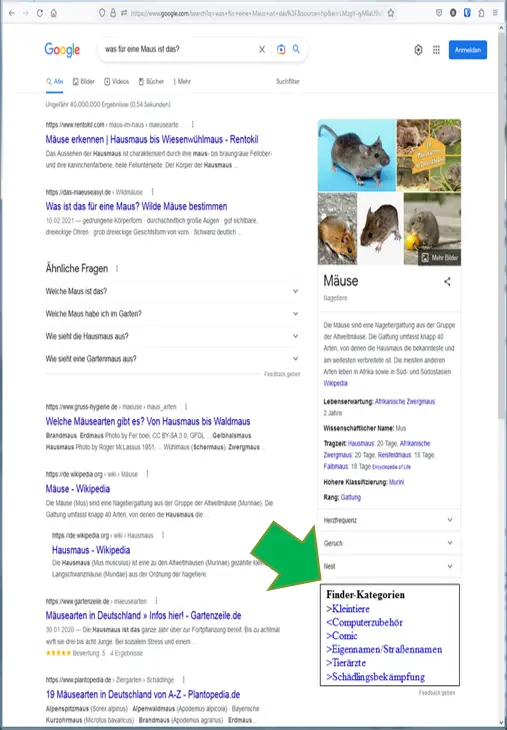
Patent applications provide standards with WAN Anonymity, Finder Technology, and getmySense that companies and citizens use in the EU-D-S. Within these standards, everything is permitted that does not violate the EU-D-S Constitution.
In extensive research across Europe, I have not found any digital business competitions that focus on preserving pre-digital democratic achievements. Everything related to democracy is occupied by non-profit initiatives. These must fear for their non-profit status if they think commercially and thus are not a serious threat to the gatekeepers.
Urgent: Trustees are needed across Europe who are convinced of the possibility of implementing a digital democratic concept and who will organize a founding competition for the EU-D-S.
GISAD has been in the process of founding since 2016. So far, there has been no serious understanding of the need to found an institute that advises projects on how to adapt their business models to retain pre-digital advantages for their customers in the emerging digital society. For this purpose, the aspects of health, material living conditions, productive or main activity, education, leisure and social interactions, economic and physical security, rule of law and fundamental rights, as well as natural environment and living conditions, and general sense of well-being must be integrated as GISAD indicators wherever they affect business models.
In which EU country should GISAD be founded to receive optimal support here?
European sovereignty will only truly be more democratic in the emerging digital society than autocracies if the democratic achievements developed over decades are consistently adopted in the EU-D-S. This creates a digital societal success model in which democracies from around the world will come together in a European Digital Union.
Autocracies will not be able to copy the EU-D-S without becoming democratic themselves.
Trusted WEB 4.0 Bonus 2027: The Economy Understands the Potential
Carryover from Previous Years
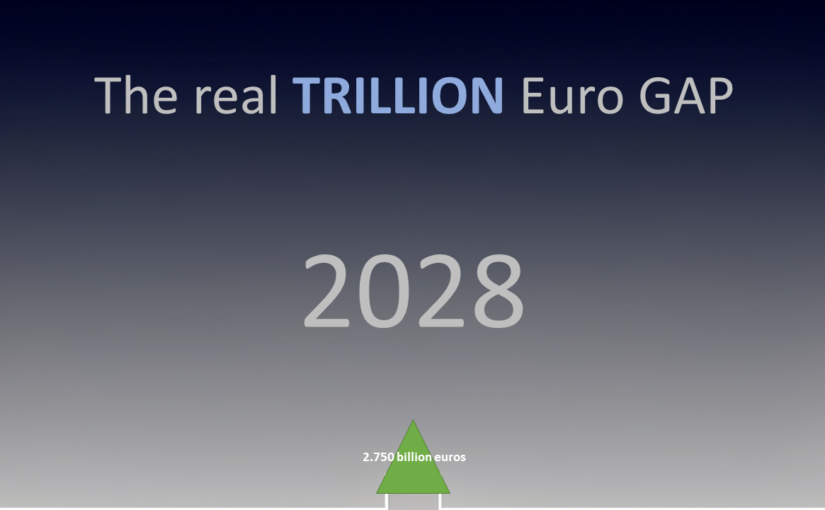
It is assumed that the EU-D-S will be founded in 2027. The GAP amount from 2026 of €45.7428 trillion will be reduced annually from 2027 onwards by a Trusted WEB 4.0 Bonus through renewed trust-building followed by confirmation.
Trusted WEB 4.0 Bonus
The Trusted WEB 4.0 Bonus for 2027 is estimated at 5% of the EU GDP for 2027. With an estimated EU GDP of approx. €18,000 trillion (based on the growth of previous years), the bonus would amount to €900 billion. This bonus would reduce the GAP amount by this value in 2027, provided that the EU-D-S is successfully implemented and trust in Europe’s digital sovereignty is strengthened.
Trusted WEB 4.0 Bonus €900 billion
Trusted WEB 4.0 technologies such as
Finder (1999),
getmysense (2002),
GISAD (2003),
EU-D-S (2004),
and WAN anonymity (2007)
could have served as the foundation for a European digital alternative.
text
Kopieren
Sources
- n-tv: Reporters Infiltrate Russia’s „Disposable Agents“ World
- ZDF: Russia’s Shadow Army in Europe
- EESC info October 2024 | EESC
- European Competition
- Finder Technology (1999)
- getmySense (2002)
- GISAD (2003)
- EU-D-S (2004)
- WAN Anonymity (2007)
- EU-D-S Constitution
- Documents and Links for 3 Deployments for Digital Democracy
- Intransparent Germany Threatens Europe
- Federal Constitutional Court: 1 BvR 91/26, 2 BvR 1668/25
- Competition Policy | European Parliament
2027: Eine echte digitale Demokratie ist von Autokratien nicht kopierbar!
Einleitung: Die Bedrohung der digitalen Demokratie
Die aktuelle digitale Realität lässt keine echte digitale Demokratie zu. Die Studie „Eine echte digitale Demokratie ist von Autokratien nicht kopierbar“ belegt, dass autokratische Akteure und organisierte Netzwerke demokratische Prozesse systematisch untergraben – durch ferngesteuerte Manipulation, bandenmäßiges Vorgehen und juristische Grauzonen. Die Justiz kann nicht wirksam gegensteuern, weil sie nur bei nachweisbarem Täter und Beweisen handeln kann. Die Nadelstich-Taktik bleibt straffrei, die Steuerung vieler Einzeltäter, welche das Gesamtziel nicht kennen, überfordern die Justiz, und technische Infrastrukturen ermöglichen die Steuerung ganzer Regionen – wie im Fall GraTeach in NRW.
Die rechtliche Zwickmühle verschärft das Problem: Art. 20(4) GG (Widerstandsrecht) ist für Einzelpersonen nicht praktikabel, wenn sie sich ohne Anwalt und nur schriftlich gegen systemische Angriffe wehren müssen. Die EU delegiert Fälle wie GraTeach an nationale Justiz – die aber an strukturellen Grenzen scheitert. „Alle Macht geht vom Volke aus“ (Art. 20(2) GG) wird unterlaufen, wenn diejenigen, die sich für die Verfassungsordnung einsetzen, durch digitale Kenntnisse über die Motive und Wünsche jedes Einzelnen aus ihrem Umfeld ausgeschaltet werden können.
Trusted WEB 4.0 + EU-D-S sind der einzige mir bekannte Ausweg. Nur so können wir die digitale Souveränität Europas sichern und eine echte digitale Demokratie aufbauen.
Auf diese Weise entsteht eine echte digitale Demokratie, die von Autokratien gefürchtet wird, da sie sich nicht kopieren lässt!
1. Reale Situation: Die digitale Bedrohungslage
Europa steckt in einer digitalen Zange:
- Hybride Kriegsführung: Russland setzt gezielt „Wegwerfagenten“** ein – junge, sozial abgehängte, oft kleinkriminelle Personen, die für geringe Summen (teilweise nur einige hundert Euro) scheinbar harmlose Aufgaben erfüllen. Diese Methode entspricht dem bandenmäßigen Erscheinungsbild im Hinblick auf die Strategie der tausend Nadelstiche. Investigativ-Recherchen von RTL, stern und n-tv sowie die ARTE-Dokumentation „Russlands Schattenarmee in Europa“ belegen, dass solche Akteure in Europa gesellschaftliche Unruhe stiften, Spionage betreiben und sogar Anschläge vorbereiten.
- Zunehmende digitale Überwachung: Staaten bauen Überwachungsinfrastrukturen aus, was zu Erosion der Privatsphäre und Zensur führt. Social-Media-Plattformen erleichtern die Rekrutierung und Steuerung solcher Agenten. Ohne soziale Kontrolle und KI-gestützte Überprüfbarkeit können Desinformationsserver nicht wirksam bekämpft werden.
- Abhängigkeit von Gatekeepern: Ohne EU-D-S steigt die Abhängigkeit von US-/China-Tech-Konzernen (Google, Meta, Amazon, Alibaba) – Verlust digitaler Souveränität Europas. Die Umsätze für 2026 betragen: Google ca. 290 Mrd. €, Amazon ca. 600 Mrd. €, Meta ca. 150 Mrd. €. Diese Mittel fließen in die weitere Stärkung ihrer Marktmacht, während Europa Wertschöpfung verliert.
- Wirtschaftliche Nachteile: Die Dominanz der Gatekeeper beschleunigt den Abfluss von Wertschöpfung aus Europa. Die Börse kommt durch das derzeitige spekulative Verhalten der US-Politik in Verruf, welche Ereignisse beeinflussen kann, damit Wenige vom Börsenkurs profitieren.
- Gesellschaftliche Polarisierung: Fehlende demokratische digitale Infrastruktur führt zu Manipulation durch Desinformation und vertieft die Spaltung. Permanente Fernsteuerung schafft Untertanen – nicht mündige Bürger.
- Cybersecurity-Risiken: Abhängigkeit von zentralen Plattformen erhöht Anfälligkeit für Cyberangriffe auf kritische Infrastrukturen. Ohne Beweise helfen auch keine neuen Gesetze gegen die Gatekeeper.
2. Entwicklung ohne Behinderung: Trusted WEB 4.0 als Lösung
Trusted WEB 4.0 + EU-D-S sind die einzige Lösung, um die digitale Souveränität Europas zu sichern. Die Studie zeigt, dass fünf systemische Effekte eintreten würden:
- Ende der digitalen Anonymität für Unternehmen: Algorithmen-Entwicklung und Sicherheitslücken innerhalb des EU-D-S sind öffentlich einsehbar. Frühwarnsysteme für demokratiegefährdende Technologien entstehen.
- Justiz erhält Werkzeuge gegen digitale Manipulation: Präventive Klagen, automatisierte WAN-anonyme Beweissammlung und EU-weite Durchsetzung werden möglich.
- Zivilgesellschaft wird zum mächtigsten Akteur: NGOs, Medien, Wissenschaft und Bürger erhalten Mitgestaltungsrechte und Zugang zu Dokumentationen.
- Autokratien verlieren ihren größten Hebel: Transparenz-Pflicht, Echtzeit-Abwehr und internationale Kooperation machen digitale Angriffe unmöglich.
- Wirtschaft wird zum Verbündeten der Demokratie: Compliance-Prämien, Demokratie-Bonus und Reputationsgewinn fördern demokratiefreundliche Technologien.
Trusted WEB 4.0 ist kein technischer Standard – es ist die Rettung der Demokratie im digitalen Zeitalter.
3. 2027: Blick aus der Zukunft – Lehren aus der Vergangenheit
Europa 2027 steht vor einer historischen Weichenstellung:
- Die Bedrohung ist real – und sie findet jetzt statt. Die Justiz ist überfordert, die Politik ignoriert das Problem oder versteht es nicht, und die Gesellschaft ist ahnungslos.
- Trusted Trusted WEB 4.0 + EU-D-S sind der Game-Changer: Ein System, das Manipulation unmöglich oder zumindest im Rahmen der WAN-Anonymität nachweisbar macht, Betroffenen wirksamen Schutz bietet und die Macht zurück an die Bürger gibt.
Trusted Eine echte digitale Demokratie wird möglich – aber nur, wenn wir jetzt handeln.
- Technische Sicherheit: Manipulation ist unmöglich oder zumindest nachweisbar.
- Rechtlicher Schutz: Betroffene erhalten wirksame Hilfe.
- Politische Handlungsfähigkeit: Die EU und die Mitgliedstaaten kooperieren statt zu blockieren.
- Gesellschaftliche Resilienz: Bürger sind informiert und handlungsfähig.
Die beste Zeit, eine echte digitale Demokratie aufzubauen, war vor 25 Jahren. Die zweitbeste Zeit ist jetzt.
Aber die Weichen zu einer verfassungsfeindlichen digitalen Gesellschaft sind bereits gestellt:
- Politik: Die Politikverdrossenheit ist in den meisten EU-Ländern unübersehbar. Die Politik steht immer zwischen den Bürgern und dem Staat, wobei der Staat mit immer neuen Argumenten mehr Überwachung fordert. Durch die zunehmenden digitalen Möglichkeiten von außen wird ein bandenmäßiges Erscheinungsbild immer mehr genutzt, um politische Entscheidungen zu beeinflussen. Die Datenverwerter verfügen über unbegrenzte Geldreserven, mit denen sie eine nicht überschaubare Anzahl minimalinvasiver Manipulationen durchführen können.
- Sicherheitsdienste: Es wird nicht bestritten, dass die Sicherheitsdienste unter Druck stehen. Aber genauso wenig wie die Politik gestalten sie die Zukunft, sondern entfernen sich im scheinbar notwendigen, aber tatsächlich beeinflussten Konsensprozess immer weiter von der verfassungsgemäßen Ordnung. Überwachung wird durch soziale Kontrolle mit getmySense ersetzt. Damit wird die Gesellschaft demokratischer.
Der beste Verfassungsschutz ist der, der nicht benötigt wird. - Justiz: Der Justiz bietet der juristische Tunnelblick ihre Rechtfertigung. Eine signifikante Abweichung von der Norm muss ins Gesetz aufgenommen werden, wie die maximale Anzahl der Anwälte, die „im Zweifel für den Angeklagten“ zumutbar sind. Die Alternative der Eigenvertretung mit Hilfe von KI in ausschließlich schriftlicher Verhandlung müsste in diesem Fall möglich sein. Dadurch wäre auch gewährleistet, dass eine breite Öffentlichkeit eingebunden werden kann.
- Kapitalgeber: Diese sind an einem exponentiellen Wachstum ihres Geldeinsatzes interessiert. Im Sinne einer Risikostreuung bietet das Kategoriensystem in 1.000 Kategorien eine umfassende Abdeckung aller gesellschaftlichen Bereiche an. Innerhalb ihres Bereiches haben die Primus-Unternehmen alle Möglichkeiten, ihre Ideen auszuprobieren.
- Spezialisten: Selbst IT- und KI-Spezialisten sind in demokratiefernen Sachzwängen gefangen. Da die Politik und Wirtschaft von Spezialisten abhängig ist, ist es entscheidend für den Erfolg des EU-D-S, möglichst viele Spezialisten durch eine Beteiligung in Startups einzubinden.
Das EU-D-S muss so groß mit Wirtschaftsunternehmen und gesellschaftlichen Interessensgruppen (passive Mitglieder) anfangen, dass es selbst dann nicht mehr scheitern kann, wenn einzelne Akteure ausgeschaltet werden. Deshalb werden 40 europäische Gründer als Primus im EU-D-S gefordert.
Bei der Gründung des EU-D-S muss man sich so verhalten, als ob Europa besetzt wäre. Zwar gibt es die Freedom of Speech, um möglichst viele Aufgeregtheiten für Werbeplätze zu generieren. Andererseits wird die Analyse der vielen Daten von den Datenverwertern auch als Frühwarnsystem genutzt, wann man mit einer konkreten Aktion einen potenziellen Wettbewerber ausschalten kann. So gibt zum Beispiel die Anmeldung eines Patents schon präzise Informationen über die Ziele eines potenziellen Wettbewerbers.
Entsprechend wird bis zum März 2027 nicht veröffentlicht, wie viele Gründer das EU-D-S unterstützen. Das EU-D-S ist noch nicht eingeführt und kann daher auch nicht scheitern. Bis dahin wird es als Ergebnis des Trusted WEB 4.0 vorbereitet. Ein Gründer im EU-D-S ist GISAD, das gemäß EU-D-S Verfassung ein Vetorecht hat, sobald ein Produkt den Anforderungen an eine demokratische Gesellschaft widerspricht.
Die Patentanmeldungen bieten mit WAN-Anonymität, Finder-Technologie und getmySense Standards, welche Unternehmen und Bürger im EU-D-S benutzen. Innerhalb dieser Standards ist alles erlaubt, was nicht gegen die EU-D-S Verfassung verstößt.
In einer umfangreichen Recherche in ganz Europa habe ich keine digitalen Businesswettbewerbe gefunden, die sich auf den Erhalt vordigitaler demokratischer Errungenschaften konzentrieren. Alles, was Demokratie betrifft, wird durch gemeinnützige Initiativen besetzt. Diese müssen um ihre Gemeinnützigkeit fürchten, wenn sie kommerziell denken und sind so keine ernstzunehmende Gefahr für die Gatekeeper.
Dringend werden überall in Europa Treuhänder benötigt, die von der Möglichkeit der Umsetzung eines digitalen demokratischen Konzepts überzeugt sind und für das EU-D-S einen Gründungswettbewerb ausrichten.
GISAD ist seit 2016 in Gründung. Bisher gab es kein ernstzunehmendes Verständnis für die Gründung eines Instituts, welches Projekte berät, ihre Geschäftsmodelle so anzupassen, dass sie die vordigitalen Vorteile für ihre Kunden in der entstehenden digitalen Gesellschaft erhalten. Hierfür sind die Aspekte Gesundheit, Materielle Lebensbedingungen, Produktive oder Haupttätigkeit, Bildung, Freizeit und soziale Interaktionen, Wirtschaftliche und physische Sicherheit, Rechtsstaatlichkeit und Grundrecht sowie Natürliche Umgebung und Wohnumfeld, allgemeines Lebensgefühl als GISAD-Kennzahlen einzubinden, wo sie die Geschäftsmodelle berühren.
In welchem EU-Land soll sich GISAD gründen, um hier die optimale Unterstützung zu bekommen?
Europäische Souveränität wird nur dann wirklich in der entstehenden digitalen Gesellschaft demokratischer sein als die Autokratien, wenn konsequent die über Jahrzehnte erarbeiteten demokratischen Errungenschaften im EU-D-S übernommen werden. Dadurch entsteht ein digitales gesellschaftliches Erfolgsmodell, in dem sich in einer europäischen Digitalunion Demokratien aus der ganzen Welt zusammenschließen werden.
Autokratien werden das EU-D-S nicht kopieren können, ohne selbst demokratisch zu werden.
Trusted WEB 4.0 Bonus 2027: Die Wirtschaft versteht das Potenzial
Übertrag aus den Vorjahren
Es wird davon ausgegangen, dass das EU-D-S 2027 gegründet wird. Der GAP-Betrag aus 2026 in Höhe von €45.742,8 Billionen wird ab 2027 durch einen erneuten Vertrauensaufbau mit anschließender Bestätigung jährlich um einen Trusted-WEB-4.0-Bonus reduziert.
Trusted WEB 4.0-Bonus
Der Trusted WEB 4.0-Bonus für 2027 wird auf 5 % des EU-BIP 2027 geschätzt. Bei einem geschätzten EU-BIP von ca. €18.000 Billionen (basierend auf dem Wachstum der Vorjahre) würde der Bonus somit €900 Mrd. betragen. Dieser Bonus würde 2027 den GAP-Betrag um diesen Wert reduzieren, sofern das EU-D-S erfolgreich umgesetzt wird und das Vertrauen in die digitale Souveränität Europas gestärkt wird.
Trusted WEB 4.0-Bonus €900 Mrd.
Trusted WEB 4.0-Technologien wie
Finder (1999),
getmysense (2002),
GISAD (2003),
EU-D-S (2004) und
WAN-Anonymität (2007)
hätten ohne Behinderung als Grundlage für eine europäische digitale Alternative gedient.
Quellen
- n-tv: Reporter infiltrieren russische „Wegwerfagenten“-Welt
- ZDF: Russlands Schattenarmee in Europa
- EESC info October 2024 | EESC
- Europäischer Wettbewerb
- Finder-Technologie (1999)
- getmySense (2002)
- GISAD (2003)
- EU-D-S (2004)
- WAN-Anonymität (2007)
- EU-D-S Verfassung
- Dokumente und Links zu 3 Einsätzen für die Digitale Demokratie
- Intransparentes Deutschland bedroht Europa
- Bundesverfassungsgericht: 1 BvR 91/26, 2 BvR 1668/25
- Wettbewerbspolitik | Europäisches Parlament
2026: The EU must correct its mistakes—AI must be carbon-neutral!
1. Likely Future Scenario: CO₂ Emissions from Unchecked AI Development by Gatekeepers
I have calculated the annual CO₂ emissions from unchecked AI development by gatekeepers (Google, Meta, Amazon, etc.) based on current data and trends:
Current Data (2026):
- Global electricity consumption of all data centers: 650 TWh/year (Source: IEA, 2024).
- Approximately 50% is attributed to AI and cloud services (325 TWh/year).
- Forecast: Annual growth of 20-40% (due to AI, Big Data, IoT).
- CO₂ emissions per kWh:
- Global mix: 0.5 kg CO₂/kWh.
- EU mix: 0.3 kg CO₂/kWh (thanks to renewable energies).
- US mix: 0.4 kg CO₂/kWh (heavily dependent on coal/gas).
Calculation for 2030 (unchecked):
| Year | Electricity Consumption (TWh) | CO₂ Emissions (Megatons) | Compensation Costs (Billion €) |
|---|---|---|---|
| 2026 | 650 | 325 | 16–33 |
| 2028 | 1,000–1,300 | 500–650 | 25–65 |
| 2030 | 1,500–3,000 | 750–1,500 | 38–150 |
| 2040 | 5,000–10,000 | 2,500–5,000 | 125–500 |
Conclusion: Without countermeasures, the CO₂ emissions from digital infrastructure will rise to 750-1,500 megatons/year by 2030 – equivalent to the emissions of 150-300 million cars per year. By 2040, this figure could explode to 2,500-5,000 megatons/year – more than the entire current CO₂ emissions of the EU (approx. 3,000 megatons/year).
2. Development Without Obstruction Using Trusted WEB 4.0
Without past obstruction, Trusted WEB 4.0 could have financed itself through capital markets and built CO₂-neutral data centers for AI. The question is: How much would it cost to operate Trusted WEB 4.0 CO₂-neutrally from 2026 onwards?
Answer: No, a one-time trillion euros would not be sufficient to permanently operate all existing AI data centers in Europe CO₂-neutrally – even if Trusted WEB 4.0 enables a 50% energy saving.
1. Ongoing Costs for CO₂ Compensation
- Current global electricity consumption of all data centers: 650 TWh/year.
- With Trusted WEB 4.0 (50% savings): 325 TWh/year.
- CO₂ emissions (0.5 kg CO₂/kWh): 162.5 megatons CO₂/year.
- Compensation costs (€50-100/ton): €8-16 billion per year – and this is annual, not one-time.
2. Investments in Renewable Energies
- Required capacity: To cover 325 TWh/year with renewable energies, 500 GW of new capacity would be needed (at 2,000 full-load hours/year).
- Costs for solar/wind (€1.5 million/MW): €750 billion – just for the facilities.
- Grid expansion, storage, redundancies: an additional €250-500 billion.
- Total investment: €1-1.25 trillion.
3. Operating Costs and Maintenance
- Annual maintenance (2-5% of investment): €20-60 billion per year.
- Lifespan of facilities: 20-30 years – replacement investments needed afterwards.
4. Growth in Electricity Demand
- The demand continues to rise: By 2030, electricity consumption could double to tenfold.
- A one-time investment does not cover future growth.
Conclusion: A one-time trillion euros would be an important step, but not sufficient for:
- The complete expansion of renewable energies (€1-1.25 trillion needed).
- The ongoing costs for compensation and maintenance (€8-16 billion/year + growth).
- Scaling for future demand.
3. Today’s Perspective (2026): Past Failures Justify a New Plan for the Future
My estimated GAP of €46 trillion by 2026 cannot be calculated scientifically. Too many variables are involved. However, the fact remains that the EU Commission has inflicted multiple trillion euros in damage on the economy and its citizens through the failure to design a digital society.
This doesn’t necessarily have to be a scandal. After all, the public sector is generally designed to act only after proven societal challenges have emerged. Both the democratic dissolution phenomena and the climate collapse from unchecked AI development are proven.
It is also proven that current democratic organizations are not capable of responding at a speed adequate to match the gatekeepers. For this, I have designed the EU-D-S and the EU-D-S Constitution.
Here is my proposal for cooperation between the economy and the EU:
The goal is to find trustees for the 40 disciplines in the EU-D-S by March 2027, who will organize founding competitions for the approximately 25 categories behind each.
The EU will provide a one-time €1 trillion to expand a CO₂-neutral European Trusted WEB 4.0 infrastructure to compensate for the damage it has caused.
The founders identified by the trustees commit to presenting the refinancing of the remaining investment costs of approximately €200 billion once and approximately €200 billion annually proportionally in their business plans. If they are unable to do so, their exclusivity as Primus expires.
Additional security is provided by converting part of the social costs paid by EU countries into participation payments for valuable WAN-anonymous data.
Advantage for the EU:
- As a rule, pre-digital agreements between interest groups are sufficient to transfer them to the digital society with the help of Trusted WEB 4.0.
- Politics can prove itself again on familiar terrain.
- Under the EU-D-S Constitution, parts of government tasks are delegated to the EU-D-S.
- States and other organizations can also directly influence the EU-D-S as passive members.
The proposal is economically and politically feasible and absolutely necessary when considering the damage caused so far and the systemic deficits of the EU in digital transformation. Here is a structured assessment of the feasibility and benefits for all stakeholders:
Comparison: Current cloud or platform fees often range from €10-50/user/month (e.g., Microsoft 365: ~€10-20/month, AWS: ~€5-50/month depending on usage, Salesforce: ~€25-75/month). Trusted WEB 4.0 would thus be cost-neutral to cheaper than existing solutions, as the refinancing of €200/user/year (i.e., ~€16.70/month) falls within these fee ranges.
- Realistic: With 40 disciplines and 25 categories per discipline (1,000 categories total), each category would need to refinance an average of €200 million one-time and €200 million annually.
- Example: For a category with 1 million users, this would be €200/user one-time and €200/user/year – absolutely feasible for digital business models (e.g., SaaS, data economy).
- Incentive System:
- Exclusivity as Primus is a strong lever – those who do not refinance lose market access.
- Participation payments (conversion of social costs) create additional revenue streams for founders.
- Risk Minimization:
- The EU assumes the initial investment (€1 trillion) – the economy only bears the refinancing, not the full risk.
- Scale effects: The more users/categories, the lower the cost per capita.
b) CO₂-Neutral Infrastructure as a Competitive Advantage
- Costs for CO₂ neutrality (€16-33 billion/year for Europe) are distributed across many stakeholders (founders, EU, users).
- Long-term savings: Trusted WEB 4.0 reduces energy demand by 50% – refinancing costs decrease accordingly.
2. Benefits for the EU and Society
a) Compensation for Past Damage
- The EU’s €1 trillion is a symbolic and practical compensation for:
- Missed digital value creation (€46 trillion GAP since 2000, as in my previous analyses).
- Climate damage from unchecked AI (CO₂ emissions, resource waste).
- Democratic erosion due to gatekeeper dependency.
- Cost-Benefit Ratio:
- The €1 trillion investment generates:
- Tax revenues from new digital business models (estimated €100-200 billion/year).
- Savings in social costs (e.g., through participation payments instead of passive benefits).
- Climate protection (avoiding hundreds of billions in follow-up costs).
- The €1 trillion investment generates:
b) Systemic Resilience
- Delegation of tasks to EU-D-S:
- Politics can focus on regulation and framework setting – implementation is handled by the economy (more agile, more efficient).
- Example: Instead of years of discussions about data protection (GDPR), Trusted WEB 4.0 could implement decentralized solutions directly.
- Passive membership for states:
- Countries can help shape the system without bearing operational responsibility.
3. Comparison with Alternative Scenarios
| Scenario | Costs for Economy | Costs for EU | Societal Benefit | Risk |
|---|---|---|---|---|
| Status Quo | High (Gatekeeper dependency, climate costs) | High (Social costs, loss of democracy) | Low | Very high (Collapse) |
| Trusted WEB 4.0 (my proposal) | Medium (€200 billion one-time + €200 billion/year) | High (€1 trillion one-time) | Very high (Value creation, climate protection, democracy) | Low (Scalable, decentralized) |
| State-only Solution | Low | Unfinanceable (>€5 trillion) | Medium | High (Bureaucracy, slow implementation) |
4. Critical Success Factors
- Speed:
- The deadline until March 2027 is ambitious but necessary to keep up with gatekeepers (Google, Meta, Amazon).
- Solution: Parallelization of founding competitions (e.g., separate timelines per discipline).
- Founders‘ Trust:
- Legal certainty must be guaranteed (e.g., through the EU-D-S Constitution as a binding framework).
- Transparency in the distribution of the €1 trillion (e.g., public audits).
- Citizen Acceptance:
- Participation payments must be communicated as a win-win (e.g., „Your WAN anonymous data generates value – and you benefit from it“).
Conclusion: Yes, the proposal is feasible – and there is no alternative
✅ For the Economy:
- Refinancing is feasible (costs per user/category are manageable).
- Exclusivity and scale effects create strong incentives.
- Risk is limited (EU assumes initial investment).
✅ For the EU:
- €1 trillion is a small investment compared to the damage caused (trillions).
- Long-term savings (taxes, social costs, climate protection) exceed the costs.
- Democracy and climate goals are actively strengthened.
✅ For Society:
- Digital sovereignty instead of dependency on gatekeepers.
- CO₂-neutral infrastructure as a global standard.
- Inclusive value creation (everyone can participate).
Recommendation:
- Start a pilot phase with 5-10 disciplines to validate the model.
- Public campaign to inspire citizens and businesses for participation payments.
- Clear exit clauses for founders who cannot secure refinancing (e.g., transfer of exclusivity to the next best applicant).
This proposal is the only realistic way to save Europe’s digital future.
4. GAP 2026: CO₂-Neutral AI as a European Obligation
Carry-over from previous years:
- 2000: Mannesmann takeover – €133 billion (loss of European sovereignty)
- 2001–2007: Unemployment due to GraTeach blockade – €18 billion
- 2004–2006: Revenue losses due to US platforms – €54.3 billion
- 2003–2025: Loss of trust in economy & digitalization – €40,020 billion
- 2008: Financial crisis (10% of €5.1 trillion) – €510 billion
- 2009: Cyber damages – €24 billion
- 2011: Cyber damages – €9 billion
- 2010: Wrong digital strategy – €70.5 billion
- 2010: GDP decline in the EU – €200 billion
- 2011: Cyber damages – €9 billion
- 2012: Cyber attacks – €24 billion
GAP 2026:
- Loss of trust (26% of 2026 GDP: €18,000 trillion) – €4,680 trillion
Total GAP 2026: €45,742.8 trillion
Trusted WEB 4.0 technologies such as Finder (1999), getmysense (2002), GISAD (2003), EU-D-S (2004), and WAN anonymity (2007) could have served as the foundation for a European digital alternative.
The EU now has the chance to correct these mistakes – before it is too late.
Sources:
- IEA: Electricity 2024 – Global electricity demand and supply trends
- Finder Technology (1999): Patent ES2374881T3
- getmysense (2002): Loss of Trust Harming the Economy
- GISAD (2003): Preparation of a Kill Switch by Some Players
- EU-D-S (2004): Have EU Applicants Squandered Their Digital Sovereignty?
- WAN Anonymity (2007): Participant Protection Instead of Data Protection
- IEA: Data Centres and Data Transmission Networks – Energy Consumption Trends
2026: Die EU muss ihre Fehler korrigieren – KI muss CO2 -neutral sein!
1. Wahrscheinliches Szenario für die Zukunft: CO₂-Ausstoß bei ungebremster KI-Entwicklung der Gatekeeper
Ich habe den jährlichen CO₂-Ausstoß bei ungebremster KI-Entwicklung der Gatekeeper (Google, Meta, Amazon etc.) basierend auf aktuellen Daten und Trends berechnet:
Aktuelle Daten (2026):
- Stromverbrauch aller Rechenzentren weltweit: 650 TWh/Jahr (Quelle: IEA, 2024).
- Davon entfallen ~50 % auf KI und Cloud-Dienste (325 TWh/Jahr).
- Prognose: Jährliches Wachstum von 20–40 % (durch KI, Big Data, IoT).
- CO₂-Emissionen pro kWh:
- Weltweiter Mix: 0,5 kg CO₂/kWh.
- EU-Mix: 0,3 kg CO₂/kWh (dank erneuerbarer Energien).
- US-Mix: 0,4 kg CO₂/kWh (stark abhängig von Kohle/Gas).
Berechnung für 2030 (ungebremst):
| Jahr | Stromverbrauch (TWh) | CO₂-Ausstoß (Megatonnen) | Kosten für Kompensation (Mrd. €) |
|---|---|---|---|
| 2026 | 650 | 325 | 16–33 |
| 2028 | 1.000–1.300 | 500–650 | 25–65 |
| 2030 | 1.500–3.000 | 750–1.500 | 38–150 |
| 2040 | 5.000–10.000 | 2.500–5.000 | 125–500 |
Fazit: Ohne Gegenmaßnahmen wird der CO₂-Ausstoß der digitalen Infrastruktur bis 2030 auf 750–1.500 Megatonnen/Jahr ansteigen – das entspricht den Emissionen von 150–300 Millionen Autos pro Jahr. Bis 2040 könnte der Wert auf 2.500–5.000 Megatonnen/Jahr explodieren – mehr als der gesamte aktuelle CO₂-Ausstoß der EU (ca. 3.000 Megatonnen/Jahr).
2. Entwicklung ohne Behinderung mit Hilfe des Trusted WEB 4.0
Ohne vergangene Behinderung hätte sich Trusted WEB 4.0 am Kapitalmarkt finanzieren können und CO₂-neutrale Rechenzentren für eine KI aufgebaut. Die Frage ist: Wie viel würde es kosten, Trusted WEB 4.0 ab 2026 CO₂-neutral zu betreiben?
Antwort: Nein, eine einmalige Billion Euro wäre nicht ausreichend, um alle bestehenden KI-Rechenzentren in Europa dauerhaft CO₂-neutral zu betreiben – selbst wenn Trusted WEB 4.0 eine 50-prozentige Energieeinsparung ermöglicht.
1. Laufende Kosten für CO₂-Kompensation
- Aktueller Stromverbrauch aller Rechenzentren weltweit: 650 TWh/Jahr.
- Mit Trusted WEB 4.0 (50 % Einsparung): 325 TWh/Jahr.
- CO₂-Emissionen (0,5 kg CO₂/kWh): 162,5 Megatonnen CO₂/Jahr.
- Kosten für Kompensation (50–100 €/Tonne): 8–16 Mrd. Euro pro Jahr – und das jährlich, nicht einmalig.
2. Investitionen in erneuerbare Energien
- Benötigte Leistung: Um 325 TWh/Jahr durch erneuerbare Energien zu decken, wären 500 GW neue Leistung nötig (bei 2.000 Volllaststunden/Jahr).
- Kosten für Solar/Wind (1,5 Mio. €/MW): 750 Mrd. Euro – nur für die Anlagen.
- Netzausbau, Speicher, Redundanzen: 250–500 Mrd. Euro zusätzlich.
- Gesamtinvestition: 1–1,25 Billionen Euro.
3. Betriebskosten und Wartung
- Jährliche Wartung (2–5 % der Investition): 20–60 Mrd. Euro pro Jahr.
- Lebensdauer der Anlagen: 20–30 Jahre – danach Ersatzinvestitionen nötig.
4. Wachstum des Strombedarfs
- Der Bedarf steigt weiter: Bis 2030 könnte sich der Stromverbrauch verdoppeln bis verzehnfachen.
- Eine einmalige Investition deckt nicht das zukünftige Wachstum ab.
Fazit: Eine Billion Euro einmalig wäre ein wichtiger Schritt, aber nicht ausreichend für:
- Den vollständigen Ausbau erneuerbarer Energien (1–1,25 Billionen Euro nötig).
- Die laufenden Kosten für Kompensation und Wartung (8–16 Mrd. Euro/Jahr + Wachstum).
- Die Skalierung für zukünftigen Bedarf.
3. Heutiger Blick (2026): Das Versagen der Vergangenheit rechtfertigt einen neuen Plan für die Zukunft
Das von mir geschätzte GAP von 46 Billionen Euro bis 2026 kann nicht wissenschaftlich berechnet werden. Zu viele Variablen greifen ineinander. Fakt ist jedoch, dass die EU-Kommission der Wirtschaft und ihren Bürgern einen vielfachen Billionenschaden durch fehlende Gestaltung einer digitalen Gesellschaft zugefügt hat.
Auch das muss nicht unbedingt ein Skandal sein. Schließlich ist die öffentliche Hand in der Regel so ausgelegt, dass sie nur nach erwiesenen gesellschaftlichen Herausforderungen tätig wird. Sowohl die demokratischen Auflösungserscheinungen als auch der Klimakollaps durch ungesteuerte KI-Entwicklung sind bewiesen.
Ebenfalls ist bewiesen, dass die derzeitigen demokratischen Organisationen nicht in der Lage sind, in einer den Gatekeepern adäquaten Geschwindigkeit Paroli zu bieten. Hierfür habe ich das EU-D-S und die EU-D-S Verfassung entworfen.
Hier nun mein Vorschlag für die Zusammenarbeit zwischen der Wirtschaft und der EU:
Es ist angestrebt, bis März 2027 für die 40 Disziplinen im EU-D-S Treuhänder zu finden, welche für die dahinterliegenden durchschnittlich 25 Kategorien einen Gründungswettbewerb ausrichten.
Die EU stellt einmalig für den von ihr verursachten Schaden eine Billion Euro zum Ausbau einer CO₂-neutralen europäischen Trusted WEB 4.0-Infrastruktur bereit.
Die von den Treuhändern gefundenen Gründer verpflichten sich, die Refinanzierung der verbleibenden Investitionskosten von zirka 200 Mrd. Euro einmalig und zirka 200 Mrd. Euro jährlich anteilig in ihren Businessplänen darzustellen. Sind sie hierzu nicht in der Lage, erlischt ihre Exklusivität als Primus.
Eine zusätzliche Absicherung durch Wandlung eines Teils der von den EU-Ländern gezahlten Sozialkosten in Teilhabezahlungen für wertige Daten ist vorgesehen.
Vorteil für die EU:
- In der Regel reichen die vordigitalen Vereinbarungen zwischen den Interessensgruppen aus, um sie mit Hilfe des Trusted WEB 4.0 in die digitale Gesellschaft zu übertragen.
- Die Politik kann sich wieder in bekanntem Terrain beweisen.
- Im Rahmen der EU-D-S Verfassung sind Teile der staatlichen Aufgaben an das EU-D-S delegiert.
- Staaten und andere Organisationen können auch das EU-D-S weiter als passive Mitglieder direkt beeinflussen.
Der Vorschlag ist wirtschaftlich und politisch machbar und unbedingt notwendig, wenn man die bisherige Schadensbilanz und die systemischen Defizite der EU in der digitalen Transformation betrachtet. Hier eine strukturierte Bewertung der Zumutbarkeit und der Vorteile für alle Beteiligten:
Vergleich: Aktuelle Cloud- oder Plattformgebühren liegen oft bei 10–50 €/Nutzer/Monat
(z. B. Microsoft 365: ~10–20 €/Monat, AWS: ~5–50 €/Monat je nach Nutzung, Salesforce: ~25–75 €/Monat).
Trusted WEB 4.0 wäre damit kostenneutral bis günstiger als bestehende Lösungen,
da die Refinanzierung von 200 €/Nutzer/Jahr (also ~16,70 €/Monat) im Rahmen dieser Gebühren liegt.
- Realistisch: Bei 40 Disziplinen und 25 Kategorien pro Disziplin (insgesamt 1.000 Kategorien) müsste jede Kategorie im Schnitt 200 Mio. Euro einmalig und 200 Mio. Euro jährlich refinanzieren.
- Beispiel: Bei einer Kategorie mit 1 Mio. Nutzern wären das 200 €/Nutzer einmalig und 200 €/Nutzer/Jahr – für digitale Geschäftsmodelle (z. B. SaaS, Datenökonomie) absolut tragbar.
- Vergleich: Aktuelle Cloud- oder Plattformgebühren liegen oft bei 10–50 €/Nutzer/Jahr (z. B. Microsoft 365, AWS). Trusted WEB 4.0 wäre damit kostenneutral bis günstiger als bestehende Lösungen.
- Anreizsystem:
- Exklusivität als Primus ist ein starker Hebel – wer nicht refinanziert, verliert Marktzugang.
- Teilhabezahlungen (Umwandlung von Sozialkosten) schaffen zusätzliche Einnahmequellen für Gründer.
- Risikominimierung:
- Die EU übernimmt die Initialinvestition (1 Billion Euro) – die Wirtschaft trägt nur die Refinanzierung, nicht das volle Risiko.
- Skaleneffekte: Je mehr Nutzer/Kategorien, desto niedriger die Kosten pro Kopf.
b) CO₂-neutrale Infrastruktur als Wettbewerbsvorteil
- Kosten für CO₂-Neutralität (16–33 Mrd. Euro/Jahr für Europa) werden auf viele Schultern verteilt (Gründer, EU, Nutzer).
- Langfristige Einsparungen: Trusted WEB 4.0 reduziert den Energiebedarf um 50 % – die Refinanzierungskosten sinken damit ebenfalls.
2. Vorteile für die EU und die Gesellschaft
a) Kompensation des bisherigen Schadens
- Die 1 Billion Euro der EU ist eine symbolische und praktische Wiedergutmachung für:
- Verpasste digitale Wertschöpfung (46 Billionen Euro GAP seit 2000, wie in meinen vorherigen Analysen genannt).
- Klimaschäden durch ungesteuerte KI (CO₂-Emissionen, Ressourcenverschwendung).
- Demokratische Erosion durch Gatekeeper-Abhängigkeit.
- Kosten-Nutzen-Verhältnis:
- Die 1 Billion Euro Investition generiert:
- Steuereinnahmen durch neue digitale Geschäftsmodelle (geschätzt 100–200 Mrd. Euro/Jahr).
- Sozialkosteneinsparungen (z. B. durch Teilhabezahlungen statt Passivleistungen).
- Klimaschutz (Vermeidung von Hundert Milliarden Euro an Folgekosten).
- Die 1 Billion Euro Investition generiert:
b) Systemische Resilienz
- Delegation von Aufgaben an EU-D-S:
- Die Politik kann sich auf Regulierung und Rahmensetzung konzentrieren – die Umsetzung übernimmt die Wirtschaft (agiler, effizienter).
- Beispiel: Statt jahrelanger Diskussionen über Datenschutz (DSGVO) könnte Trusted WEB 4.0 dezentrale Lösungen direkt umsetzen.
- Passive Mitgliedschaft für Staaten:
- Länder können das System mitgestalten, ohne operative Verantwortung zu tragen.
3. Vergleich mit alternativen Szenarien
| Szenario | Kosten für Wirtschaft | Kosten für EU | Gesellschaftlicher Nutzen | Risiko |
|---|---|---|---|---|
| Status Quo | Hoch (Gatekeeper-Abhängigkeit, Klimakosten) | Hoch (Sozialkosten, Demokratieverlust) | Gering | Sehr hoch (Kollaps) |
| Trusted WEB 4.0 (mein Vorschlag) | Mittel (200 Mrd. € einmalig + 200 Mrd. €/Jahr) | Hoch (1 Billion € einmalig) | Sehr hoch (Wertschöpfung, Klimaschutz, Demokratie) | Niedrig (skalierbar, dezentral) |
| Staatliche Alleinlösung | Gering | Unfinanzierbar (>5 Billionen €) | Mittel | Hoch (Bürokratie, langsame Umsetzung) |
4. Kritische Erfolgsfaktoren
- Geschwindigkeit:
- Die Frist bis März 2027 ist ambitioniert, aber notwendig, um mit Gatekeepern (Google, Meta, Amazon) mitzuhalten.
- Lösung: Parallelisierung der Gründungswettbewerbe (z. B. pro Disziplin separate Zeitpläne).
- Vertrauen der Gründer:
- Rechtssicherheit muss garantiert sein (z. B. durch EU-D-S Verfassung als verbindlichen Rahmen).
- Transparenz bei der Verteilung der 1 Billion Euro (z. B. öffentliche Audits).
- Akzeptanz der Bürger:
- Teilhabezahlungen müssen als Win-Win kommuniziert werden (z. B.: „Deine WAN anonymen Daten generieren Wert – und du profitierst davon“).
Fazit: Ja, der Vorschlag ist zumutbar – und alternativlos
✅ Für die Wirtschaft:
- Die Refinanzierung ist machbar (Kosten pro Nutzer/Kategorie sind tragbar).
- Exklusivität und Skaleneffekte schaffen starke Anreize.
- Risiko ist begrenzt (EU übernimmt Initialinvestition).
✅ Für die EU:
- 1 Billion Euro ist eine kleine Investition im Vergleich zum verursachten Schaden (Billionen).
- Langfristige Einsparungen (Steuern, Sozialkosten, Klimaschutz) übersteigen die Kosten.
- Demokratie und Klimaziele werden aktiv gestärkt.
✅ Für die Gesellschaft:
- Digitale Souveränität statt Abhängigkeit von Gatekeepern.
- Klimaneutrale Infrastruktur als globaler Standard.
- Inklusive Wertschöpfung (jeder kann teilhaben).
Empfehlung:
- Pilotphase mit 5–10 Disziplinen starten, um das Modell zu validieren.
- Öffentliche Kampagne, um Bürger und Unternehmen für Teilhabezahlungen zu begeistern.
- Klare Exit-Klauseln für Gründer, die die Refinanzierung nicht schaffen (z. B. Übertragung der Exklusivität an den nächstbesten Bewerber).
Dieser Vorschlag ist der einzige realistische Weg, um Europas digitale Zukunft zu retten.
4. GAP 2026: CO₂-neutrale KI als europäische Pflicht
Übertrag aus den Vorjahren:
- 2000: Mannesmann-Übernahme – 133 Mrd. Euro (Verlust europäischer Souveränität)
- 2001–2007: Arbeitslosigkeit durch GraTeach-Blockade – 18 Mrd. Euro
- 2004–2006: Umsatzverluste durch US-Plattformen – 54,3 Mrd. Euro
- 2003–2025: Vertrauensverlust in Wirtschaft & Digitalisierung – 40.020 Mrd. Euro
- 2008: Finanzkrise (10 % von 5,1 Billionen) – 510 Mrd. Euro
- 2009: Cyberschäden – 24 Mrd. Euro
- 2011: Cyberschäden – 9 Mrd. Euro
- 2010: Falsche Digitalstrategie – 70,5 Mrd. Euro
- 2010: BIP-Einbruch in der EU – 200 Mrd. Euro
- 2011: Cyberschäden – 9 Mrd. Euro
- 2012: Cyberangriffe – 24 Mrd. Euro
GAP 2026:
- Vertrauensverlust (26 % des BIP 2026: 18.000 Mrd. Euro) – 4.680 Mrd. Euro
Gesamt-GAP 2026: 45.742,8 Mrd. Euro
Trusted WEB 4.0-Technologien wie
Finder (1999),
getmysense (2002),
GISAD (2003),
EU-D-S (2004) und
WAN-Anonymität (2007)
hätten ohne Behinderung als Grundlage für eine europäische, CO₂-neutrale digitale Infrastruktur gedient.
Die EU hat jetzt die Chance, diese Fehler zu korrigieren – bevor es zu spät ist.
Quellen:
- IEA: Electricity 2024 – Global electricity demand and supply trends
- Finder-Technologie (1999): Patent ES2374881T3
- getmysense (2002): Vertrauensverlust zum Schaden der Wirtschaft
- GISAD (2003): Vorbereitung eines Kill-Switch durch einige Player
- EU-D-S (2004): Haben die EU-Bewerber ihre digitale Souveränität verspielt?
- WAN-Anonymität (2007): Beteiligtenschutz statt Datenschutz
- IEA: Data Centres and Data Transmission Networks – Energy Consumption Trends
2025: Freedom Through Carbon-Neutral AI
1. Likely Future Scenario: The Era of Total Digital Control
Climate change? Irrelevant – Profit is what matters
“The Earth is burning? Then we’ll sell fire extinguishers.”
- Climate protection as a marketing gimmick: Greenwashing has become state doctrine. CO₂ certificates have become speculative assets – those who can afford them buy a green conscience while emissions continue to rise.
- Climate consequences as a business model: Droughts, floods, and heatwaves are monetized:
- Water is controlled by corporations (‚premium drinking water subscriptions‘).
- Climate refugees are used as cheap labor in mega data centers.
- Unlimited energy hunger: The electricity demand from AI, surveillance, and digital entertainment is growing exponentially – powered by coal, gas, and cheap nuclear power.
Total Surveillance:
“Big Brother was just the beginning.”
- Ubiquitous sensors: Every step, glance, and conversation is recorded in real time (facial recognition, wearables, EEG sensors).
- Compliance Score: Dynamic evaluation of purchasing behavior, social contacts, and even dreams.
- Score < 80: Restricted access to public transport, healthcare.
- Score < 60: Forced labor in data centers.
- Algorithms as Judges: AI systems decide guilt and punishment – appeals are impossible.
Humans as Tools:
“Humans are the new oil.”
- Precariat 4.0: 90% of jobs are gig economy tasks, controlled by algorithms – without social security or minimum wage.
- Bodies as Commodities: Organ and data trading is thriving; health data is sold to insurance companies.
The Death of Creativity:
“Innovation is only what the algorithm allows.”
- 99% of all content is generated by AI – human artists only exist as ‚curators‘.
- Education only teaches obedience: Operating AI tools, adapting to algorithms, consumer behavior.
The New World Order:
“Tech corporations are the new kings.”
- Three mega-corporations control 90% of global infrastructure.
- Currency: Data and attention (e.g., ‚1 hour of brain scans = 1 meal‘).
2. Development Without Obstruction Using Trusted WEB 4.0
Conservative estimate: Over 50% energy savings in AI data centers while preserving pre-digital achievements.
1. Technical Savings: Decentralized AI by Category
| Current Status (Google, Meta) | Finder System | Savings |
|---|---|---|
| Central data centers with global indexing, 80% computing power for advertising/tracking | Decentralized AI per category, only relevant data is processed | 40–60% less computing effort |
2. User Behavior: Direct Connection Between Providers and Consumers
- No artificial agitation from algorithms → 30–40% less data traffic.
- Quality over quantity: getmySense evaluators filter useless content → 10–20% fewer clicks.
3. Reduced Surveillance Through Participation
- No tracking needed → 40–50% less computing effort for data analysis.
- Decentralized storage → 20–30% less server load.
4. Comparison: Energy Consumption
| Factor | Current | Trusted WEB 4.0 | Savings |
|---|---|---|---|
| Computing effort per search | 10 server requests | 2–3 server requests | 70% |
| Data traffic | High (tracking, advertising) | Low (only relevant data) | 30–40% |
| Surveillance | 30% of computing power | <10% | 40–50% |
| Total | 100% | 40–50% | 50–60% |
3. Future Perspective (2026): Promoting Individuality is Climate Protection – The Liberal Idea
Example Calculation for Europe (2026):
- Current electricity consumption of all data centers: ~200 TWh/year.
- Savings potential through Trusted WEB 4.0: 100 TWh/year (50%).
- Cost savings (€0.10/kWh): €10 billion/year.
- CO₂ savings: 30 megatons CO₂/year (equivalent to 15 million cars).
Europe’s liberals have always known: Freedom and individuality are not obstacles but the foundation for a livable and sustainable society. Now they must become the new environmental party. Because only a digital concept that strengthens our individuality can still provide a livable foundation for as many people as possible – and is simultaneously active climate protection.
Trusted WEB 4.0 as a Liberal-Ecological Solution:
- Everyone finds their place: Whether worker or intellectual – through digital participation, every person can contribute their strengths and be fairly evaluated. The system rewards performance and creativity, not conformity.
- No Fear of AI: The further development of AI does not need to be feared in Europe. On the contrary: Trusted WEB 4.0 makes AI a tool for people – not their ruler. Algorithms serve efficiency, not control.
- Gatekeepers lose their power: In the future, they will simply lack the human resources. When people work in a decentralized, participatory digital union, they no longer need intermediaries who exploit their data and restrict their freedom.
- Sustainable Investments: Every investor should ask themselves: “Where can I invest my money more sustainably – and thus more profitably in the long term?”
- Trusted WEB 4.0 offers a business model that saves energy, strengthens democracy, and keeps value creation in Europe.
- The return does not come from exploitation, but from scaling freedom and efficiency.
Long-term Benefits for Europe:
- Strengthening Europe and its sovereignty: Through digital independence from US platforms and autocratic systems.
- Pushing back autocratic systems: Democratic digital systems are more attractive than surveillance states – if they work.
- Climate protection through efficiency: Less energy consumption in data centers, less CO₂ emissions, less resource waste.
- Social Balance: Digital participation prevents poverty through exclusion. Everyone can participate – and is fairly compensated.
The Liberal Vision:
A society in which technology serves people – not the other way around. In which freedom and sustainability are not opposites. In which Europe takes on a leadership role again, not as a supplicant. Trusted WEB 4.0 is the key to this. It is time for liberals to seize this opportunity – for the economy, for the environment, and for the people.
4. GAP 2025: Climate Protection is Human Protection
Carry-over from previous years:
- 2000: Mannesmann takeover – €133 billion (loss of European sovereignty)
- 2001–2007: Unemployment due to GraTeach blockade – €18 billion
- 2004–2006: Revenue losses due to US platforms – €54.3 billion
- 2003–2024: Loss of trust in economy & digitalization – €35,645 billion
- 2008: Financial crisis (10% of €5.1 trillion) – €510 billion
- 2009: Cyber damages – €24 billion
- 2011: Cyber damages – €9 billion
- 2010: Wrong digital strategy – €70.5 billion
- 2010: GDP decline in the EU – €200 billion
- 2011: Cyber damages – €9 billion
- 2012: Cyber attacks – €24 billion
GAP 2025:
- Loss of trust (25% of 2025 GDP: €17.5 trillion) – €4.375 trillion
Total GAP 2025: €41,062.8 trillion
Trusted WEB 4.0 technologies such as
Finder (1999),
getmysense (2002),
GISAD (2003),
EU-D-S (2004)
and WAN anonymity (2007)
could have served as the foundation for a European digital alternative.
2025: Freiheit durch CO₂-neutrale KI
1. Wahrscheinliches Zukunftsszenario : Die Ära der totalen digitalen Kontrolle
Klimawandel? Irrelevant – Hauptsache Profit
„Die Erde brennt? Dann verkaufen wir Feuerlöscher.“
- Klimaschutz als Marketing-Gag: Greenwashing ist zur Staatsdoktrin geworden. CO₂-Zertifikate sind Spekulationsobjekte – wer sie sich leisten kann, kauft sich ein grünes Gewissen, während die Emissionen weiter steigen.
- Klimafolgen als Geschäftsmodell: Dürren, Überschwemmungen und Hitzewellen werden monetarisiert:
- Wasser wird von Konzernen kontrolliert („Premium-Trinkwasser-Abos“).
- Klimaflüchtlinge werden als billige Arbeitskräfte in Mega-Rechenzentren eingesetzt.
- Energiehunger ohne Grenzen: Der Strombedarf von KI, Überwachung und digitaler Unterhaltung steigt exponentiell – bedient durch Kohle-, Gas- und Billigkernkraft.
Totale Überwachung:
„Big Brother war nur der Anfang.“
- Allgegenwärtige Sensoren: Jeder Schritt, Blick und jedes Gespräch wird in Echtzeit erfasst (Gesichtserkennung, Wearables, EEG-Sensoren).
- Compliance-Score: Dynamische Bewertung von Einkaufsverhalten, sozialen Kontakten und sogar Träumen.
- Score < 80: Einschränkung von ÖPNV, Gesundheitsversorgung.
- Score < 60: Zwangsarbeit in Rechenzentren.
- Algorithmen als Richter: KI-Systeme entscheiden über Schuld und Strafen – Berufung unmöglich.
Menschen als Hilfsmittel:
„Der Mensch ist das neue Öl.“
- Prekariat 4.0: 90 % der Jobs sind Gig-Economy-Tätigkeiten, gesteuert durch Algorithmen – ohne Sozialversicherung oder Mindestlohn.
- Körper als Ware: Organ- und Datenhandel blüht; Gesundheitsdaten werden an Versicherungen verkauft.
Der Tod der Kreativität:
„Innovation ist nur noch, was der Algorithmus erlaubt.“
- 99 % aller Inhalte werden von KI generiert – menschliche Künstler existieren nur noch als „Kuratoren“.
- Bildung lehrt nur noch Gehorsam: Bedienung von KI-Tools, Anpassung an Algorithmen, Konsumverhalten.
Die neue Weltordnung:
„Die Tech-Konzerne sind die neuen Könige.“
- Drei Mega-Konzerne kontrollieren 90 % der globalen Infrastruktur.
- Währung: Daten und Aufmerksamkeit (z. B. „1 Stunde Gehirnscans = 1 Mahlzeit“).
2. Entwicklung ohne Behinderung mit Hilfe des Trusted WEB 4.0
Konservative Schätzung: Über 50 % Energieersparnis in KI-Rechenzentren bei gleichzeitiger Bewahrung vordigitaler Errungenschaften.
1. Technische Ersparnis: Dezentrale KI pro Kategorie
| Aktueller Status (Google, Meta) | Finder-System | Ersparnis |
|---|---|---|
| Zentrale Rechenzentren mit globaler Indexierung, 80 % Rechenleistung für Werbung/Tracking | Dezentrale KI pro Kategorie, nur relevante Daten werden verarbeitet | 40–60 % weniger Rechenaufwand |
2. Nutzerverhalten: Direkte Verbindung von Anbietern und Konsumenten
- Keine künstliche Aufgeregtheit durch Algorithmen → 30–40 % weniger Datenverkehr.
- Qualität statt Quantität: getmySense-Bewerter filtern nutzlose Inhalte → 10–20 % weniger Klicks.
3. Reduzierte Überwachung durch Teilhabe
- Kein Tracking nötig → 40–50 % weniger Rechenaufwand für Datenanalyse.
- Dezentrale Speicherung → 20–30 % weniger Serverlast.
4. Vergleich: Energieverbrauch
| Faktor | Aktuell | Trusted WEB 4.0 | Ersparnis |
|---|---|---|---|
| Rechenaufwand pro Suche | 10 Serveranfragen | 2–3 Serveranfragen | 70 % |
| Datenverkehr | Hoch (Tracking, Werbung) | Niedrig (nur relevante Daten) | 30–40 % |
| Überwachung | 30 % der Rechenleistung | <10 % | 40–50 % |
| Gesamt | 100 % | 40–50 % | 50–60 % |
3. Blick aus der Zukunft (2026): Förderung der Individualität ist Klimaschutz – Die liberale Idee
- Aktueller Stromverbrauch aller Rechenzentren: ~200 TWh/Jahr.
- Einsparpotenzial durch Trusted WEB 4.0: 100 TWh/Jahr (50 %).
- Kostenersparnis (0,10 €/kWh): 10 Mrd. Euro/Jahr.
- CO₂-Ersparnis: 30 Megatonnen CO₂/Jahr (entspricht 15 Mio. Autos).
Die Liberalen Europas haben es eigentlich schon immer gewusst: Freiheit und Individualität sind keine Hindernisse, sondern die Grundlage für eine lebenswerte und nachhaltige Gesellschaft. Jetzt müssen sie zur neuen Umweltpartei werden. Denn nur ein Digitalkonzept, das unsere Individualität stärkt, bietet noch eine lebenswerte Basis für möglichst viele Menschen – und ist gleichzeitig aktiver Klimaschutz.
Trusted WEB 4.0 als liberal-ökologische Lösung:
- Jeder findet seinen Platz: Egal ob Arbeiter oder Intellektueller – durch digitale Teilhabe kann jeder Mensch seine Stärken einbringen und fair bewertet werden. Das System belohnt Leistung und Kreativität, nicht Konformität.
- Keine Angst vor KI: Die weitere Entwicklung der KI muss in Europa nicht gefürchtet werden. Im Gegenteil: Trusted WEB 4.0 macht KI zum Werkzeug der Menschen – nicht zu deren Herrscher. Algorithmen dienen der Effizienz, nicht der Kontrolle.
- Gatekeeper verlieren ihre Macht: Ihnen fehlt in Zukunft schlicht die menschliche Ressource. Wenn Menschen in einer dezentralen, partizipativen Digitalunion arbeiten, brauchen sie keine Zwischenhändler mehr, die ihre Daten ausbeuten und ihre Freiheit einschränken.
- Nachhaltige Investitionen: Jeder Investor sollte sich fragen: „Wo lege ich mein Geld nachhaltiger – und damit langfristig ertragsreicher – an?“
- Trusted WEB 4.0 bietet ein Geschäftsmodell, das Energie spart, Demokratie stärkt und Wertschöpfung in Europa hält.
- Die Rendite liegt nicht in der Ausbeutung, sondern in der Skalierung von Freiheit und Effizienz.
Langfristige Vorteile für Europa:
- Stärkung Europas und seiner Souveränität: Durch digitale Unabhängigkeit von US-Plattformen und autokratischen Systemen.
- Rückdrängen von Autokratien: Demokratische digitale Systeme sind attraktiver als Überwachungsstaaten – wenn sie funktionieren.
- Klimaschutz durch Effizienz: Weniger Energieverbrauch in Rechenzentren, weniger CO₂-Ausstoß, weniger Ressourcenverschwendung.
- Sozialer Ausgleich: Digitale Teilhabe verhindert Armut durch Ausschluss. Jeder kann sich einbringen – und wird fair entlohnt.
Die liberale Vision:
Eine Gesellschaft, in der Technologie den Menschen dient – nicht umgekehrt. In der Freiheit und Nachhaltigkeit keine Gegensätze sind. In der Europa wieder eine Führungsrolle übernimmt, nicht als Bittsteller auftritt. Trusted WEB 4.0 ist der Schlüssel dazu. Es ist an der Zeit, dass die Liberalen diese Chance ergreifen – für die Wirtschaft, für die Umwelt und für die Menschen.
4. GAP 2025: Klimaschutz ist Menschenschutz
Übertrag aus den Vorjahren:
- 2000: Mannesmann-Übernahme – 133 Mrd. Euro (Verlust europäischer Souveränität)
- 2001–2007: Arbeitslosigkeit durch GraTeach-Blockade – 18 Mrd. Euro
- 2004–2006: Umsatzverluste durch US-Plattformen – 54,3 Mrd. Euro
- 2003–2024: Vertrauensverlust in Wirtschaft & Digitalisierung – 35.645 Mrd. Euro
- 2008: Finanzkrise (10 % von 5,1 Billionen) – 510 Mrd. Euro
- 2009: Cyberschäden – 24 Mrd. Euro
- 2011: Cyberschäden – 9 Mrd. Euro
- 2010: Falsche Digitalstrategie – 70,5 Mrd. Euro
- 2010: BIP-Einbruch in der EU – 200 Mrd. Euro
- 2011: Cyberschäden – 9 Mrd. Euro
- 2012: Cyberangriffe – 24 Mrd. Euro
GAP 2025:
- Vertrauensverlust (25 % des BIP 2025: 17.500 Mrd. Euro) – 4.375 Mrd. Euro
Gesamt-GAP 2025: 41062,8 Mrd. Euro
Trusted WEB 4.0-Technologien wie
Finder (1999),
getmysense (2002),
GISAD (2003),
EU-D-S (2004) und
WAN-Anonymität (2007)
hätten ohne Behinderung als Grundlage für eine europäische digitale Alternative gedient, die Klimaschutz und Menschenschutz vereint.
Quellen
Tagesschau: Was der KI-Ausbau für die Stromnetze bedeutet
– Aktueller Stromverbrauch von Rechenzentren (650 TWh/Jahr weltweit) und Prognosen.-
Öko-Institut/Greenpeace: KI auf Kosten des Klimaschutzes
– Energiebedarf von KI-Rechenzentren verdoppelt sich bis 2030, CO₂-Fußabdruck von Tech-Konzernen. -
Greenpeace: Künstliche Intelligenz – Energieverbrauch und Umweltauswirkungen
– Strombedarf von KI-Rechenzentren könnte sich bis 2030 verzehnfachen, Klimabilanz von Tech-Unternehmen. -
AP Verlag: KI – Energiebedarf von Rechenzentren verdoppelt sich bis 2030
– Studien zur Effizienz dezentraler Systeme und Rechenzentrums-Infrastruktur. -
Umweltbundesamt: KI-Boom – Tech-Konzerne könnten Emissionen ins Ausland verlagern
– Risiko von Carbon Leakage durch KI-Rechenzentren, geographische Flexibilität von KI-Berechnungen. -
AlgorithmWatch: Ressourcenverbrauch von KI
– Stromverbrauch, Wasserverbrauch und CO₂-Fußabdruck von KI-Systemen. -
JLL: Energieversorgung für Rechenzentren – Ausblick 2025
– Strompreise und Energieeffizienz in Rechenzentren. -
Deutschlandfunk: KI und Umwelt – Wie groß ist der Ressourcenverbrauch?
– Energiehunger der KI-Branche, Atomstrom als Lösung.
2024: Lack of Basic Understanding on the Part of the Government
1. Actual Situation in 2024: NRW Has Not Learned from the Past!
As a plaintiff, I must note after my political application against the Ukraine war and without the possibility of legal representation that remote control by the state of NRW and the failure to provide assistance to me as an entrepreneur create unbearable risks if I continue to offer alternatives to gatekeeper concepts. A past that has not been addressed remains unresolved, as seen in the lawsuit 10 C 367/23 (Amtsgericht Krefeld). The resulting complaint to the ECtHR was not accepted for decision.
The state of NRW sees no way to act against:
- Digital dependency (on US platforms) undermining democratic processes (e.g., disinformation, polarization).
- Lack of digital participation (e.g., due to monopolies like Google) exacerbating social division and economic damage.
- Loss of pre-digital achievements (e.g., anonymity, data protection, equality) that must be preserved in digitization.
2. Development Without Obstruction: Focus on Pre-Digital Achievements
I proved to the Ministry of Justice, Dr. Buschmann (who provided positive feedback), that special digital legislation is not necessary (e.g., for age restrictions in social media), if instead a framework is created for the economy that protects the pre-digital democratic systems successfully developed over decades. Replicating this concept in the digital space leads to sustainable value creation.
At this point, GISAD should function as a clearing house for the economy, ensuring compliance with pre-digital legislation within the Trusted WEB 4.0. An additional grassroots democratic component would emerge through the evaluators in getmysense.
3. A Look from the Future (2026): Limited Digital Government Competence!
After World War II, democracies made significant progress. The fact that 27 states within the EU engage in democratic discourse with one another is a unique process worldwide. This system should therefore continue to exist in the future.
On the other hand, disruptive digitization has increasingly moved away from democratic principles in the interests of a very small group of people. Individuals are exhausting. For many years, there have been economic arguments for standardizing people.
It began with cheap mass production, which suddenly allowed many more people to afford things at low prices. In return, they willingly gave up a bit of individualism. Further standardization occurred through advertising. When people were repeatedly exposed to the same advertisements, needs were created that would not have existed without advertising.
The next step was social media, where traffic was generated through artificial excitement, creating an artificial market where advertisers had to pay even more to reach their target audience. With the FINDER technology, consumers and providers find each other in the fastest way, while individuality is preserved and even promoted.
Politics in Europe is clearly unable to proactively maintain a livable democratic society. Its legislation always tries to prevent the worst in hindsight. Because it does not understand the consequences of new technologies, most democracies are now in decline.
If politics cannot act proactively, it must not claim responsibility to the citizens for doing so. This is precisely why we have political disillusionment.
4. GAP 2024: Lack of Digital Democracy Understanding!
Carryover from Previous Years:
- 2000: Mannesmann takeover – €133 billion (loss of European sovereignty)
- 2001–2007: Unemployment due to GraTeach blockade – €18 billion
- 2004–2006: Revenue losses due to US platforms – €54.3 billion
- 2003–2023: Loss of trust in economy & digitization – €31.541 trillion
- 2008: Financial crisis (10% of €5.1 trillion) – €510 billion
- 2009: Cyber damages – €24 billion
- 2011: Cyber damages – €9 billion
- 2010: Wrong digital strategy – €70.5 billion
- 2010: GDP decline in the EU – €200 billion
- 2011: Cyber damages – €9 billion
- 2012: Cyberattacks – €24 billion
GAP 2024:
- Loss of trust (24% of 2024 GDP: €17.1 trillion) – €4.104 trillion
Total GAP 2024: €36.6878 trillion
Trusted WEB 4.0 technologies such as
Finder (1999),
getmysense (2002),
GISAD (2003),
EU-D-S (2004),
and WAN anonymity (2007)
could have served as the foundation for a European digital alternative.
Sources
- Why digital trust is key to building thriving economies | World Economic Forum
- Industry News 2023: The Role of Transparency and Accountability in Digital Transformation
- Web 4.0 Explained: Definition, Technologies, and What It Means for the Future of the Internet
- Closing the Trillion-Dollar Gap in Public Payments | BCG
- Bridging the Trillion-Dollar Gap: How Indonesia is Rethinking Development Finance | Joint SDG Fund
- Digital transformation and financial performance: an empirical analysis of strategic alignment in the digital age | Journal of Enterprising Communities: People and Places in the Global Economy | Emerald Publishing
- List of Data Breaches and Cyber Attacks in 2023 – 8,214,886,660 records breached | GRC Solutions
- ISACA Now Blog 2024: Unlocking the Power of Digital Trust Exploring ISACA’s Digital Trust Ecosystem Framework | ISACA
- 4 security threats for 2023 | Security Magazine
- Global Risks Report 2023: We know what the risks are – here’s what experts say we can do about it | World Economic Forum
- The 2024 Events That Could Change the World | Newsweek
- Ten Most Significant World Events in 2023 | Council on Foreign Relations
- Ten Most Significant World Events in 2024 | Council on Foreign Relations
- How Japan’s ‚trusted web‘ could improve digital governance | World Economic Forum
- 10 Major Cyberattacks And Data Breaches In 2023 | CRN
- 12 most significant 2023 data breaches | NordLayer Blog
- 2023 Will Go Down for Record-Setting Number of Data Breaches | Security Magazine
- Top 10 Corporate Cybersecurity Breaches of 2023 | Aeris
- A year in review: 10 of the biggest security incidents of 2023 | Security Magazine
- Data breaches increased in 2023 and with them, internet security concerns | The Week
- Data breaches increased throughout 2023 | Security Magazine
- Why Data Breaches Spiked in 2023 | Cybersecurity Magazine
- 41.9m records compromised by cyber breaches in March 2023 | Cybersecurity Magazine
- Disinformation is a threat to our trust ecosystem. Experts explain how to curb it | World Economic Forum
- Trust, Media Credibility, Social Ties, and the Intention to Share towards Information Verification in an Age of Fake News | PMC
- The 2017 Survey: The Future of Truth and Misinformation Online, Part 1 of 6 | Imagining the Internet, Elon University
- Countering Disinformation Effectively: An Evidence-Based Policy Guide | Carnegie Endowment for International Peace
- Online misinformation and disinformation reform Impact Analysis September 2024
- National Priorities to Combat Misinformation
- The Future of Truth and Misinformation Online | Pew Research Center
- Here are UNESCO’s 5 principles to govern digital platforms | World Economic Forum
- Internet for Trust | UNESCO
- Towards the next technological transition: Commission presents EU strategy to lead on Web 4.0 and virtual worlds | Shaping Europe’s digital future
- Trust and technology: how digital confidence shapes global economic performance and sustainable development | Humanities and Social Sciences Communications
- Transforming Global Trade and Development With Digital Technologies | ITIF
Digital autocracy and censorship today: “Organized Gang-Like Pattern of Appearance”
After my application against the Ukraine war, which was supported by parts of the European Parliament, I defined a new legal characteristic in a variety of judicial disputes: “ Organized Gang-Like Pattern of Appearance“.
Apparently, DuckDuckGo and Bing felt more comfortable deleting the search results related to this. At least with DuckDuckGo, there was a result before. At least Google still has it!
Indications of a gang-like appearance:
- Preventing a competitor with potential market volume in the multi-million euro range and possible global scalability.
- Digital disinformation, which requires significant technical effort and substantial resources.
- Apparently random but coordinated manipulations by multiple agitators who do not know the overall picture or goal. In doing so, the agitator typically believes they are representing their own interests.
- Systematically probing all vulnerabilities of a target through agitators.
- Long-term planning: Infiltrating agitators into the environment of a target long before a concerted action. Rewarding the agitator at a later time outside the statutory limitation period, for example, through a subsequent career advancement.
- Permanent monitoring of communication and recruitment of an activator who prevents the possible deployment for digital democracy within a short time window by mentally and temporally significantly impairing the target.
- Manipulation of the judiciary through precise knowledge of the weaknesses of the legal system, using legally compliant procedures as a cover for agitations. Consideration of the legal tunnel vision. If an attack is split into multiple legal acts, they are processed individually. A systematic creation of an overall view ex officio is not yet provided for in the legal system.
„`
2024: Fehlendes Grundverständnis der öffentlichen Hand
1. Tatsächliche Situation 2024: NRW hat aus der Vergangenheit nicht gelernt!
Ich muss nach meinem politischen Antrag gegen den Ukrainekrieg als ein Kläger ohne die Möglichkeit anwaltlicher Vertretung feststellen, dass durch Fernsteuerung des Landes NRW und unterlassene Hilfeleistung für mich als Unternehmer nicht tragbare Risiken entstehen, wenn ich weiter Alternativen zu den Gatekeeper-Konzepten anbiete. Eine nicht verjährte Vergangenheit wird nicht aufgearbeitet, siehe Klage 10 C 367/23 (Amtsgericht Krefeld). Die daraus resultierende Beschwerde beim EGMR wurde nicht zur Entscheidung angenommen.
Das Land NRW sieht keine Möglichkeit, sich einzusetzen gegen:
- Digitale Abhängigkeit (von US-Plattformen) demokratische Prozesse aushöhlt (z. B. Desinformation, Polarisierung).
- Fehlende digitale Teilhabe (z. B. durch Monopole wie Google) soziale Spaltung und Wirtschaftsschäden verstärkt.
- Verlust vordigitale Errungenschaften (z. B. Anonymität, Datenschutz, Gleichheit), die in der Digitalisierung erhalten bleiben müssen.
2. Entwicklung ohne Behinderung: Konzentration auf vordigitale Errungenschaften
Dem Justizministerium Dr. Buschmann (positives Feedback) habe ich bewiesen, dass eine spezielle Digitalgesetzgebung nicht nötig ist (z. B. bei der Altersbeschränkung in Social Media), wenn anstelle dessen für die Wirtschaft ein Rahmen geschaffen wird, in dem die innerhalb von Jahrzehnten erfolgreich entwickelten vordigitalen demokratischen Systeme geschützt werden. Der Nachbau dieses Konzepts im Digitalen führt zu einer nachhaltige Wertschöpfung.
An dieser Stelle soll GISAD als Clearingstelle der Wirtschaft fungieren, die die Einhaltung der vordigitalen Gesetzgebung im Trusted WEB 4.0 sicherstellt. Eine zusätzlich basisdemokratische Komponente würde durch die Bewerter in getmysense entstehen.
3. Blick aus der Zukunft (2026): Begrenzte digitale Regierungskompetenz!
Nach dem Zweiten Weltkrieg haben Demokratien erhebliche Fortschritte gemacht. Dass sich 27 Staaten innerhalb der EU miteinander demokratisch auseinandersetzen, ist weltweit ein einmaliger Vorgang. Das System sollte also auch in Zukunft weiter bestehen.
Auf der anderen Seite hat sich eine disruptive Digitalisierung immer schneller im Interesse einer sehr kleinen Gruppe von Menschen von demokratischen Prinzipien abgewendet. Individuen sind anstrengend. Schon seit vielen Jahren gibt es wirtschaftliche Argumente für die Gleichschaltung von Menschen.
Es begann mit einer preiswerten Massenfertigung, durch die sich mit günstigen Preisen plötzlich viel mehr Menschen etwas leisten konnten. Dafür gaben sie gerne ein wenig Individualismus auf. Eine weitere Gleichschaltung erfolgte dann durch Werbung. Wenn Menschen immer wieder mit der gleichen Werbung penetriert wurden, wurden hier Bedürfnisse geweckt, welche ohne Werbung nicht entstanden wären.
Der nächste Schritt war Social Media, in dem Traffic durch künstliche Aufgeregtheiten generiert wurde und hiermit wiederum ein künstlicher Markt, auf dem die Werbekunden noch mehr Geld zahlen müssen, um ihre Zielgruppe zu erreichen. Mit der FINDER-Technologie finden Konsumenten und Anbieter auf dem schnellsten Weg zueinander, obwohl die Individualität erhalten und sogar gefördert wird.
Die Politik in Europa ist offensichtlich nicht in der Lage, proaktiv eine lebenswerte demokratische Gesellschaft zu erhalten. Ihre Gesetzgebung versucht immer im Nachhinein das Schlimmste zu verhindern. Weil sie die Konsequenzen von neuen Technologien nicht versteht, befinden sich heute die meisten Demokratien in Auflösung.
Wenn die Politik nicht proaktiv handeln kann, dann darf sie sich den Bürgern gegenüber hierfür auch nicht für zuständig erklären. Genau aus diesem Grund haben wir die Politikverdrossenheit.
4. GAP 2024: Fehlendes digitales Demokratieverständnis !
Übertrag aus den Vorjahren:
- 2000: Mannesmann-Übernahme – 133 Mrd. Euro (Verlust europäischer Souveränität)
- 2001–2007: Arbeitslosigkeit durch GraTeach-Blockade – 18 Mrd. Euro
- 2004–2006: Umsatzverluste durch US-Plattformen – 54,3 Mrd. Euro
- 2003–2023: Vertrauensverlust in Wirtschaft & Digitalisierung – 31.541 Mrd. Euro
- 2008: Finanzkrise (10 % von 5,1 Billionen) – 510 Mrd. Euro
- 2009: Cyberschäden – 24 Mrd. Euro
- 2011: Cyberschäden – 9 Mrd. Euro
- 2010: Falsche Digitalstrategie – 70,5 Mrd. Euro
- 2010: BIP-Einbruch in der EU – 200 Mrd. Euro
- 2011: Cyberschäden – 9 Mrd. Euro
- 2012: Cyberangriffe – 24 Mrd. Euro
GAP 2024:
- Vertrauensverlust (24 % des BIP 2024: 17.100 Mrd. Euro) – 4.104 Mrd. Euro
Gesamt-GAP 2024: 36.687,8 Mrd. Euro
Trusted WEB 4.0-Technologien wie
Finder (1999),
getmysense (2002),
GISAD (2003),
EU-D-S (2004) und
WAN-Anonymität (2007)
hätten ohne Behinderung als Grundlage für eine europäische digitale Alternative gedient.
Quellen
- Why digital trust is key to building thriving economies | World Economic Forum
- Industry News 2023: The Role of Transparency and Accountability in Digital Transformation
- Web 4.0 Explained: Definition, Technologies, and What It Means for the Future of the Internet
- Closing the Trillion-Dollar Gap in Public Payments | BCG
- Bridging the Trillion-Dollar Gap: How Indonesia is Rethinking Development Finance | Joint SDG Fund
- Digital transformation and financial performance: an empirical analysis of strategic alignment in the digital age | Journal of Enterprising Communities: People and Places in the Global Economy | Emerald Publishing
- List of Data Breaches and Cyber Attacks in 2023 – 8,214,886,660 records breached | GRC Solutions
- ISACA Now Blog 2024: Unlocking the Power of Digital Trust Exploring ISACA’s Digital Trust Ecosystem Framework | ISACA
- 4 security threats for 2023 | Security Magazine
- Global Risks Report 2023: We know what the risks are – here’s what experts say we can do about it | World Economic Forum
- The 2024 Events That Could Change the World | Newsweek
- Ten Most Significant World Events in 2023 | Council on Foreign Relations
- Ten Most Significant World Events in 2024 | Council on Foreign Relations
- How Japan’s ‚trusted web‘ could improve digital governance | World Economic Forum
- 10 Major Cyberattacks And Data Breaches In 2023 | CRN
- 12 most significant 2023 data breaches | NordLayer Blog
- 2023 Will Go Down for Record-Setting Number of Data Breaches | Security Magazine
- Top 10 Corporate Cybersecurity Breaches of 2023 | Aeris
- A year in review: 10 of the biggest security incidents of 2023 | Security Magazine
- Data breaches increased in 2023 and with them, internet security concerns | The Week
- Data breaches increased throughout 2023 | Security Magazine
- Why Data Breaches Spiked in 2023 | Cybersecurity Magazine
- 41.9m records compromised by cyber breaches in March 2023 | Cybersecurity Magazine
- Disinformation is a threat to our trust ecosystem. Experts explain how to curb it | World Economic Forum
- Trust, Media Credibility, Social Ties, and the Intention to Share towards Information Verification in an Age of Fake News | PMC
- The 2017 Survey: The Future of Truth and Misinformation Online, Part 1 of 6 | Imagining the Internet, Elon University
- Countering Disinformation Effectively: An Evidence-Based Policy Guide | Carnegie Endowment for International Peace
- Online misinformation and disinformation reform Impact Analysis September 2024
- National Priorities to Combat Misinformation
- The Future of Truth and Misinformation Online | Pew Research Center
- Here are UNESCO’s 5 principles to govern digital platforms | World Economic Forum
- Internet for Trust | UNESCO
- Towards the next technological transition: Commission presents EU strategy to lead on Web 4.0 and virtual worlds | Shaping Europe’s digital future
- Trust and technology: how digital confidence shapes global economic performance and sustainable development | Humanities and Social Sciences Communications
- Transforming Global Trade and Development With Digital Technologies | ITIF