Introduction: The Threat to Digital Democracy
The current digital reality does not allow for a true digital democracy. The study „A True Digital Democracy Cannot Be Copied by Autocracies“ proves that autocratic actors and organized networks systematically undermine democratic processes—through remote-controlled manipulation, gang-like behavior, and legal gray areas. The judiciary cannot effectively counter this because it can only act when there are identifiable perpetrators and evidence. The pinprick tactic remains unpunished; the control of many individual perpetrators who are unaware of the overall goal overwhelm the judiciary, and technical infrastructures enable the control of entire regions—as in the case of GraTeach in NRW.
The legal dilemma exacerbates the problem: Article 20(4) of the Basic Law (right to resistance) is not practical for individuals when they have to defend themselves against systemic attacks without a lawyer and only in writing. The EU delegates cases like GraTeach to national judiciaries—which, however, fail due to structural limitations. The principle that „all state authority emanates from the people“ (Article 20(2) of the Basic Law) is being undermined when those who advocate for the constitutional order can be neutralized through digital knowledge about the motives and desires of each individual in their environment.
Trusted WEB 4.0 + EU-D-S is the only solution I know of. Only in this way can I secure Europe’s digital sovereignty and build a true digital democracy.
This is how a true digital democracy emerges—one that autocracies fear because it cannot be copied!
1. Real Situation: The Digital Threat Landscape
Europe is caught in a digital vise:
- Hybrid warfare: Russia deliberately deploys „disposable agents“—young, socially marginalized, often petty criminal individuals who perform seemingly harmless tasks for small sums (sometimes just a few hundred euros). This method corresponds to the gang-like appearance in relation to the strategy of a thousand pinpricks. Investigative research by RTL, stern, and n-tv, as well as the ARTE documentary „Russia’s Shadow Army in Europe“, prove that such actors sow social unrest, engage in espionage, and even prepare attacks in Europe.
- Increasing digital surveillance: States are expanding surveillance infrastructures, leading to the erosion of privacy and censorship. Social media platforms facilitate the recruitment and control of such agents. Without social control and AI-supported verifiability, disinformation servers cannot be effectively combated.
- Dependence on gatekeepers: Without EU-D-S, dependence on US/China tech giants (Google, Meta, Amazon, Alibaba) increases—leading to the loss of Europe’s digital sovereignty. The revenues for 2026 amount to: Google approx. €290 billion, Amazon approx. €600 billion, Meta approx. €150 billion. These funds flow into further strengthening their market power, while Europe loses value creation.
- Economic disadvantages: The dominance of gatekeepers accelerates the outflow of value creation from Europe. The stock market is being discredited by the current speculative behavior of US politics, which can influence events so that a few benefit from stock market prices.
- Societal polarization: The lack of democratic digital infrastructure leads to manipulation through disinformation and deepens division. Permanent remote control creates subjects—not empowered citizens.
- Cybersecurity risks: Dependence on central platforms increases vulnerability to cyberattacks on critical infrastructures. Without evidence, even new laws against the gatekeepers are useless.
2. Unimpeded Development: Trusted WEB 4.0 as the Solution
Trusted WEB 4.0 + EU-D-S is the only solution to secure Europe’s digital sovereignty. The study shows that five systemic effects would occur:
- End of digital anonymity for companies: Algorithm development and security vulnerabilities within the EU-D-S are publicly visible. Early warning systems for democracy-endangering technologies emerge.
- The judiciary gains tools against digital manipulation: Preventive lawsuits, automated WAN-anonymous evidence collection, and EU-wide enforcement become possible.
- Civil society becomes the most powerful actor: NGOs, media, science, and citizens gain co-determination rights and access to documentation.
- Autocracies lose their greatest lever: Transparency obligations, real-time defense, and international cooperation make digital attacks impossible.
- The economy becomes an ally of democracy: Compliance bonuses, democracy bonuses, and reputation gains promote democracy-friendly technologies.
Trusted WEB 4.0 is not a technical standard—it is the salvation of democracy in the digital age.
3. 2027: A Look from the Future – Lessons from the Past
Europe 2027 faces a historic crossroads:
- The threat is real—and it is happening now. The judiciary is overwhelmed, politics either ignore the problem or do not understand it, and society is unaware.
- Trusted WEB 4.0 + EU-D-S is the game-changer: A system that makes manipulation impossible or at least provable within the framework of WAN anonymity, provides effective protection for those affected, and returns power to the citizens.
A true digital democracy becomes possible—but only if I act now.
- Technical security: Manipulation is impossible or at least provable.
- Legal protection: Those affected receive effective assistance.
- Political capacity to act: The EU and member states cooperate instead of blocking.
- Societal resilience: Citizens are informed and capable of action.
The best time to build a true digital democracy was 25 years ago. The second-best time is now.
However, the course for an anti-constitutional digital society has already been set:
- Politics: Political disillusionment is undeniable in most EU countries. Politics always stands between the citizens and the state, with the state demanding more surveillance with ever-new arguments. Due to increasing digital capabilities from abroad, a gang-like appearance is increasingly used to influence political decisions. Data processors have unlimited financial reserves with which they can carry out an unmanageable number of minimally invasive manipulations.
- Security services: It is not disputed that security services are under pressure. But just like politics, they do not shape the future; instead, in a seemingly necessary but actually influenced consensus process, they move further and further away from the constitutional order, as shown in Intransparent Germany Threatens Europe. Surveillance is replaced by social control with getmySense. This makes society more democratic. The best constitutional protection is the one that is not needed.
- Judiciary: The judiciary justifies itself with legal tunnel vision. Any significant deviation from the norm must be incorporated into the law, such as the maximum number of lawyers that are reasonable for the principle „in doubt for the defendant.“ In this case, the alternative of self-representation with the help of AI in exclusively written proceedings must be possible. This would also ensure that a broad public can be involved.
- Investors: These are interested in exponential growth of their capital investment. In terms of risk diversification, the category system with 1,000 categories offers comprehensive coverage of all societal areas. Within their area, Primus companies have all the opportunities to test their ideas.
- Specialists: Even IT and AI specialists are trapped in anti-democratic constraints. Since politics and the economy depend on specialists, it is crucial for the success of the EU-D-S to involve as many specialists as possible through participation in startups.
The EU-D-S must start so large with businesses and societal interest groups (passive members) that it cannot fail even if individual actors are eliminated. This is why 40 European founders as Primus are required in the EU-D-S.
When founding the EU-D-S, I must act as if Europe were occupied. While there is freedom of speech to generate as much excitement as possible for advertising spaces, on the other hand, data processors also use the analysis of the vast amounts of data as an early warning system to determine when a specific action can eliminate a potential competitor. For example, a patent application already provides precise information about the goals of a potential competitor.
Accordingly, I will not publish until March 2027 how many founders support the EU-D-S. The EU-D-S has not yet been introduced and therefore cannot fail. Until then, it will be prepared as a result of Trusted WEB 4.0. One founder in the EU-D-S is GISAD, which, according to the EU-D-S Constitution, has a right of veto as soon as a product contradicts the requirements of a democratic society.
Patent applications provide standards with WAN Anonymity, Finder Technology, and getmySense that companies and citizens use in the EU-D-S. Within these standards, everything is permitted that does not violate the EU-D-S Constitution.
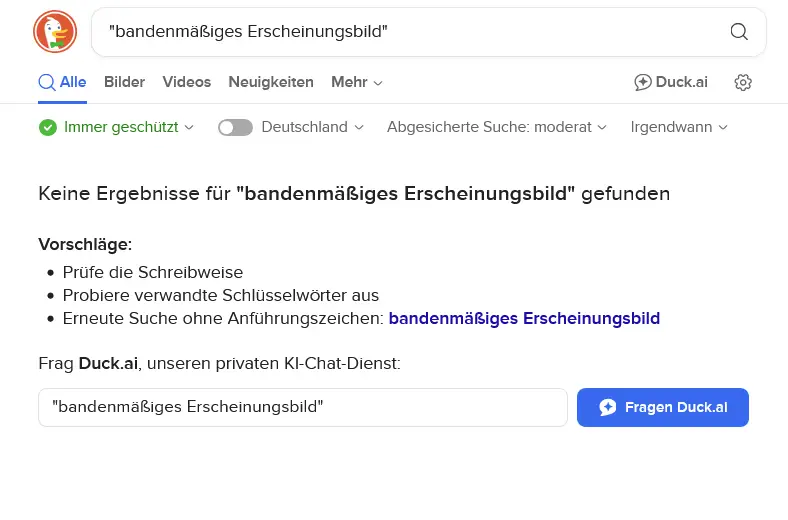
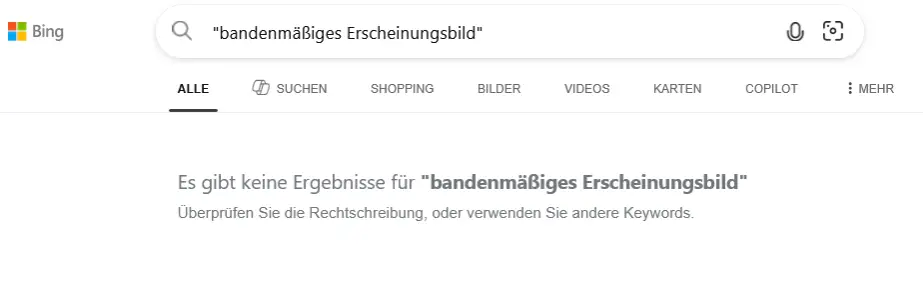
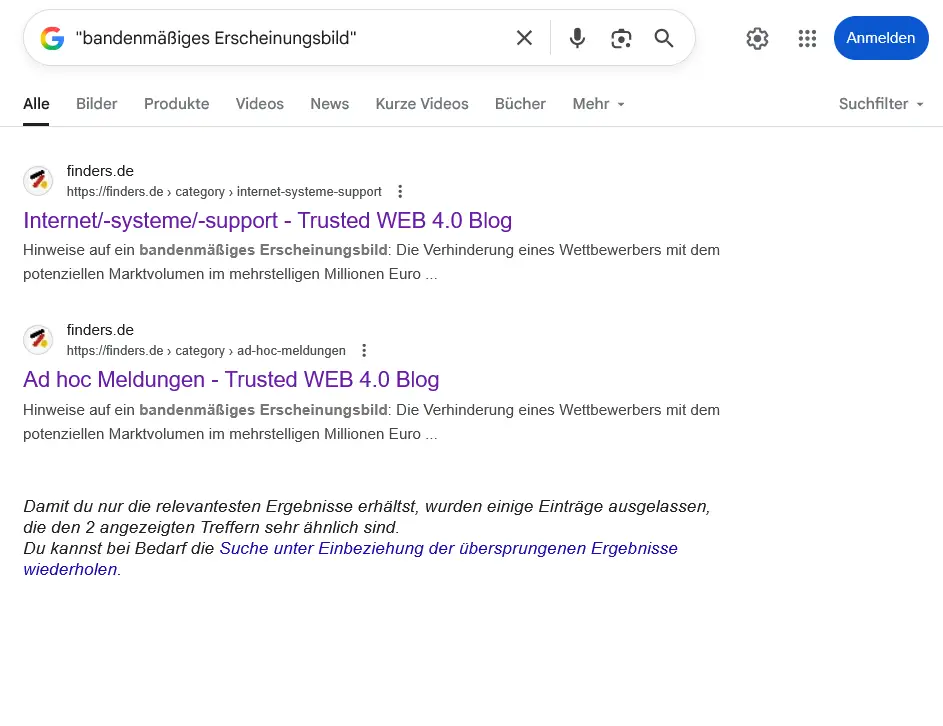
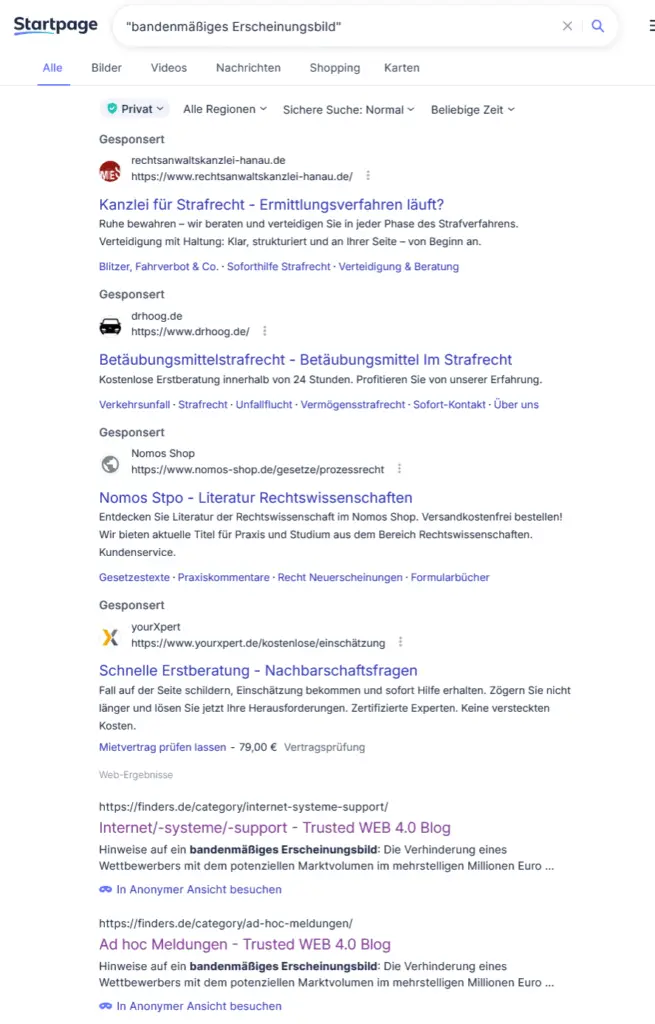
In extensive research across Europe, I have not found any digital business competitions that focus on preserving pre-digital democratic achievements. Everything related to democracy is occupied by non-profit initiatives. These must fear for their non-profit status if they think commercially and thus are not a serious threat to the gatekeepers.
Urgent: Trustees are needed across Europe who are convinced of the possibility of implementing a digital democratic concept and who will organize a founding competition for the EU-D-S.
GISAD has been in the process of founding since 2016. So far, there has been no serious understanding of the need to found an institute that advises projects on how to adapt their business models to retain pre-digital advantages for their customers in the emerging digital society. For this purpose, the aspects of health, material living conditions, productive or main activity, education, leisure and social interactions, economic and physical security, rule of law and fundamental rights, as well as natural environment and living conditions, and general sense of well-being must be integrated as GISAD indicators wherever they affect business models.
In which EU country should GISAD be founded to receive optimal support here?
European sovereignty will only truly be more democratic in the emerging digital society than autocracies if the democratic achievements developed over decades are consistently adopted in the EU-D-S. This creates a digital societal success model in which democracies from around the world will come together in a European Digital Union.
Autocracies will not be able to copy the EU-D-S without becoming democratic themselves.
Trusted WEB 4.0 Bonus 2027: The Economy Understands the Potential
Carryover from Previous Years
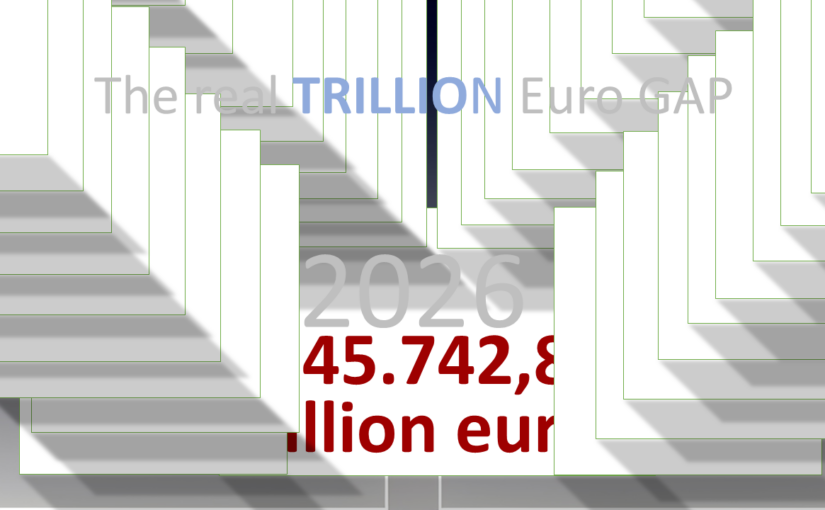
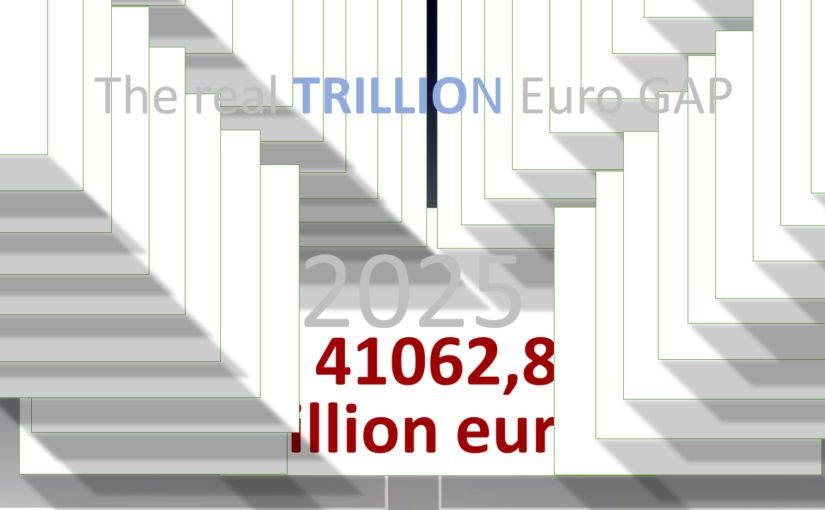
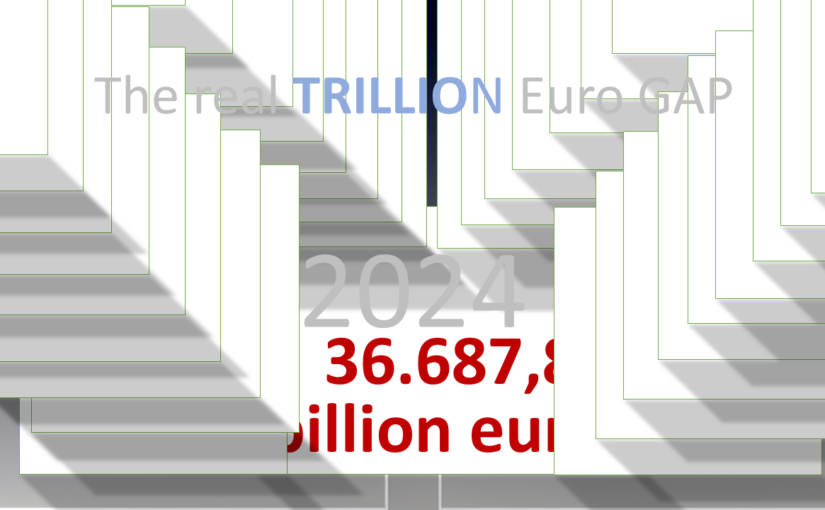
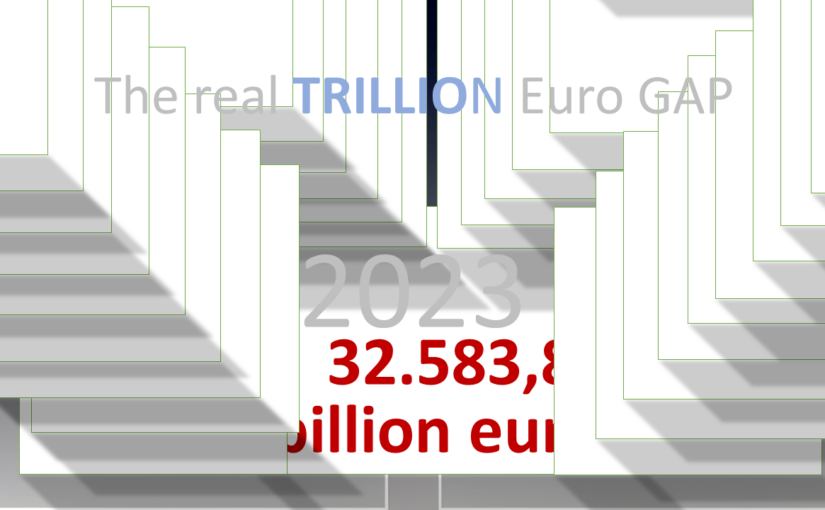
It is assumed that the EU-D-S will be founded in 2027. The GAP amount from 2026 of €45,74 trillion will be reduced annually from 2027 onwards by a Trusted WEB 4.0 Bonus through renewed trust-building followed by confirmation.
Trusted WEB 4.0 Bonus
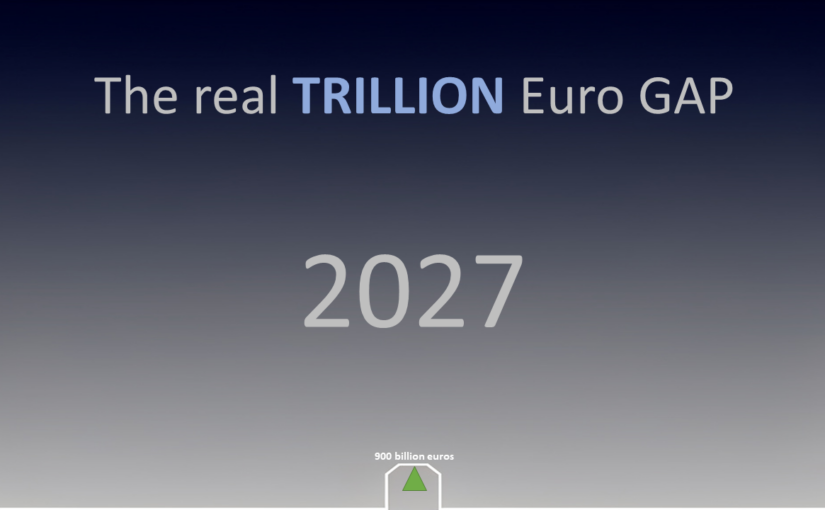
The Trusted WEB 4.0 Bonus for 2027 is estimated at 5% of the EU GDP for 2027. With an estimated EU GDP of approx. €18,000 trillion (based on the growth of previous years), the bonus would amount to €900 billion. This bonus would reduce the GAP amount by this value in 2027, provided that the EU-D-S is successfully implemented and trust in Europe’s digital sovereignty is strengthened.
Trusted WEB 4.0 Bonus €900 billion
Trusted WEB 4.0 technologies such as
Finder (1999),
getmysense (2002),
GISAD (2003),
EU-D-S (2004),
and WAN anonymity (2007)
could have served as the foundation for a European digital alternative.
Notes on Understanding the GAP and the Trusted WEB 4.0 Bonus
For the years 2003 to 2026, I estimated an annual loss of trust in the economy and in digitalization. For the years 2027 to 2030, I awarded a Trusted WEB 4.0 Bonus. You can find the individual years via the search https://finders.de/?s=, followed by the year – for example https://finders.de/?s=2003 for the year 2003.
Even though the GISAD studies (available from 2027 onward) draw on the most valid figures possible for the forecasts of the future, this is not possible with precision, neither for the GAP nor for the Trusted WEB 4.0 Bonus. 9/11 caused the United States to focus on the surveillance industry, thereby influencing global societal development for decades after 2001. Nobody dares to quantify the damage caused by a single year of detrimental development for the emergence of a digital society over the next 100 years. However, an estimate is necessary so that politicians understand the impact their lack of a proactive digital strategy will have on the economy and society in the future.
Even 10 percent of the European GDP is not far-fetched in my view, since the economy too depends primarily on psychological factors. If, from 2027 onward, the EU-D-S succeeds in counteracting the feeling shared by many people that autocracies may perhaps do it even better, with the hope of an emerging genuine digital society, then the impact expressed in a Trusted WEB 4.0 Bonus for the next 100 years can hardly be valued highly enough. From 2031 onward, I refrained from further estimates because the variables had become too numerous even for an estimate.
Sources
- n-tv: Reporters Infiltrate Russia’s „Disposable Agents“ World
- ZDF: Russia’s Shadow Army in Europe
- EESC info October 2024 | EESC
- European Competition
- Finder Technology (1999)
- getmySense (2002)
- GISAD (2003)
- EU-D-S (2004)
- WAN Anonymity (2007)
- EU-D-S Constitution
- Documents and Links for 3 Deployments for Digital Democracy
- Intransparent Germany Threatens Europe
- Federal Constitutional Court: 1 BvR 91/26, 2 BvR 1668/25
- Competition Policy | European Parliament