The study compares initiatives for digital participation with the concept of „Trusted WEB 4.0“. Digital participation is only possible within a holistic concept.
1. Likely Scenario Without Trusted WEB 4.0 for the Future
Forecast for 2028: (based on EESC, European Parliament)
Without Trusted WEB 4.0 and EU-D-S, the one-click society will continue to consolidate:
- Complete dependence on gatekeepers: Users will become entirely dependent on platforms like Google, Meta, or Amazon. Every interaction will take place through centralized services that collect and monetize data.
- Loss of linguistic competence: AI-driven search functions and social media will further reduce the ability to formulate precise queries. Users will grow accustomed to not thinking for themselves but merely clicking.
- Artificially inflated digital market: Companies will have to spend increasing amounts of money to remain visible. Platforms will profit, while a genuine data economy fails to emerge.
- Loss of concentration and passive consumption: The flood of information snippets will lead to a decline in concentration. Genuine societal participation will be replaced by passive consumption.
- Dystopian AI dominance: AI systems will increasingly determine what information users receive—based on probability calculations, not relevance or truth.
Conclusion: The one-click society leads to a passive, manipulable population that completely surrenders its digital sovereignty to gatekeepers—with severe consequences for democracy, the economy, and individual freedom.
2. Development with Broad European Support for Trusted WEB 4.0
The greatest challenge in the EU-D-S lies in the acceptance of getmySense as a participation component. Social media programs have made users dependent on them and corrupted social behavior patterns. Particularly those who are less integrated hope to gain participation through social media—yet often, it only creates addiction.
Solution: Active participation through structured thinking
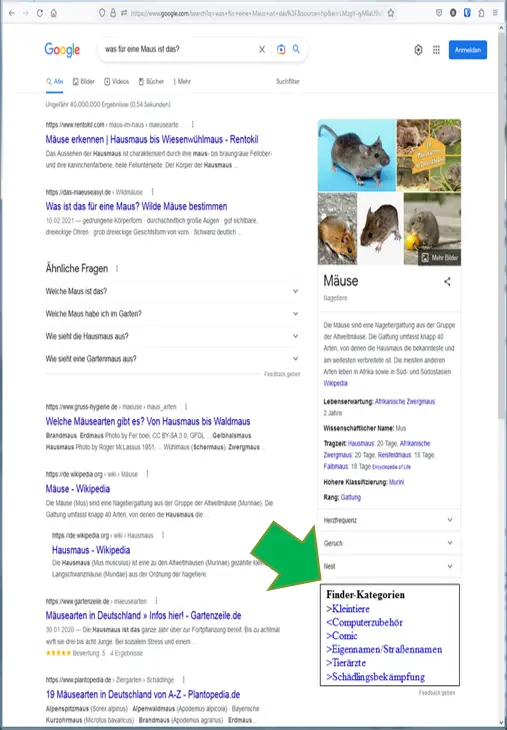
Unlike Google Search, Finder Technology considers the entire worldview. For a search query like „What kind of mouse is this?“, Google does not offer a category for a computer mouse.
Finder Technology (available since 2001), however, provides categories such as „small animals, computer accessories, comics, proper nouns/street names, veterinarians, pest control.“ Behind each category, a founder can establish themselves and receive the specific search query for further processing.
Advantages:
- Energy efficiency: An AI specialized in a specific field requires less energy and delivers more precise answers.
- Community and knowledge pool: An unmatched knowledge database in all languages is created.
- Active participation: Users must mentally structure what they want and then communicate it precisely.
- Cannot be copied by autocracies: A society based on active participation cannot be replicated by autocracies.
- New business models: Within each category, services can develop as micro-businesses.
Even the AI-powered Google Search from July 2026 assumes small animals: 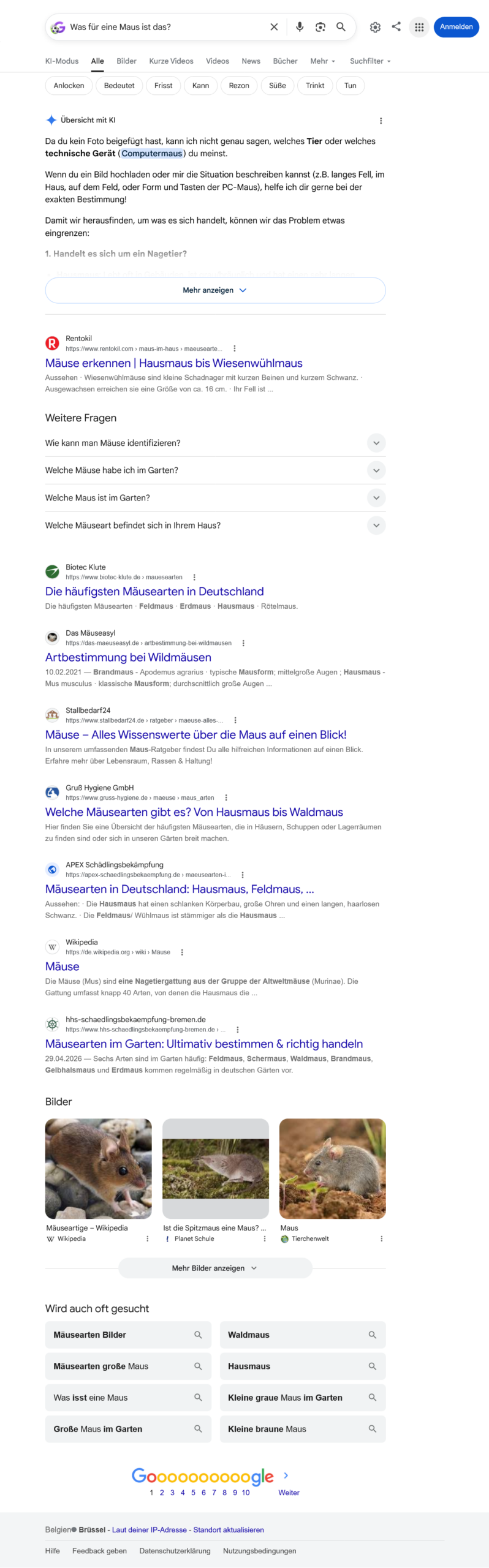
The AI is aware of the ambiguity—but instead of encouraging users to think, it requests a photo. This advances the dumbing-down process: Users no longer need to express themselves linguistically.
For getmySense to succeed, it is crucial to involve as many societal actors as possible in the EU-D-S.
3. 2026: Predicting the Impact
Search engines and social media programs fuel the expectation of being just one click away from any truth. This creates the illusion of qualified participation if as many information snippets as possible are absorbed. As a result, concentration wanes—and with it, the prerequisite for genuine societal participation.
The abundance of information snippets artificially inflates a digital market in which companies must spend a lot of money to reach their customers. The portals profit, but a genuine data economy does not emerge.
Example: Healthcare sector: Many people are excluded from the workforce due to illness. They could provide valuable data to the healthcare industry. With WAN anonymity, data compensation is possible without compromising anonymity. When the healthcare industry accesses data today, it accepts legal gray areas. Actively provided data from patients would be at least as valuable.
The EU-D-S offers the possibility for entirely new business models that enable active participation—and ideally, also compensate it. If everyone contributes to data creation, they receive as much for their data as they pay. €20 per user per month would already be enough to finance the EU-D-S. Recipients of basic income could earn €100–200 per month from home with good data and ideas.
4. Trusted WEB 4.0 Bonus 2028: Citizens Understand the Potential
Carryover from previous years:
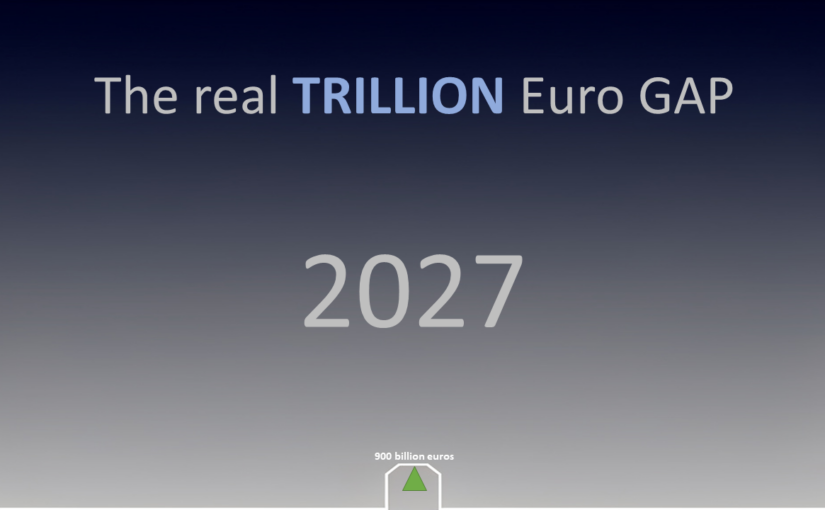
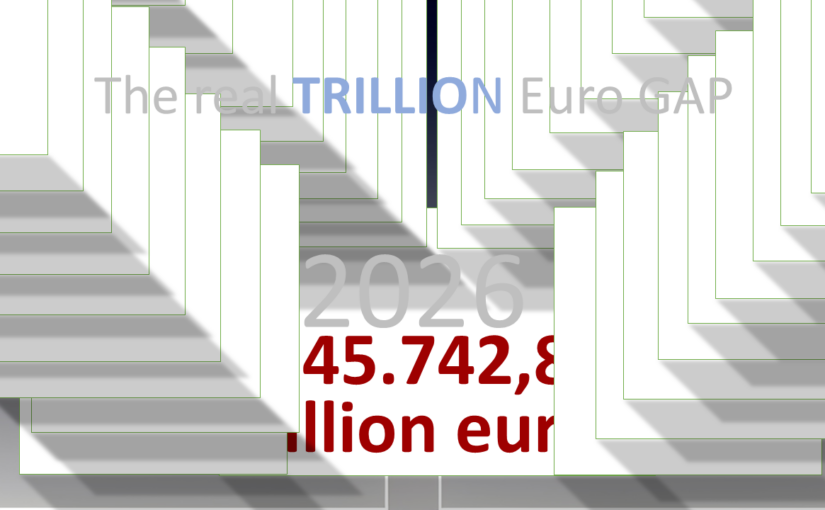
It is assumed that the EU-D-S will be founded in 2027. The GAP amount from 2026 of €45,74 trillion will be reduced annually by a Trusted WEB 4.0 Bonus starting in 2027.
Trusted WEB 4.0 Bonus:
Growth is based on a spirit of optimism—which requires trust.
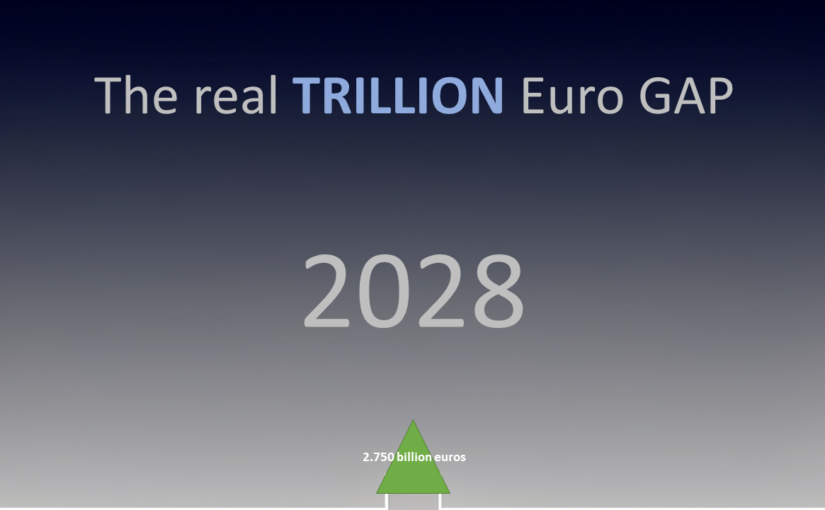
The Trusted WEB 4.0 Bonus for 2028 is estimated at 10% of the EU GDP for 2028. With an estimated EU GDP of approximately €18.5 trillion, the bonus would amount to €1.85 trillion. This bonus would reduce the GAP amount by this value.
- Trusted WEB 4.0 Bonus 2027: €900 billion
- Trusted WEB 4.0 Bonus 2028: €1.85 trillion
Total Trusted WEB 4.0 Bonus: €2.75 trillion
Trusted WEB 4.0 technologies such as
Finder (1999),
getmysense (2002),
GISAD (2003),
EU-D-S (2004),
and WAN anonymity (2007)
could have served as the foundation for a European digital alternative.
Notes on Understanding the GAP and the Trusted WEB 4.0 Bonus
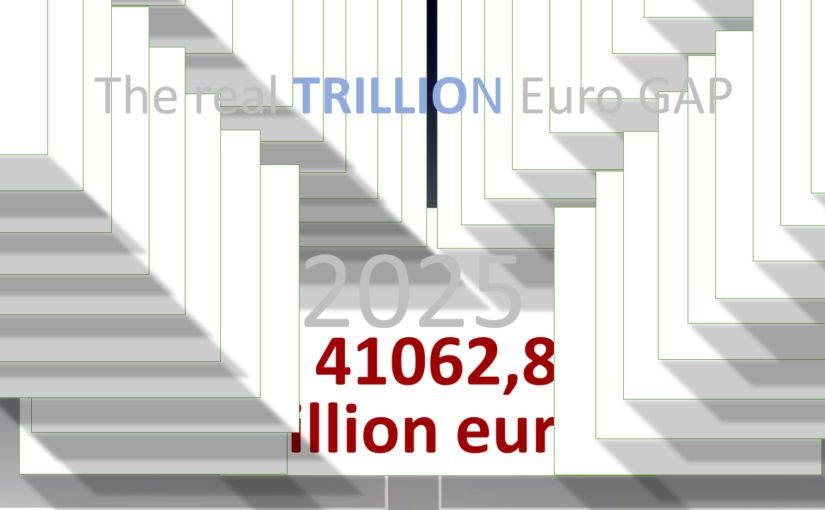
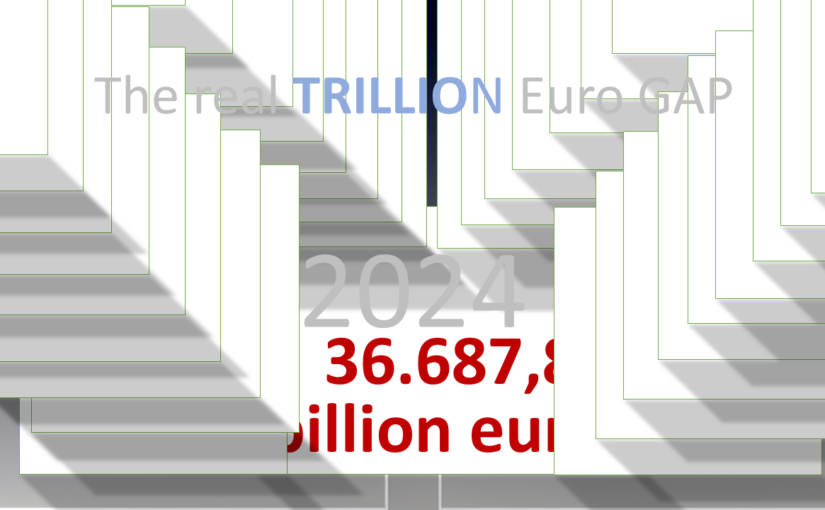
For the years 2003 to 2026, I estimated an annual loss of trust in the economy and in digitalization. For the years 2027 to 2030, I awarded a Trusted WEB 4.0 Bonus. You can find the individual years via the search https://finders.de/?s=, followed by the year – for example https://finders.de/?s=2003 for the year 2003.
Even though the GISAD studies (available from 2027 onward) draw on the most valid figures possible for the forecasts of the future, this is not possible with precision, neither for the GAP nor for the Trusted WEB 4.0 Bonus. 9/11 caused the United States to focus on the surveillance industry, thereby influencing global societal development for decades after 2001. Nobody dares to quantify the damage caused by a single year of detrimental development for the emergence of a digital society over the next 100 years. However, an estimate is necessary so that politicians understand the impact their lack of a proactive digital strategy will have on the economy and society in the future.
Even 10 percent of the European GDP is not far-fetched in my view, since the economy too depends primarily on psychological factors. If, from 2027 onward, the EU-D-S succeeds in counteracting the feeling shared by many people that autocracies may perhaps do it even better, with the hope of an emerging genuine digital society, then the impact expressed in a Trusted WEB 4.0 Bonus for the next 100 years can hardly be valued highly enough. From 2031 onward, I refrained from further estimates because the variables had become too numerous even for an estimate.